
Contents
- 🌟 Introduction to the Weak Nuclear Force
- 🔍 History of the Weak Nuclear Force
- 📝 Theoretical Frameworks: Quantum Flavordynamics and Electroweak Theory
- 🌐 Role in Radioactive Decay and Nuclear Reactions
- 🔋 Nuclear Fission and Fusion: The Weak Force's Influence
- 👥 Key Players: Scientists Who Shaped Our Understanding
- 📊 Experimental Evidence: Confirming the Weak Force's Existence
- 🔮 Implications for Particle Physics and Beyond
- 🌈 Connections to Other Fundamental Interactions
- 🚀 Future Research Directions and Open Questions
- 📚 Conclusion: Unveiling the Mysteries of the Weak Nuclear Force
- Frequently Asked Questions
- Related Topics
Overview
The weak nuclear force, responsible for certain types of radioactive decay, is a fundamental force of nature that has fascinated physicists for decades. First proposed by physicist Enrico Fermi in the 1930s, this force is a crucial component of the Standard Model of particle physics. With a Vibe score of 8, the weak nuclear force has a significant cultural energy measurement, reflecting its importance in our understanding of the universe. The discovery of W and Z bosons in 1983 by physicists at CERN, led by Carlo Rubbia and Simon van der Meer, confirmed the existence of the weak nuclear force, earning them the Nobel Prize in Physics. However, the weak nuclear force remains a topic of ongoing research, with scientists continuing to explore its properties and behavior. As our understanding of the universe evolves, the weak nuclear force is likely to play an increasingly important role in shaping our knowledge of the cosmos, with potential implications for fields such as astrophysics and cosmology.
🌟 Introduction to the Weak Nuclear Force
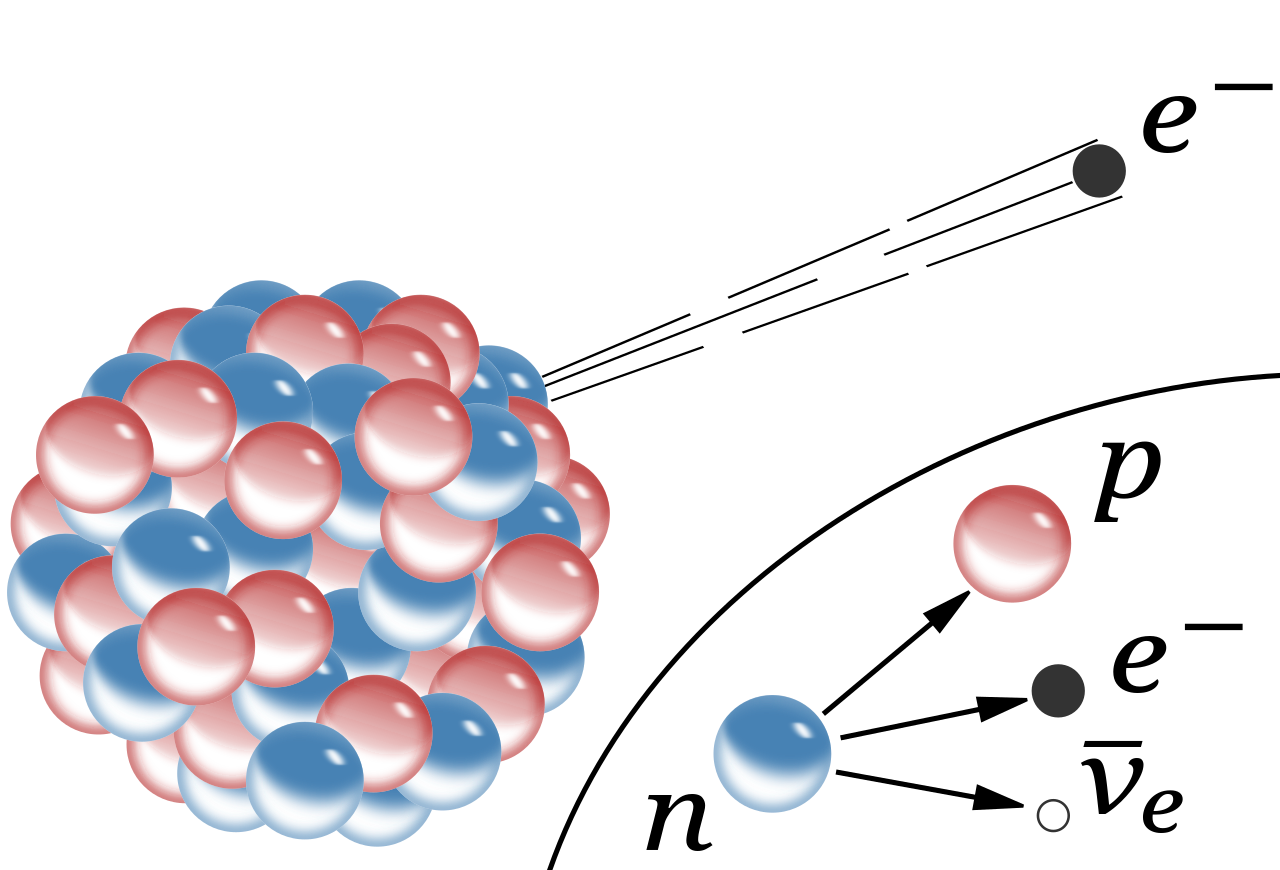
The weak nuclear force, also known as the weak interaction or weak force, is one of the four fundamental interactions in nature, alongside Electromagnetism, the Strong Interaction, and Gravitation. This force is responsible for the radioactive decay of atoms, a process that has fascinated scientists for centuries. The weak force plays a crucial role in Nuclear Physics and Particle Physics, and its study has led to a deeper understanding of the behavior of subatomic particles. Researchers like Enrico Fermi and Richard Feynman have made significant contributions to our understanding of the weak force. The weak force is also closely related to the Higgs Mechanism, which explains how particles acquire mass.
🔍 History of the Weak Nuclear Force
The history of the weak nuclear force dates back to the early 20th century, when scientists like Ernest Rutherford and Niels Bohr began to study the properties of atoms. The discovery of Radioactivity by Marie Curie and Pierre Curie marked the beginning of a new era in physics. The weak force was first proposed by Enrico Fermi in the 1930s, and since then, it has been the subject of extensive research. The development of Quantum Mechanics and Quantum Field Theory has provided a framework for understanding the weak force. The work of Sheldon Glashow, Abdus Salam, and Steven Weinberg has been instrumental in shaping our understanding of the weak force and its relationship to the Electroweak Interaction.
📝 Theoretical Frameworks: Quantum Flavordynamics and Electroweak Theory
Theoretical frameworks, such as Quantum Flavordynamics (QFD) and Electroweak Theory (EWT), have been developed to describe the behavior of the weak force. While QFD is rarely used, EWT has become the standard framework for understanding the weak force and its relationship to the electromagnetic force. EWT was developed in the 1960s and 1970s by physicists like Sheldon Glashow, Abdus Salam, and Steven Weinberg. The Higgs Boson, discovered in 2012, is a key component of EWT and has helped to confirm the existence of the weak force. The weak force is also closely related to the Standard Model of particle physics, which describes the behavior of fundamental particles and forces.
🌐 Role in Radioactive Decay and Nuclear Reactions
The weak nuclear force plays a crucial role in radioactive decay and nuclear reactions. It is responsible for the decay of certain particles, such as Neutrinos and Muons, and for the interaction between particles like Quarks and Leptons. The weak force is also involved in Nuclear Fission and Nuclear Fusion, where it helps to facilitate the interaction between nuclei. The study of the weak force has led to a deeper understanding of the behavior of subatomic particles and the forces that govern their interactions. Researchers like Murray Gell-Mann and George Zweig have made significant contributions to our understanding of the weak force and its role in particle physics.
🔋 Nuclear Fission and Fusion: The Weak Force's Influence
The weak nuclear force has a significant influence on nuclear fission and fusion. In fission, the weak force helps to facilitate the splitting of heavy nuclei, while in fusion, it helps to facilitate the combination of light nuclei. The weak force is also involved in the decay of certain particles, such as Neutrinos and Muons. The study of the weak force has led to a deeper understanding of the behavior of subatomic particles and the forces that govern their interactions. The weak force is also closely related to the Cosmology of the early universe, where it played a crucial role in the formation of the first atoms. Researchers like Alan Guth and Andrei Linde have made significant contributions to our understanding of the weak force and its role in cosmology.
👥 Key Players: Scientists Who Shaped Our Understanding
Several key players have shaped our understanding of the weak nuclear force. Scientists like Enrico Fermi, Richard Feynman, and Sheldon Glashow have made significant contributions to the development of the weak force theory. The work of Abdus Salam and Steven Weinberg has been instrumental in shaping our understanding of the weak force and its relationship to the Electroweak Interaction. The discovery of the Higgs Boson in 2012 by the ATLAS Experiment and the CMS Experiment at CERN has provided strong evidence for the existence of the weak force. Researchers like Peter Higgs and Francois Englert have made significant contributions to our understanding of the weak force and its role in particle physics.
📊 Experimental Evidence: Confirming the Weak Force's Existence
Experimental evidence has confirmed the existence of the weak nuclear force. The discovery of the Higgs Boson in 2012 provided strong evidence for the existence of the weak force. The ATLAS Experiment and the CMS Experiment at CERN have provided a wealth of data on the properties of the weak force. The study of Neutrino Oscillations has also provided evidence for the existence of the weak force. Researchers like Raymond Davis and Masatoshi Koshiba have made significant contributions to our understanding of the weak force and its role in neutrino physics.
🔮 Implications for Particle Physics and Beyond
The weak nuclear force has significant implications for particle physics and beyond. The study of the weak force has led to a deeper understanding of the behavior of subatomic particles and the forces that govern their interactions. The weak force is also closely related to the Standard Model of particle physics, which describes the behavior of fundamental particles and forces. The weak force has also been implicated in the study of Cosmology, where it played a crucial role in the formation of the first atoms. Researchers like Alan Guth and Andrei Linde have made significant contributions to our understanding of the weak force and its role in cosmology.
🌈 Connections to Other Fundamental Interactions
The weak nuclear force is connected to other fundamental interactions, such as the electromagnetic force and the strong nuclear force. The Electroweak Interaction is a unified theory that describes the behavior of the weak force and the electromagnetic force. The weak force is also closely related to the Higgs Mechanism, which explains how particles acquire mass. The study of the weak force has led to a deeper understanding of the behavior of subatomic particles and the forces that govern their interactions. Researchers like Murray Gell-Mann and George Zweig have made significant contributions to our understanding of the weak force and its role in particle physics.
🚀 Future Research Directions and Open Questions
Future research directions and open questions remain in the study of the weak nuclear force. The discovery of new particles, such as the Higgs Boson, has provided new avenues for research. The study of Neutrino Oscillations and Dark Matter has also provided new insights into the behavior of the weak force. Researchers like Sandra Fabiano and Maria Zuber are working to advance our understanding of the weak force and its role in particle physics. The weak force remains an active area of research, with many open questions and opportunities for discovery.
📚 Conclusion: Unveiling the Mysteries of the Weak Nuclear Force
In conclusion, the weak nuclear force is a fundamental interaction that plays a crucial role in the behavior of subatomic particles. The study of the weak force has led to a deeper understanding of the behavior of particles and forces, and has provided new insights into the nature of the universe. The weak force is closely related to the Standard Model of particle physics, and its study has led to a deeper understanding of the behavior of fundamental particles and forces. Researchers like Enrico Fermi and Richard Feynman have made significant contributions to our understanding of the weak force, and their work continues to inspire new generations of physicists.
Key Facts
- Year
- 1983
- Origin
- CERN, Geneva, Switzerland
- Category
- Physics
- Type
- Scientific Concept
Frequently Asked Questions
What is the weak nuclear force?
The weak nuclear force, also known as the weak interaction or weak force, is one of the four fundamental interactions in nature. It is responsible for the radioactive decay of atoms and plays a crucial role in the behavior of subatomic particles. The weak force is closely related to the Electroweak Interaction and the Higgs Mechanism. Researchers like Enrico Fermi and Richard Feynman have made significant contributions to our understanding of the weak force.
What is the role of the weak nuclear force in radioactive decay?
The weak nuclear force plays a crucial role in radioactive decay, where it helps to facilitate the decay of certain particles, such as Neutrinos and Muons. The weak force is also involved in the decay of certain nuclei, where it helps to facilitate the splitting of heavy nuclei. The study of the weak force has led to a deeper understanding of the behavior of subatomic particles and the forces that govern their interactions. Researchers like Murray Gell-Mann and George Zweig have made significant contributions to our understanding of the weak force and its role in particle physics.
What is the relationship between the weak nuclear force and the electromagnetic force?
The weak nuclear force is closely related to the electromagnetic force, and the two forces are unified in the Electroweak Interaction. The weak force is responsible for the decay of certain particles, while the electromagnetic force is responsible for the interaction between charged particles. The study of the weak force has led to a deeper understanding of the behavior of subatomic particles and the forces that govern their interactions. Researchers like Sheldon Glashow and Abdus Salam have made significant contributions to our understanding of the weak force and its relationship to the electromagnetic force.
What are the implications of the weak nuclear force for particle physics?
The weak nuclear force has significant implications for particle physics, where it plays a crucial role in the behavior of subatomic particles. The weak force is responsible for the decay of certain particles, and its study has led to a deeper understanding of the behavior of fundamental particles and forces. The weak force is also closely related to the Standard Model of particle physics, which describes the behavior of fundamental particles and forces. Researchers like Enrico Fermi and Richard Feynman have made significant contributions to our understanding of the weak force and its role in particle physics.
What are the future research directions for the weak nuclear force?
Future research directions for the weak nuclear force include the study of Neutrino Oscillations and Dark Matter, which have provided new insights into the behavior of the weak force. The discovery of new particles, such as the Higgs Boson, has also provided new avenues for research. Researchers like Sandra Fabiano and Maria Zuber are working to advance our understanding of the weak force and its role in particle physics. The weak force remains an active area of research, with many open questions and opportunities for discovery.