
Contents
Overview
The Tower of London's genesis is inextricably linked to the Norman Conquest of 1066. Following his victory at the Battle of Hastings, William the Conqueror immediately recognized the strategic importance of securing London. He initiated the construction of a formidable defensive structure, the White Tower, which was completed around 1078. This imposing keep, built with Caen stone imported from France, was not merely a military stronghold but a clear statement of royal authority, designed to intimidate the recently subjugated populace. Subsequent monarchs, including Richard I and Henry III, significantly expanded the complex throughout the 12th and 13th centuries, adding defensive walls, towers, and royal apartments, transforming it into a sprawling palace-fortress. The Tower's role as a royal residence gradually diminished, but its strategic and symbolic importance only grew, cementing its place at the heart of English governance and defense.
⚙️ How It Works
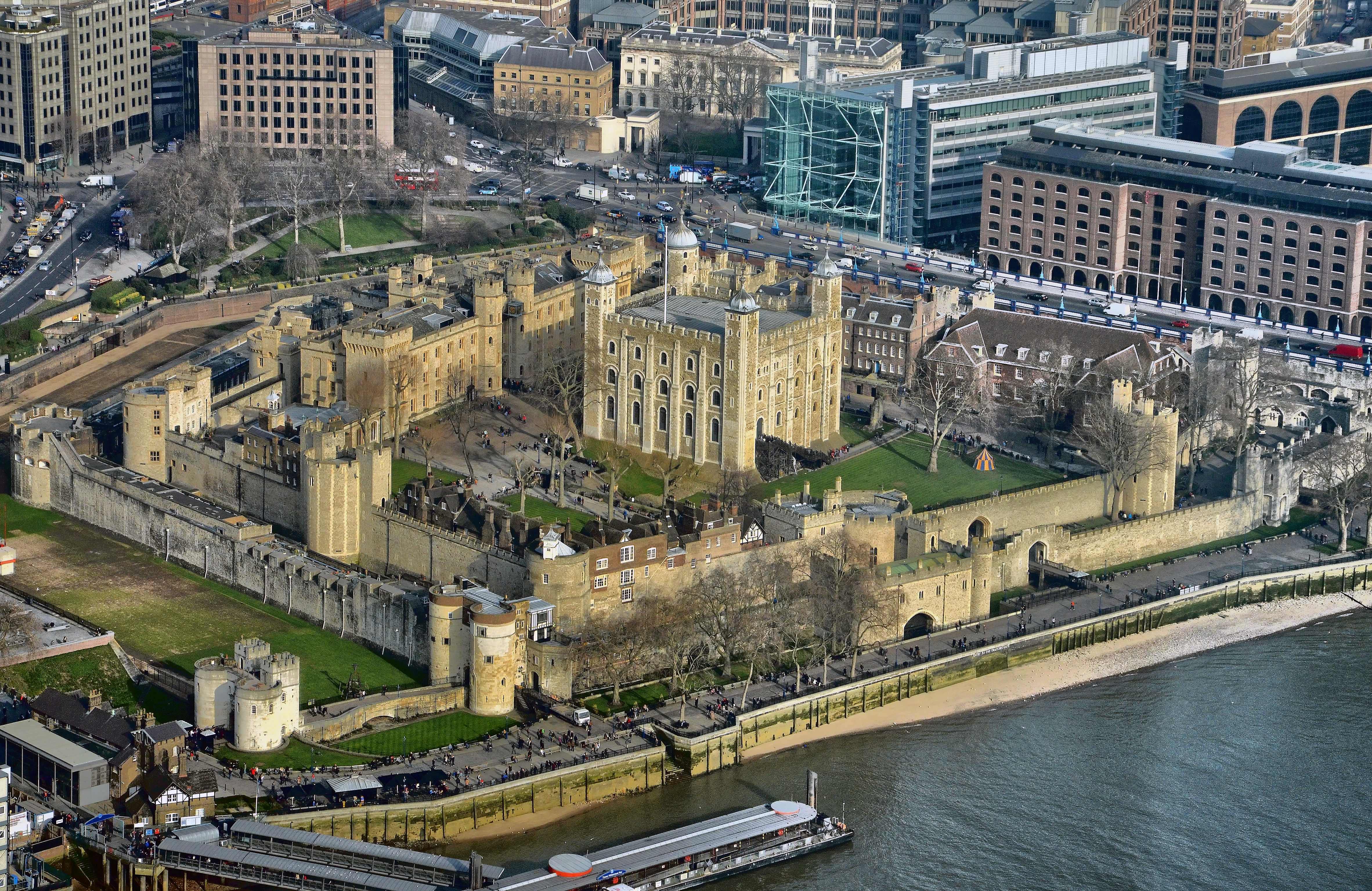
The Tower of London is a masterclass in medieval defensive architecture, a layered system designed for maximum security. Its core is the White Tower, a classic example of a Norman keep, featuring thick walls and a central position. Encircling this are two concentric rings of defensive walls: the Inner Ward and the Outer Ward. The Inner Ward, constructed primarily during the reign of Henry III, features a series of smaller towers and battlements. The Outer Ward, largely completed under Edward I, further strengthened the defenses with additional towers and a moat, which was historically filled with water from the River Thames. Access is controlled through heavily fortified gatehouses, such as the Byward Tower and the Bloody Tower, each designed to funnel attackers into kill zones. The entire complex functions as a self-contained unit, capable of withstanding prolonged sieges, a testament to the engineering prowess of its builders.
📊 Key Facts & Numbers
Spanning nearly 1,000 years, the Tower of London's statistics are staggering. It is comprised of over 20 towers. The Tower of London has a complex of buildings encircled by defensive walls and a moat. The Tower's role as a royal residence gradually diminished over time. The Tower of London has witnessed pivotal moments in British history.
👥 Key People & Organizations
The Tower of London's history is populated by a cast of powerful figures and enduring institutions. William the Conqueror stands as its founder, initiating the construction of the iconic White Tower. Monarchs like Henry III and Edward I were instrumental in its architectural expansion. Its infamous role as a prison saw figures like Sir Walter Raleigh and Guy Fawkes incarcerated within its walls. The Yeoman Warders, often called 'Beefeaters', have served as its ceremonial guardians since the Tudor period, maintaining traditions and guiding visitors. The Jewel House is managed by the Crown, ensuring the safekeeping of the regalia. The Historic Royal Palaces charity currently oversees its preservation and operation as a public attraction.
🌍 Cultural Impact & Influence
The Tower of London's cultural resonance is profound, permeating literature, art, and popular imagination. It has been a recurring setting in countless novels, from historical dramas to thrillers, often symbolizing power, mystery, and confinement. Its image has been immortalized in paintings, engravings, and photography, becoming an indelible icon of London and British heritage. The legend of the Tower ravens, said to protect the Crown, adds a layer of mystique and folklore. The Tower's association with royal ceremonies, state occasions, and its role in housing the Crown Jewels has cemented its status as a potent symbol of the British monarchy and national identity. Its influence extends to global perceptions of historical fortresses and royal power.
⚡ Current State & Latest Developments
As of 2024, the Tower of London continues its dual role as a secure repository for the Crown Jewels and a premier tourist destination managed by Historic Royal Palaces. Recent developments include ongoing conservation efforts on its ancient structures, with significant investment in preserving the White Tower's integrity. The site frequently hosts special exhibitions and events, such as the annual Tower of London Poppy Commemoration which draws national attention. Security remains paramount, with advanced measures in place to protect the regalia and the millions of visitors who pass through its gates annually. The Tower also plays a role in ceremonial duties, including the annual Beating Retreat and the Ceremony of the Keys. Discussions are ongoing regarding further integration with digital visitor experiences and augmented reality tours.
🤔 Controversies & Debates
The Tower of London is not without its controversies and debates, primarily centered on its historical narratives and its role in national memory. The persistent myth of the 'Bloody Tower' as the site of the Princes in the Tower's murder remains a subject of historical speculation, with no definitive proof. Its history as a prison and execution site, particularly for women like Anne Boleyn and Catherine Howard, raises questions about gender, power, and justice in historical contexts. Debates also arise regarding the interpretation of its history, with some critics arguing for a more critical examination of its role in colonial expansion and state oppression, while others emphasize its architectural and cultural significance. The management and funding of such historic sites by organizations like Historic Royal Palaces also periodically spark discussions about public access and heritage preservation.
🔮 Future Outlook & Predictions
The future of the Tower of London will likely see a continued balancing act between preservation and public engagement. Efforts will intensify to mitigate the impacts of climate change on its ancient stonework, potentially involving new materials and techniques. Digital integration will undoubtedly play a larger role, with enhanced virtual tours, interactive exhibits, and augmented reality experiences becoming more sophisticated, aiming to attract younger demographics and provide deeper historical context. The Tower's role in national ceremonies, such as the Coronation and other royal events, will continue, reinforcing its symbolic importance. There's also potential for expanded educational programs focusing on medieval history, architecture, and the Tower's complex social history, ensuring its relevance for future generations.
💡 Practical Applications
The Tower of London's practical applications have evolved dramatically over its history. Historically, it served as a crucial military stronghold, a royal residence providing security and administrative functions, a mint for striking coinage, an armory for equipping the nation's forces, and a treasury for safeguarding wealth and state papers. Its most enduring practical application today is as a major tourist attraction, generating significant revenue for the United Kingdom's heritage sector through Historic Royal Palaces. It also functions as a secure vault for the Crown Jewels, a role it has fulfilled for centuries. Furthermore, it serves as an invaluable educational resource, offering tangible connections to British history for students and the public alike, and as a venue for state functions and ceremonial events.
Key Facts
- Category
- history
- Type
- topic