
Contents
- 📊 Introduction to Stakeholder Relationships
- 📈 History and Evolution of Stakeholder Theory
- 👥 Key Stakeholder Groups and Their Interests
- 📊 Managing Stakeholder Relationships
- 🌎 Cultural and Social Implications of Stakeholder Relationships
- 📰 Current State and Latest Developments
- 🤔 Controversies and Debates
- 🔮 Future Outlook and Predictions
- 💡 Practical Applications and Case Studies
- 📚 Related Topics and Deeper Reading
- Frequently Asked Questions
- References
- Related Topics
Overview
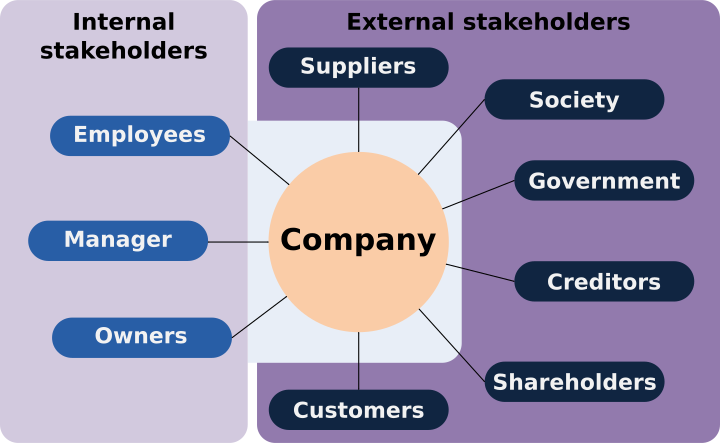
Stakeholder relationships refer to the complex interactions and dependencies between an organization and its various stakeholders, including employees, customers, suppliers, investors, and the wider community. Effective management of these relationships is crucial for achieving long-term success and sustainability. With a history dating back to the 1960s, stakeholder theory has evolved to encompass a broad range of perspectives, from corporate social responsibility to social contract theory. Today, companies like Patagonia and The Body Shop are leading examples of organizations prioritizing stakeholder relationships, with a focus on environmental sustainability and social responsibility. As the business landscape continues to shift, understanding and navigating stakeholder relationships has become a key competency for organizations seeking to thrive in a rapidly changing world. According to a study by Harvard Business Review, companies that prioritize stakeholder relationships tend to outperform those that focus solely on shareholder value. With the rise of ESG investing and increasing demands for corporate transparency, the importance of stakeholder relationships will only continue to grow.
📊 Introduction to Stakeholder Relationships
The concept of stakeholder relationships has its roots in the 1960s, when Edward Freeman first introduced the idea of stakeholder theory. Since then, the theory has evolved to encompass a broad range of perspectives, from corporate social responsibility to social contract theory. Today, companies like Starbucks and Costco are leading examples of organizations prioritizing stakeholder relationships, with a focus on employee satisfaction and customer loyalty.
📈 History and Evolution of Stakeholder Theory
Stakeholder relationships involve a complex web of interests and influences, with various groups competing for attention and resources. Key stakeholder groups include employees, customers, suppliers, investors, and the wider community. Each of these groups has its own unique interests and expectations, and effective management of these relationships is crucial for achieving long-term success and sustainability. For example, Amazon has prioritized stakeholder relationships with its customers, investing heavily in customer service and satisfaction.
👥 Key Stakeholder Groups and Their Interests
Managing stakeholder relationships requires a deep understanding of the complex interactions and dependencies between an organization and its various stakeholders. This involves identifying and prioritizing key stakeholder groups, developing effective communication strategies, and building trust and credibility with these groups. Companies like Google and Microsoft have developed innovative approaches to stakeholder relationship management, with a focus on transparency and accountability.
📊 Managing Stakeholder Relationships
Stakeholder relationships have significant cultural and social implications, with organizations playing a critical role in shaping societal values and norms. Effective management of stakeholder relationships can contribute to a positive corporate reputation, enhanced brand loyalty, and increased customer satisfaction. However, poor management of these relationships can lead to negative consequences, including reputational damage and loss of customer trust. For example, Facebook has faced criticism for its handling of stakeholder relationships, particularly with regards to user data and privacy.
📰 Current State and Latest Developments
Despite the importance of stakeholder relationships, there are ongoing controversies and debates surrounding the concept. Some critics argue that prioritizing stakeholder relationships can lead to a lack of focus on shareholder value, while others argue that the concept is too broad and lacks clear definition. For example, Warren Buffett has been critical of the emphasis on stakeholder relationships, arguing that it can distract from the core goal of maximizing shareholder value.
🤔 Controversies and Debates
Looking to the future, it is clear that stakeholder relationships will continue to play a critical role in organizational management and business ethics. As the business landscape continues to shift, companies will need to prioritize stakeholder relationships and demonstrate their commitment to social and environmental responsibility. According to a study by Mckinsey, companies that prioritize stakeholder relationships tend to outperform those that focus solely on shareholder value.
🔮 Future Outlook and Predictions
Practical applications of stakeholder relationship management can be seen in a range of industries and contexts. For example, companies like Patagonia and The Body Shop have developed innovative approaches to stakeholder relationship management, with a focus on environmental sustainability and social responsibility. Other companies, such as Costco and Starbucks, have prioritized stakeholder relationships with their employees, investing in employee satisfaction and development.
💡 Practical Applications and Case Studies
Related topics and deeper reading on stakeholder relationships can be found in a range of fields, including business ethics, corporate social responsibility, and organizational management. Key concepts and theories include stakeholder theory, social contract theory, and corporate governance. For further reading, see the work of Edward Freeman and R. Edward Freeman.
Key Facts
- Year
- 1960s
- Origin
- United States
- Category
- business
- Type
- concept
Frequently Asked Questions
What is the definition of stakeholder relationships?
Stakeholder relationships refer to the complex interactions and dependencies between an organization and its various stakeholders, including employees, customers, suppliers, investors, and the wider community. According to Edward Freeman, stakeholder relationships are critical to organizational success and require a deep understanding of complex interactions and dependencies.
Why are stakeholder relationships important?
Stakeholder relationships are important because they can contribute to a positive corporate reputation, enhanced brand loyalty, and increased customer satisfaction. Effective management of stakeholder relationships is crucial for achieving long-term success and sustainability, as seen in the examples of Patagonia and The Body Shop.
How can organizations prioritize stakeholder relationships?
Organizations can prioritize stakeholder relationships by developing effective communication strategies, building trust and credibility with stakeholders, and demonstrating their commitment to social and environmental responsibility. Companies like Google and Microsoft have developed innovative approaches to stakeholder relationship management, with a focus on transparency and accountability.
What are the cultural and social implications of stakeholder relationships?
Stakeholder relationships have significant cultural and social implications, with organizations playing a critical role in shaping societal values and norms. Effective management of stakeholder relationships can contribute to a positive corporate reputation, enhanced brand loyalty, and increased customer satisfaction, as seen in the examples of Starbucks and Costco.
What are the current trends and developments in stakeholder relationships?
The current trends and developments in stakeholder relationships include increasing demands for corporate transparency and accountability, the rise of social media and ESG investing, and a growing focus on sustainability and social responsibility. Companies like Tesla and Renewable Energy are leading the way in this regard, with a focus on sustainable practices and reduced environmental impact.
What are the controversies and debates surrounding stakeholder relationships?
The controversies and debates surrounding stakeholder relationships include the tension between prioritizing stakeholder relationships and maximizing shareholder value, the lack of clear definition and measurement of stakeholder relationships, and the potential for stakeholder relationships to distract from core business goals. For example, Warren Buffett has been critical of the emphasis on stakeholder relationships, arguing that it can distract from the core goal of maximizing shareholder value.
What is the future outlook for stakeholder relationships?
The future outlook for stakeholder relationships is characterized by increasing demands for corporate transparency and accountability, the rise of social media and ESG investing, and a growing focus on sustainability and social responsibility. According to a study by Mckinsey, companies that prioritize stakeholder relationships tend to outperform those that focus solely on shareholder value.