
Contents
Overview
The Situationist International coalesced from the merger of the International Movement for an Imaginary Architecture (Cobra-affiliated IMIB) and the Letterist International. This fusion, orchestrated in Cosio d'Arroscia, Italy, brought together disparate avant-garde elements under a unified, revolutionary banner. Precursors like Dada and Surrealism provided fertile ground, but the SI sought a more direct engagement with contemporary social and political conditions, moving beyond purely artistic concerns. Early members envisioned a radical critique of capitalist society, aiming to synthesize Marxist theory with avant-garde artistic practice. The organization's structure was deliberately fluid and international, with cells forming and dissolving across Europe, reflecting its anti-hierarchical ethos. The foundational text, Guy Debord's The Society of the Spectacle (1967), would become the movement's most enduring theoretical contribution, articulating a scathing critique of mediated reality.
⚙️ How It Works
Situationist practice was built on a series of tactical interventions designed to disrupt the passive consumption of everyday life and expose the alienating nature of the 'spectacle.' The dérive involved aimlessly wandering through urban environments to discover new psychological landscapes and challenge the predetermined paths of capitalist cities. Détournement was the repurposing of existing cultural elements – advertisements, political slogans, artistic works – to create new, subversive meanings, effectively hijacking the language of the spectacle against itself. The concept of the 'unitary urbanism' proposed a radical redesign of urban spaces to foster authentic social interaction and creative engagement, moving beyond functionalist architecture. These practices were not mere artistic experiments but tools for consciousness-raising, intended to provoke a revolutionary awareness of social alienation and inspire collective action. The SI's theoretical output, disseminated through their journal Internationale Situationniste, provided the intellectual framework for these actions, offering a complex critique of commodity fetishism and the erosion of lived experience.
📊 Key Facts & Numbers
The Situationist International's active period spanned approximately 15 years. During this time, around 70 individuals were members at various points, with a core group of about 15-20 active participants at any given moment. The journal Internationale Situationniste published 12 issues between 1957 and 1969, reaching a peak circulation of around 1,000 copies per issue. The SI's influence was particularly potent during the May 1968 protests in France, where their slogans and ideas were widely adopted by student and worker movements, with estimates suggesting over 100,000 posters bearing situationist slogans were distributed in Paris alone. While the SI never achieved mass membership, its theoretical impact is measured by the hundreds of academic texts and artistic projects that cite its influence, and the enduring relevance of its critique of consumer culture and media saturation.
👥 Key People & Organizations
The intellectual and artistic landscape of the Situationist International was shaped by a constellation of influential figures. Guy Debord, the primary theorist and leader, authored seminal works like The Society of the Spectacle and directed the film Hurlements en faveur de Sade. Asger Jorn, a Danish artist and key co-founder, brought a vital artistic perspective and helped establish the movement's international reach. Other significant members included Mustapha Khayati, author of the incendiary pamphlet On the Poverty of Student Life, and Christopher Greyer, who documented the movement's history. While not formal members, figures like Henri Lefebvre and Michel Foucault engaged with similar critiques of everyday life and urbanism, creating a broader intellectual context. The SI operated through a decentralized network of small groups and individuals, rather than formal institutions, making it difficult to delineate strict organizational boundaries.
🌍 Cultural Impact & Influence
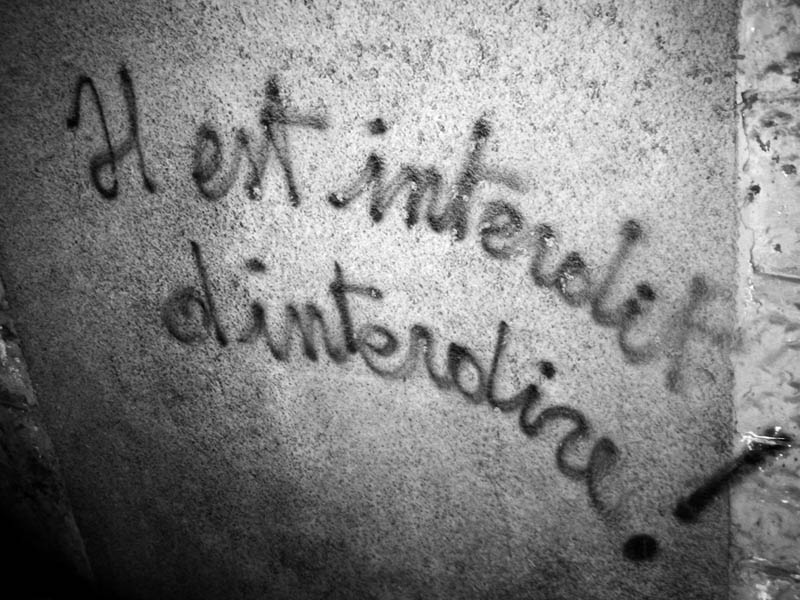
The Situationist International's impact reverberates through contemporary art, critical theory, and activist circles, often in ways that are difficult to trace directly due to the movement's deliberate obscurity. Their critique of the spectacle and the commodification of experience laid crucial groundwork for later analyses of media saturation and postmodern culture. The détournement technique, in particular, has been widely adopted and adapted by artists, advertisers, and political activists seeking to subvert dominant narratives. Movements like Adbusters and Banksy's artistic interventions owe a clear debt to situationist tactics. Furthermore, the SI's emphasis on unitary urbanism and the dérive continues to inform urban planning discourse and experimental urban exploration. While the SI itself dissolved, its ideas have proven remarkably persistent, influencing generations of thinkers and creators who grapple with the pervasive influence of media and consumerism.
⚡ Current State & Latest Developments
While the Situationist International effectively dissolved, its theoretical and tactical legacy remains highly active. Contemporary discussions on the pervasive nature of the spectacle, the manipulation of social media, and the alienation inherent in late capitalism frequently draw upon situationist concepts. Groups and individuals continue to employ détournement and dérive tactics in various forms, from street art to digital activism. The ongoing critique of urban alienation and the search for authentic lived experience, central to situationist thought, finds new expression in a world increasingly dominated by virtual interactions and algorithmic control. The enduring appeal of Guy Debord's writings, particularly The Society of the Spectacle, ensures that the SI's core ideas remain a vital reference point for understanding contemporary social dynamics. Recent scholarship continues to re-examine the SI's complex history and its relevance to current political and cultural challenges.
🤔 Controversies & Debates
The Situationist International has always been a controversial entity, both during its active years and in its posthumous reception. Critics often accused the SI of elitism, dogmatism, and a nihilistic rejection of all existing social structures. The movement's internal purges and expulsions, often conducted with theatrical ferocity, fueled accusations of sectarianism. Furthermore, the SI's deliberate embrace of ambiguity and its use of détournement have led to debates about the authenticity of its interventions and the extent to which its ideas have been co-opted or misunderstood by the very spectacle it sought to critique. Some argue that the SI's radical critique, while potent, offered few concrete solutions for achieving revolutionary change, leaving it open to charges of theoretical abstraction. The very difficulty in definitively cataloging its members and activities contributes to its controversial mystique.
🔮 Future Outlook & Predictions
The future relevance of the Situationist International's ideas appears robust, particularly as the 'spectacle' continues to evolve and intensify in the digital age. The rise of social media platforms, the pervasive influence of influencer marketing, and the increasing mediation of all aspects of life through screens present fertile ground for situationist analysis. Future applications might involve developing new forms of détournement for the digital realm, creating tactical interventions against algorithmic control, or fostering new models of [[unitary-urbanism|unitar
Key Facts
- Category
- movements
- Type
- topic