
Contents
Overview
The concept of sanitation infrastructure is as old as civilization itself, with the Indus Valley Civilization featuring sophisticated drainage systems and private toilets. The Romans were pioneers, developing extensive aqueducts for water supply and sewers like the Cloaca Maxima in Rome, demonstrating an early understanding of public health through waste management. However, for centuries, urban sanitation regressed, leading to devastating outbreaks of diseases like the plague and cholera during the Middle Ages. The 19th century marked a renaissance, driven by figures who linked cholera outbreaks to contaminated water in London and developed monumental sewer systems that became a model for modern wastewater management. This era saw the rise of public health movements and the formalization of engineering principles for sanitation systems.
⚙️ How It Works
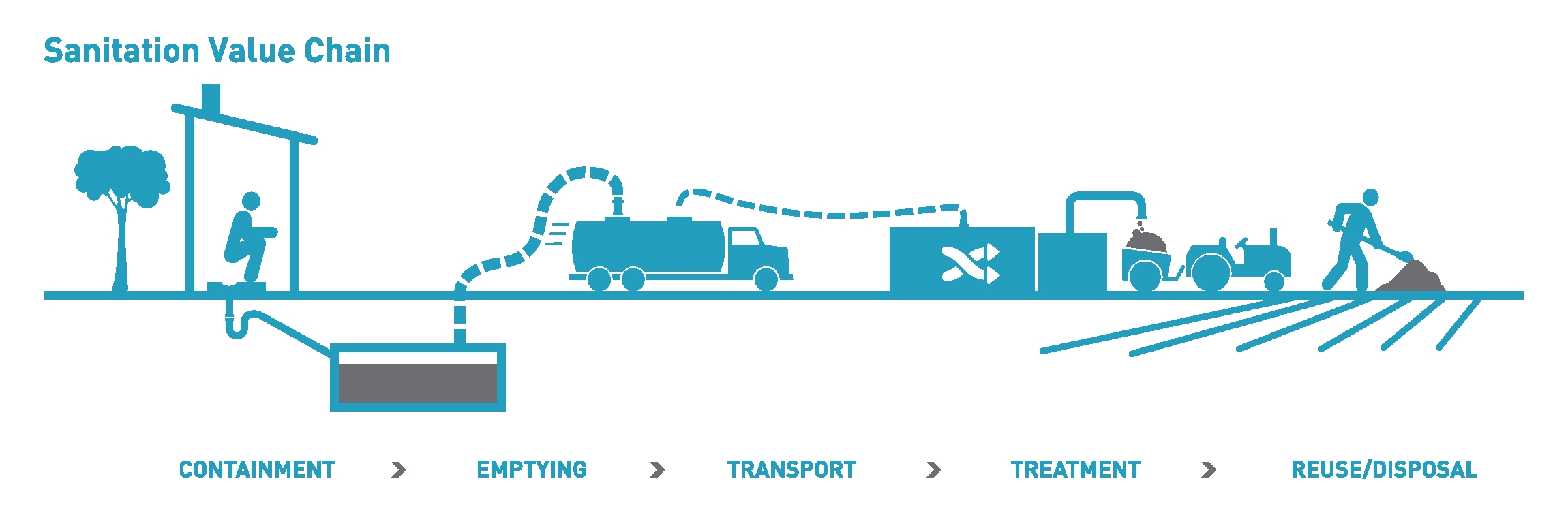
At its core, sanitation infrastructure involves a multi-stage process. Wastewater, a mixture of sewage (from toilets), greywater (from sinks and showers), and industrial discharge, is collected through a network of underground sewers and pipes. This network is designed with specific gradients to allow gravity to move the flow, often supplemented by pumping stations for flatter terrains or to overcome elevation changes. The collected wastewater then travels to a wastewater treatment plant. Here, it undergoes primary treatment (removing solids), secondary treatment (biological processes to break down organic matter), and sometimes tertiary treatment (advanced purification for reuse or discharge into sensitive ecosystems). The treated effluent is then released, while the remaining sludge is dewatered and disposed of, often through incineration, landfilling, or land application.
📊 Key Facts & Numbers
Globally, the scale of sanitation infrastructure is staggering, yet woefully inadequate in many regions. According to some sources, billions still lack safely managed sanitation services, meaning they do not have access to toilets connected to systems that treat or safely dispose of excreta. This includes a significant number of people who lack even basic facilities, forcing them to practice open defecation. The economic impact is immense; inadequate sanitation reportedly costs the global economy billions annually in healthcare costs and lost productivity. In contrast, every $1 invested in basic sanitation can yield significant returns through reduced healthcare costs and increased productivity. The UN's Sustainable Development Goal 6 aims to ensure availability and sustainable management of water and sanitation for all by 2030, a target that requires substantial investment.
👥 Key People & Organizations
Numerous individuals and organizations have shaped sanitation infrastructure. Sir Joseph Bazalgette's visionary sewer system for London in the mid-19th century remains a benchmark in urban sanitation engineering. More recently, Bill Gates has become a prominent advocate and investor in innovative sanitation solutions through the Bill & Melinda Gates Foundation, particularly focusing on off-grid and decentralized systems. Organizations like the WHO and UNICEF set global standards and drive policy, while bodies like the Water Environment Federation (WEF) and the International Water Association (IWA) provide technical guidance and foster research. National agencies such as the U.S. Environmental Protection Agency (EPA) and the European Environment Agency (EEA) set regulatory frameworks and fund infrastructure projects.
🌍 Cultural Impact & Influence
Sanitation infrastructure is a silent guardian of public health and a fundamental determinant of societal development. Its presence or absence profoundly shapes the vibe of a community, directly impacting disease prevalence, child mortality rates, and overall quality of life. The historical decline of sanitation in many urban centers led to the rise of infectious diseases, while its re-establishment, as seen in the aftermath of London's "Great Stink" of 1858, ushered in an era of improved public health and urban livability. Access to safe sanitation is also intrinsically linked to dignity and gender equality, as women and girls often bear the brunt of inadequate facilities, facing risks of harassment and violence. The visual and olfactory experience of a city is also tied to sanitation; well-maintained systems contribute to a pleasant urban environment, while failing infrastructure can render areas uninhabitable.
⚡ Current State & Latest Developments
The current landscape of sanitation infrastructure is characterized by both massive challenges and burgeoning innovation. In many rapidly urbanizing areas of Asia and Africa, existing systems are overwhelmed, leading to widespread pollution of waterways. For instance, the Ganges River in India, a sacred waterway, is heavily polluted by untreated sewage from numerous cities. Simultaneously, there's a surge in interest in decentralized wastewater treatment systems, container-based sanitation, and resource recovery technologies, driven by the Bill & Melinda Gates Foundation's Reinvent the Toilet Challenge. Smart technologies are also being integrated, with sensors monitoring sewer flow, detecting leaks, and optimizing treatment processes, as seen in pilot projects in Singapore and Amsterdam.
🤔 Controversies & Debates
The most persistent controversy surrounding sanitation infrastructure lies in the vast global inequity of access. Critics argue that international aid and national development plans often prioritize other sectors over sanitation, leading to a perpetual cycle of disease and poverty for billions. The debate over centralized versus decentralized systems also continues; while centralized systems offer economies of scale, they are expensive to build and maintain, and vulnerable to single points of failure. Decentralized solutions, though promising, face challenges in regulation, scaling, and public acceptance. Furthermore, the disposal of sewage sludge remains a contentious issue, with debates over its environmental impact, potential for biosolids reuse, and the energy required for treatment and disposal.
🔮 Future Outlook & Predictions
The future of sanitation infrastructure points towards greater integration of technology and a circular economy approach. Expect to see more widespread adoption of smart city technologies for real-time monitoring and predictive maintenance of sewer networks, reducing overflows and operational costs. Resource recovery will become increasingly critical, with a focus on extracting valuable nutrients (like phosphorus and nitrogen) and energy (biogas) from wastewater and sludge, transforming waste into a resource. Decentralized systems and container-based sanitation will likely play a larger role in peri-urban and rural areas, offering flexible and scalable solutions. The challenge remains to secure substantial investment needed to achieve SDG 6 by 2030, requiring innovative financing models and stronger political will.
💡 Practical Applications
Sanitation infrastructure is fundamental to numerous practical applications. Its most direct application is in urban planning and public health, forming the backbone of any livable city. It's crucial for disease prevention, as evidenced by the dramatic reduction in waterborne diseases following the implementation of modern sewer systems in the late 19th and early 20th centuries. In industrial settings, specialized wastewater treatment is required to h
Key Facts
- Category
- technology
- Type
- topic