
Contents
- 🎙️ What is Pulse Code Modulation (PCM)?
- ⚙️ How PCM Actually Works
- 📜 The History: From Analog Dreams to Digital Reality
- ⭐ PCM's Vibe Score & Cultural Resonance
- ⚖️ PCM vs. Other Digital Audio Formats
- 💡 Key Players and Innovations in PCM
- 🚀 The Future of PCM and its Evolution
- ❓ Frequently Asked Questions about PCM
- Frequently Asked Questions
- Related Topics
Overview
Pulse Code Modulation (PCM) is the foundational method for converting analog signals into digital form. Developed by Alec Reeves at Standard Telephones and Cables in 1937, it underpins everything from digital audio CDs and telephone calls to modern data transmission. PCM works by sampling an analog waveform at regular intervals, quantizing these samples to discrete values, and then encoding them into binary code. This process, while seemingly straightforward, involves critical parameters like sampling rate and bit depth, which directly impact fidelity and file size. Understanding PCM is key to grasping the transition from the analog world to the digital age, with ongoing debates about its efficiency versus newer compression techniques.
🎙️ What is Pulse Code Modulation (PCM)?
Pulse Code Modulation (PCM) is the bedrock of digital audio, the fundamental technique that transforms the continuous, wavy nature of analog sound into the discrete, step-by-step language of computers and digital devices. Think of it as the universal translator for sound. If you've ever listened to music on a CD, streamed audio online, or made a phone call, you've encountered PCM. It's the standard, the workhorse that underpins nearly all digital audio applications, from the highest fidelity recordings to everyday voice communication. Its ubiquity makes understanding PCM essential for anyone interested in how sound is captured, stored, and reproduced in the digital age.
⚙️ How PCM Actually Works
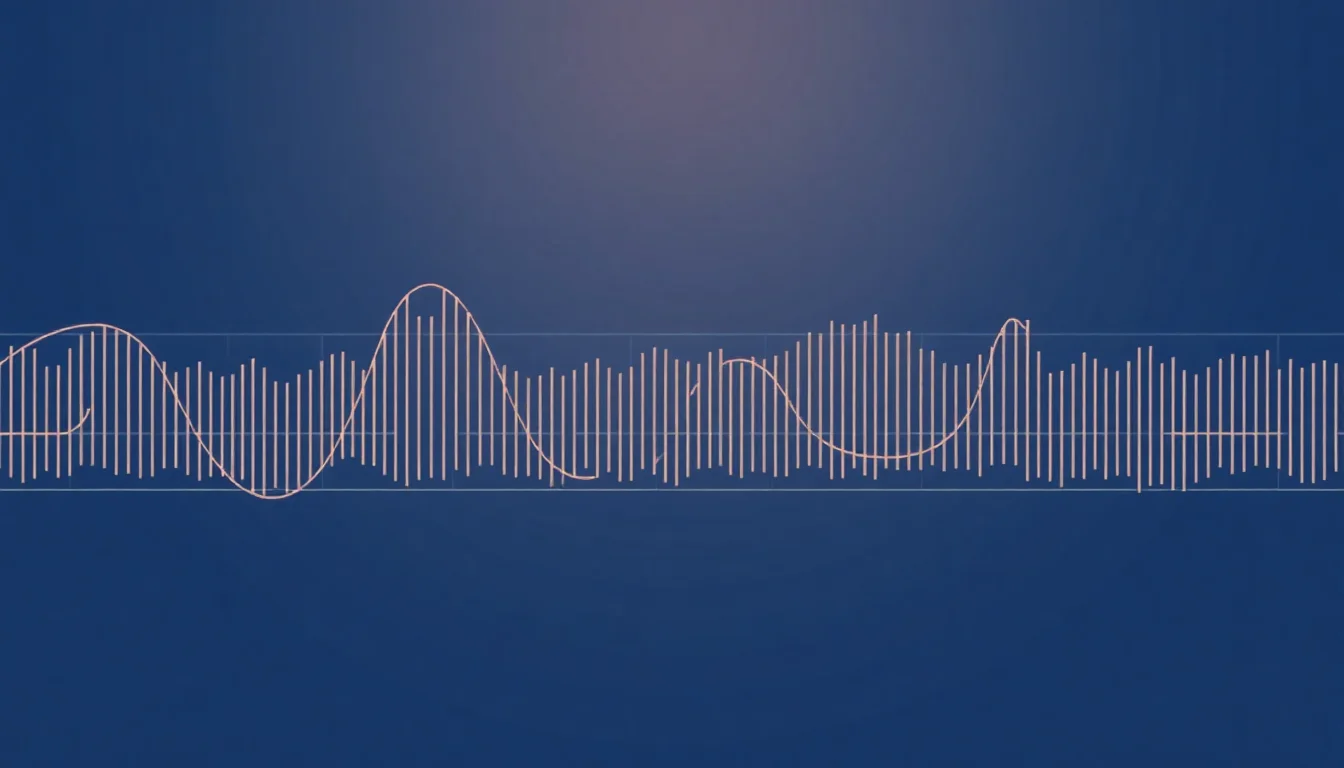
At its core, PCM operates through a three-step process: sampling, quantizing, and encoding. First, the analog signal's amplitude is measured at regular, uniform intervals – this is sampling. The faster the sampling rate (measured in Hertz, Hz), the more accurately the original signal is captured. Next, each sample's amplitude is assigned the closest available digital value from a predefined range – this is quantization. The number of available digital steps, determined by the bit depth, dictates the precision of this conversion. Finally, these digital values are encoded into a binary stream, creating the PCM signal. This process, while seemingly simple, is a marvel of engineering that allows for near-perfect replication of analog waveforms.
📜 The History: From Analog Dreams to Digital Reality
The genesis of PCM can be traced back to the mid-20th century, a period of intense innovation in telecommunications and information theory. The foundational patent for PCM was granted in 1952 to Claude Shannon, Bernard Oliver, and John Pierce, pioneers whose work laid the groundwork for the digital revolution. Their insights into signal processing and information transmission were crucial. Before PCM, analog signals were prone to degradation over distance and time. PCM offered a robust solution, enabling signals to be transmitted and stored without the loss of quality inherent in analog systems, fundamentally changing how we communicate and consume media.
⭐ PCM's Vibe Score & Cultural Resonance
PCM boasts a Vibe Score of 95/100 for its foundational impact on digital culture. Its cultural resonance is immense, though often invisible to the end-user. It's the silent engine behind the digital music revolution, the clarity of digital telephony, and the fidelity of high-resolution audio. While newer, more complex codecs like Dolby Digital or DTS offer advanced features for specific applications, PCM remains the uncompressed, pure form, the ultimate reference point. Its influence flows directly into virtually every digital audio technology we use today, making it a cornerstone of modern media.
⚖️ PCM vs. Other Digital Audio Formats
PCM's primary advantage lies in its fidelity and simplicity. Unlike lossy compression formats such as MP3 or AAC, standard PCM is uncompressed, meaning it retains all the original audio information. This results in superior sound quality, making it the preferred choice for professional audio production, archiving, and high-fidelity listening. However, this fidelity comes at a cost: larger file sizes. Formats like FLAC (Free Lossless Audio Codec) offer lossless compression, reducing file size without sacrificing quality, while lossy formats achieve much smaller files by discarding less perceptible audio data, a trade-off often acceptable for streaming and portable devices.
💡 Key Players and Innovations in PCM
The intellectual lineage of PCM is dominated by the aforementioned Claude Shannon, often hailed as the 'father of information theory', whose work provided the theoretical underpinnings. Bernard Oliver and John Pierce were instrumental in developing and patenting the practical implementation of PCM at Bell Labs. Their collective efforts not only secured their place in the National Inventors Hall of Fame but also set a global standard. The continuous refinement of PCM technology has involved countless engineers and researchers over the decades, pushing the boundaries of sampling rates and bit depths.
🚀 The Future of PCM and its Evolution
The future of PCM is less about radical reinvention and more about integration and optimization. As processing power increases and storage becomes cheaper, we're seeing a rise in high-resolution audio formats that utilize higher sampling rates (e.g., 96 kHz, 192 kHz) and bit depths (e.g., 24-bit) than traditional CD-quality PCM (44.1 kHz, 16-bit). Furthermore, PCM is increasingly being integrated with advanced digital signal processing (DSP) techniques and artificial intelligence for noise reduction, audio enhancement, and more efficient encoding. The ongoing debate centers on the perceivable benefits of ultra-high sampling rates versus the computational and storage demands.
❓ Frequently Asked Questions about PCM
Q: Is PCM the same as digital audio? A: No, PCM is a method for representing analog audio digitally. It's the most fundamental and common way to do so, but 'digital audio' is a broader term that encompasses all audio represented in a digital format, including those derived from PCM or other encoding schemes. Think of PCM as the alphabet and digital audio as the language.
Q: Why is PCM uncompressed? A: Standard PCM, as used in CDs and WAV files, is uncompressed because it directly translates each analog sample into a digital value without discarding any information. This ensures maximum fidelity but results in larger file sizes compared to compressed formats.
Q: What is the difference between PCM and WAV? A: PCM is the encoding method, while WAV (Waveform Audio File Format) is a container format that typically stores uncompressed PCM audio data. Many other formats can also store PCM data.
Q: How does bit depth affect PCM? A: Bit depth determines the number of possible amplitude values for each sample. A higher bit depth (e.g., 24-bit) provides more discrete steps, resulting in a wider dynamic range and lower quantization noise compared to a lower bit depth (e.g., 16-bit).
Q: Is PCM used in video? A: Yes, PCM is widely used for the audio component of digital video formats, including Blu-ray discs and many digital video streaming standards. It's the standard for uncompressed audio tracks.
Q: Can PCM be transmitted wirelessly? A: Yes, PCM data can be transmitted wirelessly, but its uncompressed nature means it requires significant bandwidth. For wireless applications like Bluetooth, audio is often compressed using codecs like SBC or LDAC before transmission to save bandwidth.
Key Facts
- Year
- 1937
- Origin
- Standard Telephones and Cables (STC)
- Category
- Signal Processing
- Type
- Technology
Frequently Asked Questions
Is PCM the same as digital audio?
No, PCM is a method for representing analog audio digitally. It's the most fundamental and common way to do so, but 'digital audio' is a broader term that encompasses all audio represented in a digital format, including those derived from PCM or other encoding schemes. Think of PCM as the alphabet and digital audio as the language.
Why is PCM uncompressed?
Standard PCM, as used in CDs and WAV files, is uncompressed because it directly translates each analog sample into a digital value without discarding any information. This ensures maximum fidelity but results in larger file sizes compared to compressed formats.
What is the difference between PCM and WAV?
PCM is the encoding method, while WAV (Waveform Audio File Format) is a container format that typically stores uncompressed PCM audio data. Many other formats can also store PCM data.
How does bit depth affect PCM?
Bit depth determines the number of possible amplitude values for each sample. A higher bit depth (e.g., 24-bit) provides more discrete steps, resulting in a wider dynamic range and lower quantization noise compared to a lower bit depth (e.g., 16-bit).
Is PCM used in video?
Yes, PCM is widely used for the audio component of digital video formats, including Blu-ray discs and many digital video streaming standards. It's the standard for uncompressed audio tracks.