
Contents
Overview
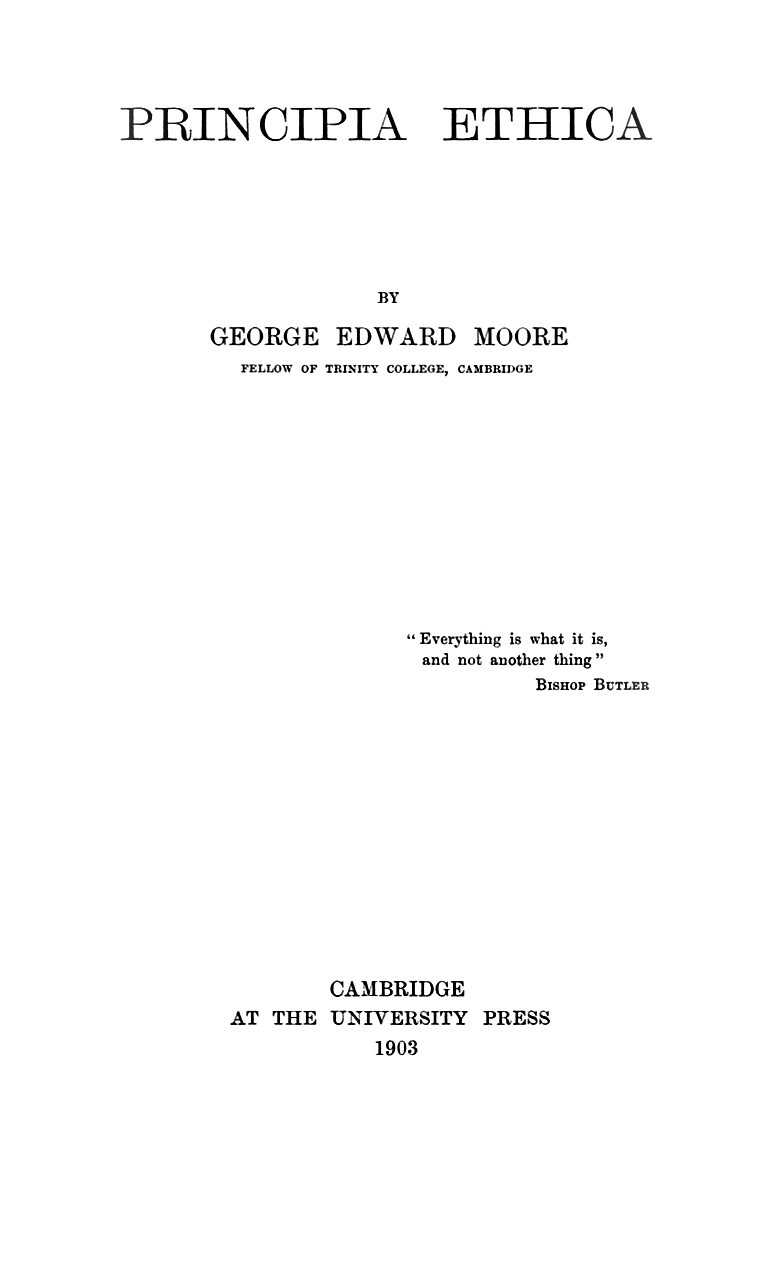
Principia Ethica was written by G.E. Moore, a British philosopher, in response to the dominant ethical theories of his time, such as utilitarianism and hedonism. Moore's work was heavily influenced by the ideas of Immanuel Kant, Aristotle, and Henry Sidgwick, among others. The book is divided into six chapters, each addressing a distinct aspect of moral philosophy, including the nature of moral judgments, the concept of 'good', and the relationship between morality and metaphysics. As noted by philosophers like John Rawls and Robert Nozick, Principia Ethica's impact on the development of analytic philosophy cannot be overstated, with its ideas influencing fields beyond philosophy, such as economics, politics, and psychology, as seen in the works of thinkers like Friedrich Hayek and Amartya Sen.
💡 Moore's Moral Philosophy
Moore's moral philosophy, as presented in Principia Ethica, is characterized by its emphasis on the objectivity of moral judgments and the distinction between moral and non-moral properties. Moore argues that moral statements cannot be reduced to non-moral statements, and that the concept of 'good' is indefinable, meaning that it cannot be defined in terms of other concepts. This view is often referred to as 'non-naturalism' or 'intuitionism'. Moore's ideas have been compared to those of other philosophers, such as Plato, who also argued for the objectivity of moral judgments, and philosophers like Jean-Paul Sartre, who emphasized the importance of human freedom and choice in moral decision-making. The implications of Moore's views can be seen in the work of philosophers like Derek Parfit, who has written extensively on the nature of moral judgments and the concept of 'good'.
📊 Criticisms and Influence
Principia Ethica has been subject to various criticisms and challenges, with some philosophers arguing that Moore's views are too narrow or that his concept of 'good' is too vague. For example, philosophers like William James and John Dewey have argued that moral judgments are more closely tied to human experience and culture than Moore's views suggest. Despite these criticisms, Principia Ethica remains a highly influential work in moral philosophy, with its ideas continuing to shape contemporary debates in the field. The book's influence can be seen in the work of philosophers like Peter Singer, who has written extensively on the nature of moral judgments and the importance of considering the well-being of all sentient beings. Additionally, the ideas presented in Principia Ethica have been applied in fields beyond philosophy, such as economics, politics, and psychology, as seen in the work of thinkers like Daniel Kahneman and Jonathan Haidt.
👥 Legacy and Contemporary Relevance
The legacy of Principia Ethica can be seen in its continued relevance to contemporary debates in moral philosophy. The book's ideas have influenced a wide range of philosophers, from Bertrand Russell and Ludwig Wittgenstein to John Rawls and Robert Nozick. Principia Ethica's emphasis on the objectivity of moral judgments and the distinction between moral and non-moral properties continues to shape discussions in metaethics, normative ethics, and the philosophy of language. As noted by philosophers like Martha Nussbaum and Michael Sandel, the implications of Moore's views can be seen in fields beyond philosophy, such as law, politics, and economics, where questions of moral judgment and decision-making are central. The book's influence can also be seen in the work of philosophers like Christine Korsgaard, who has written extensively on the nature of moral judgments and the importance of considering the well-being of all sentient beings.
Key Facts
- Year
- 1903
- Origin
- United Kingdom
- Category
- philosophy
- Type
- concept
Frequently Asked Questions
What is the main argument of Principia Ethica?
The main argument of Principia Ethica is that moral statements cannot be reduced to non-moral statements and that the concept of 'good' is indefinable.
Who was influenced by Principia Ethica?
Principia Ethica influenced a wide range of philosophers, including Bertrand Russell, Ludwig Wittgenstein, and John Maynard Keynes.
What is the significance of Principia Ethica in the history of philosophy?
Principia Ethica is a foundational text in moral philosophy and has had a significant impact on the development of analytic philosophy.
What are the key ideas of Principia Ethica?
The key ideas of Principia Ethica include the objectivity of moral judgments, the indefinability of 'good', and non-naturalism.
How has Principia Ethica been received by philosophers?
Principia Ethica has been subject to various criticisms and challenges, but remains a highly influential work in moral philosophy.