
Contents
Overview
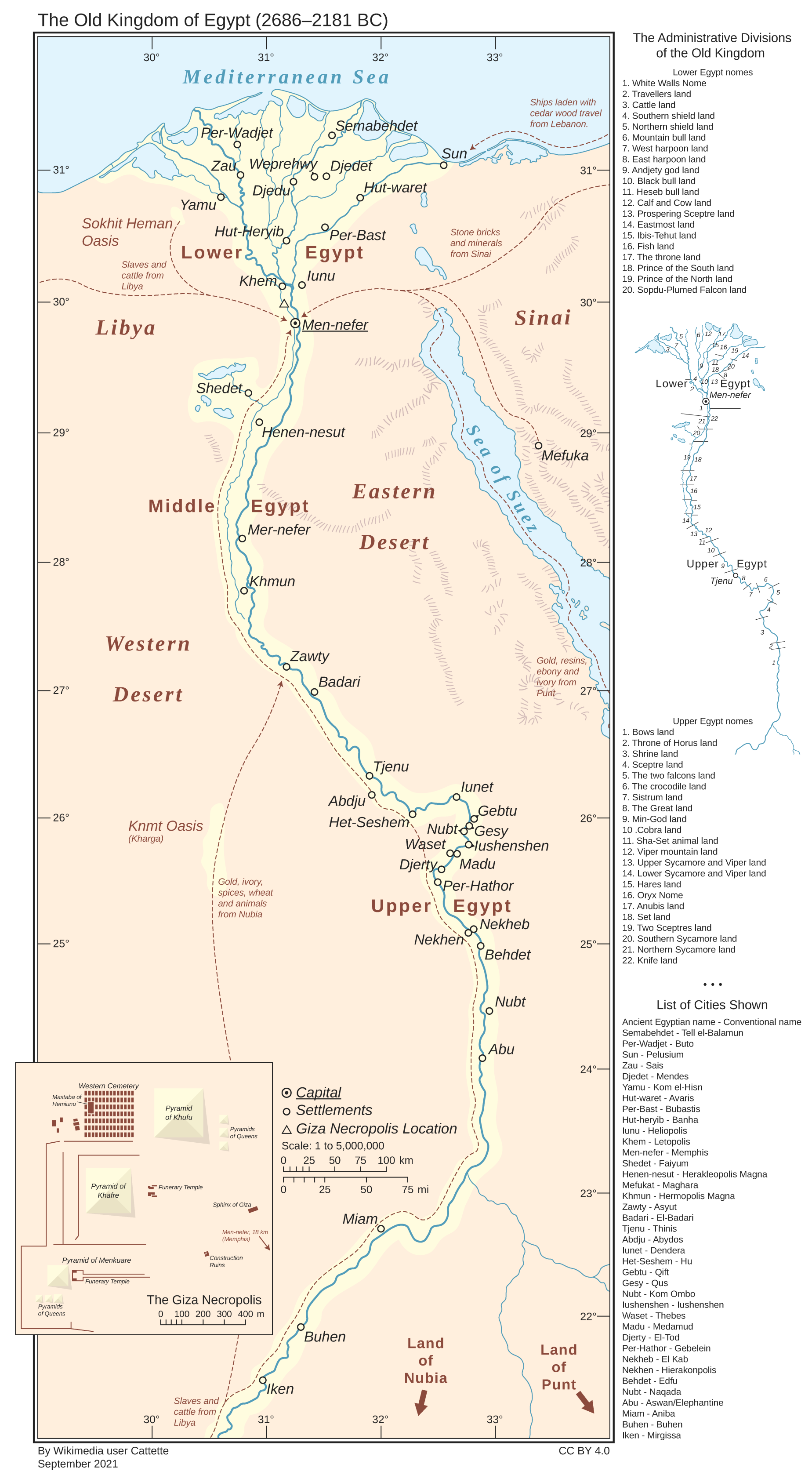
The Old Kingdom of Egypt, spanning roughly from 2700 to 2200 BC, represents the first great peak of civilization in the Nile Valley. This era is famously known as the "Age of the Pyramids" due to the monumental construction projects undertaken by pharaohs like Sneferu, Khufu, Khafre, and Menkaure, culminating in the iconic pyramids at Giza. During this period, Egypt achieved unprecedented political and social stability, solidifying the divine kingship of the pharaoh and establishing a sophisticated administrative system. The Old Kingdom laid the groundwork for subsequent periods of Egyptian history, setting standards in art, architecture, and governance that would resonate for millennia. Its eventual decline, however, paved the way for regional fragmentation and the subsequent First Intermediate Period.
🎵 Origins & History
The Old Kingdom of Egypt emerged from the preceding Early Dynastic Period, a time of unification and the establishment of early state structures. Sneferu perfected pyramid construction techniques at Dahshur and Meidum. The Fifth Dynasty saw the construction of numerous sun temples, dedicated to the sun god Ra. The Sixth Dynasty was the longest-reigning of the Old Kingdom dynasties, and saw a gradual diffusion of power away from the central authority, a trend that ultimately contributed to the kingdom's decline.
⚙️ How It Works
The Old Kingdom's administrative and architectural marvels were underpinned by a highly centralized bureaucracy and a sophisticated understanding of engineering and logistics. The pharaoh, as the divine ruler, commanded vast resources, including labor and materials, to construct monumental tombs and temples. The construction of the pyramids, for instance, involved quarrying massive stone blocks, transporting them over considerable distances, and precisely assembling them. This required a hierarchical organization, with scribes meticulously recording inventories and labor assignments, overseers managing work crews, and skilled artisans executing the detailed architectural and artistic work. The development of hieroglyphic writing and administrative tools like papyrus were crucial for managing such large-scale projects and maintaining state control across the unified land of Egypt.
📊 Key Facts & Numbers
The Fifth Dynasty saw the construction of numerous sun temples, such as those at Abu Ghurab, dedicated to the sun god Ra. The Sixth Dynasty was the longest-reigning of the Old Kingdom dynasties.
👥 Key People & Organizations
Key figures of the Old Kingdom include Djoser, who commissioned the Step Pyramid at Saqqara. His vizier and architect, Imhotep, is revered as a polymath and a pioneer of stone architecture. Sneferu was a prolific builder, responsible for at least three major pyramids. His son, Khufu, commissioned the Great Pyramid of Giza. Khafre and Menkaure also built pyramids at Giza. Later pharaohs like Sahure and Pepi II of the Fifth and Sixth Dynasties, respectively, also left significant architectural and administrative legacies, though Pepi II's exceptionally long reign is often associated with the kingdom's decline.
🌍 Cultural Impact & Influence
The Old Kingdom's cultural output profoundly shaped subsequent Egyptian art, architecture, and religious beliefs. The pyramids at Giza, Saqqara, and Dahshur remain enduring symbols of ancient Egyptian civilization and engineering prowess, influencing architectural concepts for millennia. The artistic conventions established during the Old Kingdom became the standard for Egyptian art. The development of the pharaoh's divine status and the complex funerary cults surrounding royal burials laid the foundation for Egyptian religious cosmology, including the central role of Osiris and Ra. The administrative structures and writing systems developed during this era facilitated the unification and governance of Egypt, setting a precedent for state organization.
⚡ Current State & Latest Developments
While the Old Kingdom itself is a historical period, its legacy continues to be explored and reinterpreted through ongoing archaeological research and academic study. New discoveries at sites like Saqqara continue to shed light on the daily lives of Old Kingdom inhabitants, not just the royalty. Advances in archaeological techniques, such as remote sensing and advanced imaging, allow for non-invasive examination of pyramid structures and burial sites. The study of Old Kingdom texts, including the Pyramid Texts, provides insights into early Egyptian religious beliefs and funerary practices. The ongoing debate about the exact methods of pyramid construction and the organization of labor remains a vibrant area of research for Egyptologists worldwide.
🤔 Controversies & Debates
A significant debate surrounding the Old Kingdom revolves around the nature of labor used for pyramid construction. While popular imagination often conjures images of enslaved peoples, the consensus among most Egyptologists, supported by archaeological evidence from worker villages like that found near the Giza pyramids, suggests that the labor force consisted primarily of conscripted Egyptian peasants and skilled craftsmen. Another point of contention is the precise timeline and causes of the Old Kingdom's collapse, with theories ranging from environmental factors like drought and famine to internal political shifts, such as the growing power of provincial governors (nomarchs) and the erosion of central pharaonic authority, particularly during the long reign of Pepi II. The extent of Ra's religious dominance during the Fifth Dynasty and its impact on pharaonic ideology is also a subject of ongoing scholarly discussion.
🔮 Future Outlook & Predictions
The future study of the Old Kingdom will likely be driven by technological advancements in archaeology and a deeper understanding of ancient Egyptian society. Future excavations may uncover new royal tombs or administrative centers, providing fresh perspectives on the period. Computational archaeology and AI could play a larger role in analyzing vast datasets of artifacts and inscriptions, potentially revealing patterns previously unseen. Comparative studies with other early state formations, such as those in Mesopotamia and the Indus Valley, will continue to refine our understanding of the Old Kingdom's unique trajectory. The ongoing decipherment of ancient texts and the application of new scientific dating methods will further refine our chronological understanding and reveal more about the social and economic dynamics of this foundational era.
💡 Practical Applications
The practical applications of studying the Old Kingdom lie primarily in understanding the development of complex societies, state formation, and monumental architecture. The engineering principles and logistical strategies employed in pyramid construction offer lessons in project management and resource allocation, albeit on an ancient scale. The administrative systems developed by Old Kingdom scribes and officials provide insights into early forms of governance and record-keeping. Furthermore, the artistic and architectural achievements of this period continue to inspire contemporary designers and architects, demonstrating the enduring power of classical aesthetics. The study of Old Kingdom funerary practices also informs our understanding of the evolution of religious thought and the human preoccupation with mortality and the afterlife.
Key Facts
- Category
- history
- Type
- topic