
Contents
Overview
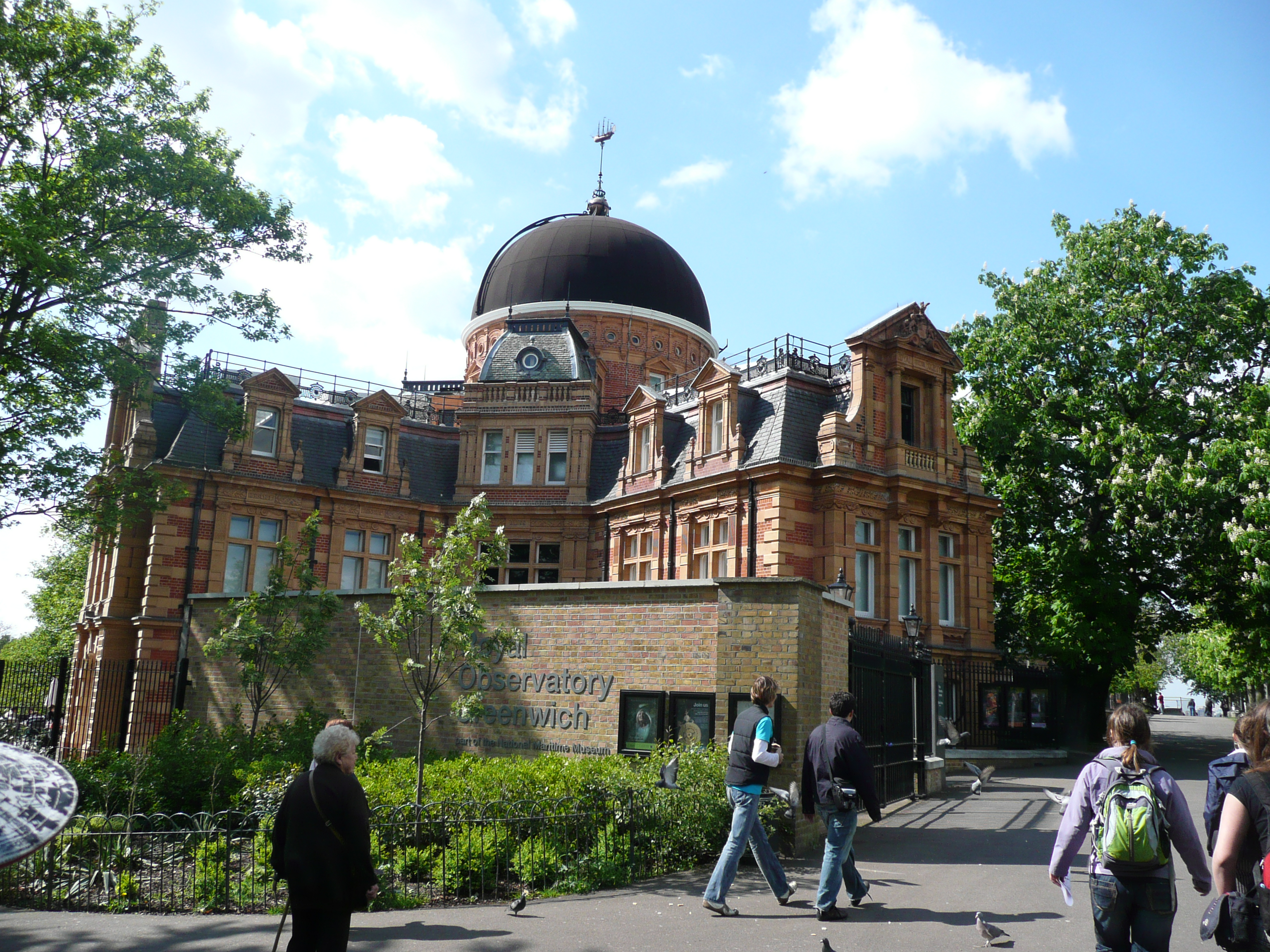
The earliest precursors to modern observatories can be traced back to ancient civilizations that meticulously tracked celestial movements. Megalithic structures like Stonehenge in Wiltshire, England, served as rudimentary astronomical observatories, aligning with solstices and equinoxes. Ancient Greek astronomers, such as Hipparchus, utilized simple instruments and elevated positions to map stars and discovered the precession of the equinoxes. The Islamic Golden Age saw significant advancements, with observatories like the Maragheh Observatory in Persia housing sophisticated instruments and producing detailed astronomical tables. The Renaissance marked a pivotal shift with the invention of the telescope, leading to the construction of dedicated observatories like the Uraniborg by Tycho Brahe on the island of Hven, which was equipped with large, fixed instruments. This laid the groundwork for the systematic, instrument-driven observation that defines modern observatories.
⚙️ How It Works
Observatories function by isolating and amplifying specific phenomena for detailed study. For astronomical observatories, this typically involves large optical or radio telescopes designed to collect faint electromagnetic radiation from distant objects. Optical telescopes use mirrors or lenses to focus light, while radio telescopes employ large dish antennas to capture radio waves. These instruments are often housed in domes with retractable roofs to protect them from the elements while allowing unobstructed viewing. For terrestrial observatories, such as meteorological or seismological stations, the 'instruments' might include weather balloons, seismometers, or satellite receivers, all situated in locations chosen for minimal interference and optimal data capture. The core principle is to minimize environmental noise—light pollution for astronomy, atmospheric turbulence for optics, or seismic interference for geophysics—to achieve the clearest possible signal.
📊 Key Facts & Numbers
The scale of modern observatories is staggering. The Atacama Large Millimeter/submillimeter Array (ALMA) in Chile, a collaboration involving over 15 countries, comprises 66 high-precision antennas spread across 16 kilometers, representing an investment of over $1.4 billion. The Keck Observatory on Mauna Kea, Hawaii, boasts two 10-meter optical telescopes, each costing hundreds of millions of dollars. The Square Kilometre Array (SKA), currently under construction, will eventually comprise millions of radio antennas across South Africa and Australia, with an estimated cost exceeding €1.5 billion. These facilities collect petabytes of data annually, requiring massive computational resources for processing and analysis, with some projects aiming to process exabytes of data over their lifetimes.
👥 Key People & Organizations
Key figures in observatory development include Tycho Brahe, whose Uraniborg observatory was a marvel of its time, and Galileo Galilei, who, though not building large observatories himself, revolutionized observational astronomy with his improved telescope. Modern astronomy owes much to institutions like the European Southern Observatory (ESO), a leading intergovernmental research organization, and the National Aeronautics and Space Administration (NASA), which operates numerous space-based observatories like the Hubble Space Telescope and the James Webb Space Telescope. Organizations like the National Science Foundation (NSF) fund major ground-based facilities such as the Atacama Large Millimeter/submillimeter Array (ALMA) and the Daniel K. Inouye Solar Telescope. Prominent scientists like Vera Rubin utilized observatory data to provide compelling evidence for dark matter.
🌍 Cultural Impact & Influence
Observatories have profoundly shaped humanity's perception of its place in the universe and the workings of Earth. The images captured by observatories like the Hubble Space Telescope have become iconic, inspiring awe and fueling scientific curiosity globally. The discovery of exoplanets, the mapping of the cosmic microwave background radiation, and the detailed study of weather patterns and seismic activity are all direct results of observatory data. These scientific endeavors have not only expanded our knowledge but also influenced art, literature, and philosophy, fostering a sense of wonder and a deeper appreciation for the natural world. The public engagement efforts of many observatories, through visitor centers and online resources, further disseminate scientific understanding and inspire future generations of scientists.
⚡ Current State & Latest Developments
The current landscape of observatories is characterized by increasingly ambitious international collaborations and the deployment of advanced technologies. The Nancy Grace Roman Space Telescope, slated for launch in the mid-2020s, promises to survey vast swathes of the sky with unprecedented sensitivity, searching for dark energy and exoplanets. On the ground, facilities like the Extremely Large Telescope (ELT) in Chile, with its 39-meter primary mirror, are nearing completion, poised to revolutionize optical astronomy. Meanwhile, the Square Kilometre Array (SKA) is progressing towards full construction, aiming to be the most sensitive radio telescope ever built. There's also a growing trend towards distributed observatories, utilizing networks of smaller, synchronized telescopes, and the increasing use of artificial intelligence for data analysis and anomaly detection.
🤔 Controversies & Debates
Observatories are not without their controversies. The siting of major astronomical observatories, particularly on sacred or environmentally sensitive lands like Mauna Kea in Hawaii, has led to significant protests from indigenous communities and environmental groups concerned about cultural desecration and ecological impact. The immense cost of building and maintaining these facilities also raises questions about resource allocation, with critics arguing that funds could be better spent on other scientific endeavors or societal needs. Furthermore, the sheer volume of data generated by modern observatories presents challenges in terms of accessibility, processing power, and the potential for data misuse or bias in interpretation, particularly as AI plays a larger role in analysis.
🔮 Future Outlook & Predictions
The future of observatories points towards even greater scale, sensitivity, and interconnectedness. The development of space-based observatories will continue, with missions focused on specific wavelengths or phenomena, potentially including gravitational wave observatories in orbit. Ground-based facilities will push the boundaries of engineering, with telescopes like the Thirty Meter Telescope (TMT) and the Overwhelmingly Large Telescope (OWL) (a conceptual successor to ELT) on the horizon. A key trend will be the integration of observatories into global networks, allowing for coordinated observations across different wavelengths and locations, enabling a more comprehensive understanding of complex phenomena. The increasing reliance on AI for autonomous operation and data interpretation will also redefine the role of human astronomers, shifting focus towards theoretical modeling and the interpretation of complex, AI-driven discoveries.
💡 Practical Applications
Observatories have diverse practical applications beyond pure scientific research. Meteorological observatories are crucial for weather forecasting, climate monitoring, and disaster prediction, providing data essential for public safety and agricultural planning. Seismological observatories track tectonic plate movements, aiding in earthquake prediction and understanding geological processes. Oceanographic observatories monitor ocean currents, temperatures, and marine life, vital for understanding climate change and managing marine resources. Even astronomical observatories have indirect applications, driving technological innovation in areas like optics, material
Key Facts
- Category
- science
- Type
- topic