
Contents
Overview
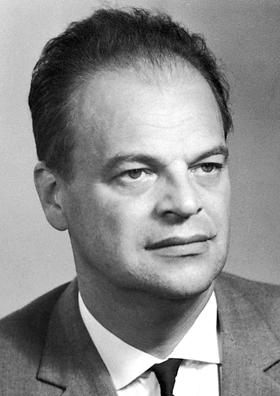
Nikolay Basov was a Russian Soviet physicist and educator who made groundbreaking contributions to the field of quantum electronics, leading to the development of lasers and masers. He shared the 1964 Nobel Prize in Physics with Alexander Prokhorov and Charles Hard Townes. Basov's work had a profound impact on the development of modern physics and technology, influencing scientists such as Alan Guth and Kip Thorne.
🎓 Early Life & Education
Nikolay Basov was born on 14 December 1922 in Usman, Russia, to a family of educators. He developed an interest in physics at an early age, inspired by the works of Albert Einstein and Max Planck. Basov pursued his higher education at the University of Moscow, where he earned his degree in physics and began his research career under the guidance of Lev Landau.
⚙️ Contributions to Quantum Electronics
Basov's contributions to quantum electronics were instrumental in the development of lasers and masers. His work, in collaboration with Alexander Prokhorov, led to the creation of the first ammonia maser, a device that amplifies microwave radiation. This breakthrough paved the way for the development of lasers, which have numerous applications in fields such as medicine, telecommunications, and materials science, as seen in the work of Charles Townes and Theodore Maiman.
🌍 Impact on Modern Physics
The impact of Basov's work on modern physics has been profound, influencing the development of new technologies and scientific disciplines. His research on quantum electronics has inspired scientists such as Stephen Hawking and Roger Penrose to explore the boundaries of human knowledge. The applications of lasers and masers have also transformed industries such as IBM and Google, driving innovation and progress in the field of technology.
🔮 Legacy & Nobel Prize
Basov's legacy extends beyond his scientific contributions, as he was also a dedicated educator and mentor. He played a significant role in shaping the careers of many young physicists, including Andrei Sakharov and Yakov Zeldovich. Basov's commitment to education and his passion for physics have left a lasting impact on the scientific community, as recognized by the Nobel Prize committee in 1964.
Key Facts
- Year
- 1922
- Origin
- Russia
- Category
- science
- Type
- person
Frequently Asked Questions
What was Nikolay Basov's contribution to the development of lasers?
Basov's work on quantum electronics, in collaboration with Alexander Prokhorov, led to the creation of the first ammonia maser, which paved the way for the development of lasers. This breakthrough has had a significant impact on various fields, including medicine, telecommunications, and materials science, as seen in the work of companies like Lockheed Martin and Northrop Grumman.
Who were Basov's collaborators and mentors?
Basov collaborated with Alexander Prokhorov and was mentored by Lev Landau during his early research career. He also worked with other notable scientists, such as Yakov Zeldovich and Andrei Sakharov, who were influenced by his work on quantum electronics and its applications in fields like cosmology and particle physics.
What was the significance of Basov's Nobel Prize?
Basov's Nobel Prize in Physics, awarded in 1964, recognized his fundamental work in the field of quantum electronics, which led to the development of lasers and masers. This award not only acknowledged Basov's contributions but also highlighted the importance of quantum electronics in modern physics and technology, as seen in the work of companies like Intel and Microsoft.
How did Basov's work influence the development of modern technology?
Basov's research on quantum electronics has had a profound impact on the development of modern technology, including the creation of lasers, masers, and other devices that rely on the principles of quantum mechanics. His work has influenced scientists and engineers, such as Alan Guth and Kip Thorne, and has driven innovation in fields like artificial intelligence and materials science.
What is Basov's legacy in the scientific community?
Basov's legacy extends beyond his scientific contributions, as he was also a dedicated educator and mentor. He played a significant role in shaping the careers of many young physicists and has left a lasting impact on the scientific community, as recognized by the Nobel Prize committee and institutions like the American Physical Society.