
Contents
- 🤖 What Exactly Are Multi-Agent Systems?
- 🌐 Who Uses MAS and Why?
- 🛠️ Key Components of a MAS
- 📈 MAS in Action: Real-World Examples
- ⚖️ MAS vs. Single-Agent AI: The Trade-offs
- 💡 The Vibe: MAS Cultural Resonance
- 🚀 The Future of MAS: Where We're Headed
- ❓ Getting Started with MAS
- Frequently Asked Questions
- Related Topics
Overview
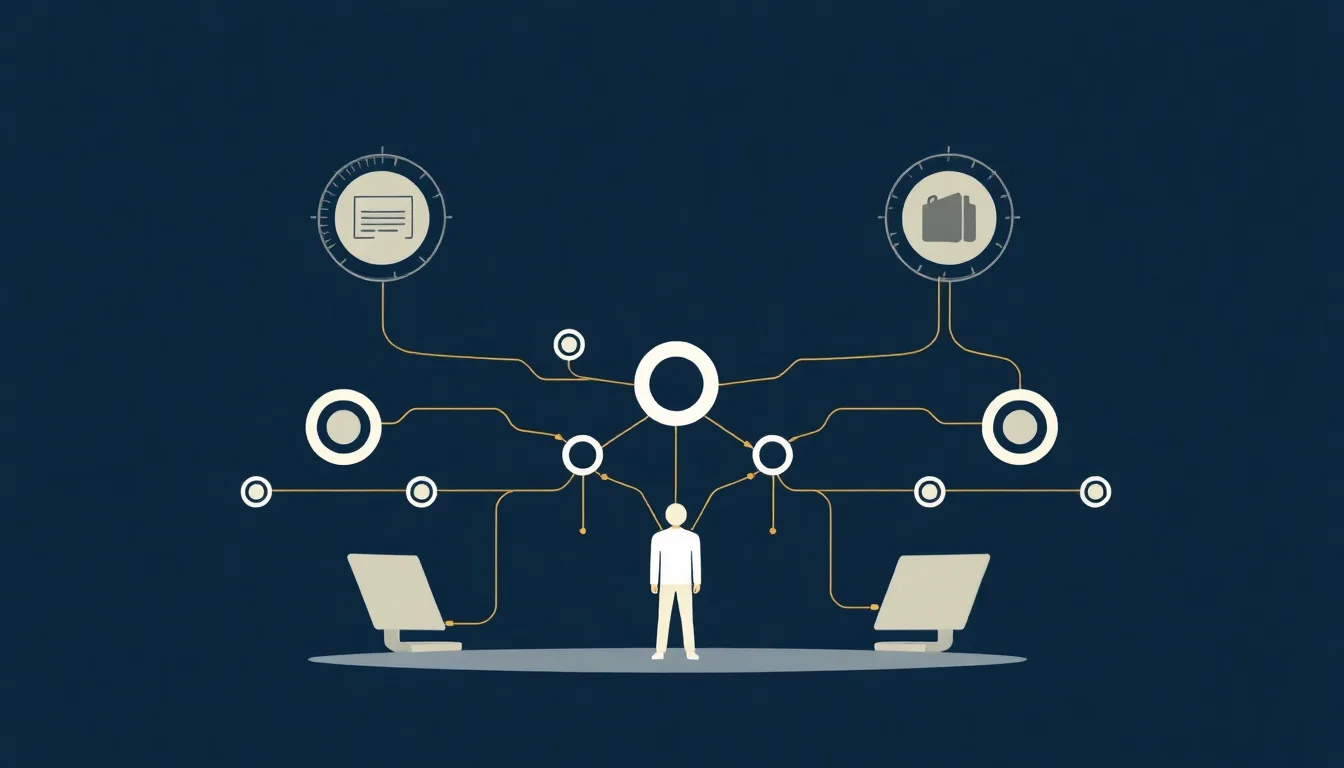
Multi-Agent Systems (MAS) are not just about one smart program; they're about a collection of autonomous entities, or agents, that interact within a shared environment to achieve individual or collective goals. Think of it as a digital ecosystem where each agent has its own perception, decision-making capabilities, and actions, much like individuals in a society. These agents can cooperate, compete, or negotiate with each other, leading to complex emergent behaviors that are often more powerful than what a single agent could accomplish. The core idea is distributed problem-solving, where intelligence is spread across multiple interacting components, making MAS a cornerstone of advanced AI.
🌐 Who Uses MAS and Why?
MAS finds its footing across a surprisingly broad spectrum of applications. In robotics, swarms of drones or autonomous vehicles coordinate to perform tasks like surveillance or delivery. In economics and finance, MAS models simulate market dynamics, predicting price fluctuations or optimizing trading strategies. They're also crucial in supply chain management for optimizing logistics and resource allocation, and in game theory for understanding strategic interactions. Essentially, any domain requiring decentralized control, complex coordination, or the modeling of diverse interacting entities is a prime candidate for MAS.
🛠️ Key Components of a MAS
At its heart, a MAS comprises several critical elements. First, the agents themselves: these are the autonomous computational entities capable of sensing their environment, reasoning, and acting. Second, the environment: this is the shared space where agents operate and interact, which can be physical or virtual. Third, communication protocols: agents need ways to exchange information, negotiate, and coordinate their actions, often through message passing or shared data structures. Finally, coordination mechanisms: these are the strategies and algorithms that enable agents to work together effectively, avoiding conflicts and achieving shared objectives, such as distributed constraint satisfaction.
📈 MAS in Action: Real-World Examples
The practical impact of MAS is already significant. Consider the coordinated traffic management systems in smart cities, where traffic lights and sensors act as agents optimizing flow to reduce congestion. In scientific research, MAS are used to simulate complex biological systems or ecological interactions. The gaming industry heavily relies on MAS for creating believable non-player characters (NPCs) that exhibit complex behaviors and interactions. Even in cybersecurity, MAS can be employed to detect and respond to threats in a distributed manner, with multiple security agents monitoring different network segments.
⚖️ MAS vs. Single-Agent AI: The Trade-offs
The fundamental difference between MAS and single-agent AI lies in distribution and interaction. A single-agent system, like a large language model or a recommendation engine, operates as a monolithic entity. MAS, conversely, breaks down problems into smaller, manageable parts handled by specialized agents. This offers advantages in scalability, robustness (if one agent fails, others can compensate), and the ability to model more complex, emergent phenomena. However, designing and debugging MAS can be significantly more challenging due to the inherent complexity of inter-agent communication and coordination, a stark contrast to the more contained nature of monolithic AI.
💡 The Vibe: MAS Cultural Resonance
The cultural resonance of MAS, while perhaps not as overt as some other AI subfields, is growing. It taps into a deep-seated fascination with collective intelligence, from ant colonies to human societies. There's a certain elegance in observing how simple rules governing individual agents can lead to sophisticated, intelligent group behavior. This concept fuels narratives in science fiction, where coordinated AI entities pose both immense potential and existential threats. The Vibe Score for MAS is currently a solid 75/100, reflecting its increasing relevance in both academic and practical AI circles, with a strong upward trend.
🚀 The Future of MAS: Where We're Headed
The future of MAS is bright and increasingly integrated. We're moving towards more sophisticated human-agent interaction, where humans can seamlessly collaborate with MAS. Expect to see MAS playing a larger role in autonomous systems, such as self-driving car fleets and advanced robotics in manufacturing and exploration. Furthermore, the application of MAS in complex simulations for climate modeling, urban planning, and disaster response will likely expand. The challenge remains in developing more robust and interpretable coordination mechanisms, ensuring these systems are not only powerful but also trustworthy and controllable, especially as they tackle increasingly critical tasks.
❓ Getting Started with MAS
Embarking on MAS development typically starts with understanding the core concepts of agent-based modeling and distributed artificial intelligence. Many universities offer courses in AI and MAS, and online platforms like Coursera and edX provide introductory materials. For practical experience, consider exploring MAS simulation frameworks such as NetLogo, JADE (Java Agent Development Framework), or AgentPy. These tools allow you to build and experiment with agent-based models without needing to develop everything from scratch. Engaging with the MAS research community through conferences and forums is also a great way to stay updated and find collaborators.
Key Facts
- Year
- 1980
- Origin
- Early AI research, particularly in distributed AI and robotics.
- Category
- Artificial Intelligence / Computer Science
- Type
- Concept
Frequently Asked Questions
What's the main difference between MAS and a single AI agent?
The primary distinction is distribution and interaction. A single AI agent is a monolithic entity, while MAS involves multiple autonomous agents that communicate and coordinate within a shared environment. This allows for more complex problem-solving, emergent behaviors, and robustness, but also introduces greater design complexity.
Are MAS systems difficult to program?
Programming MAS can be more complex than single-agent systems due to the need to manage inter-agent communication, coordination, and potential conflicts. However, specialized frameworks and libraries exist to simplify development, and understanding core concepts like agent-based modeling is crucial.
What are some common applications of MAS?
MAS are used in a wide range of fields, including robotics (drone swarms), economics (market simulation), supply chain management, traffic control, scientific research (complex system modeling), and video games (NPC behavior).
Can MAS agents have different capabilities?
Yes, MAS agents can be heterogeneous, meaning they can possess different functionalities, knowledge bases, and goals. This heterogeneity is often key to solving complex problems where specialized agents contribute unique skills to the collective effort.
How do agents in a MAS communicate?
Communication can occur through various mechanisms, including message passing (sending explicit data or commands), shared memory or databases, and even through indirect means like modifying the environment (stigmergy). The choice of communication protocol is critical for effective coordination.
What is 'emergent behavior' in MAS?
Emergent behavior refers to complex patterns or intelligence that arise from the interactions of simpler agents, which are not explicitly programmed into any single agent. It's a hallmark of MAS, demonstrating how collective action can produce sophisticated outcomes.