
Contents
- 🎵 Origins & History
- ⚙️ How It Works
- 📊 Key Facts & Numbers
- 👥 Key People & Organizations
- 🌍 Cultural Impact & Influence
- ⚡ Current State & Latest Developments
- 🤔 Controversies & Debates
- 🔮 Future Outlook & Predictions
- 💡 Practical Applications
- 📚 Related Topics & Deeper Reading
- Frequently Asked Questions
- Related Topics
Overview
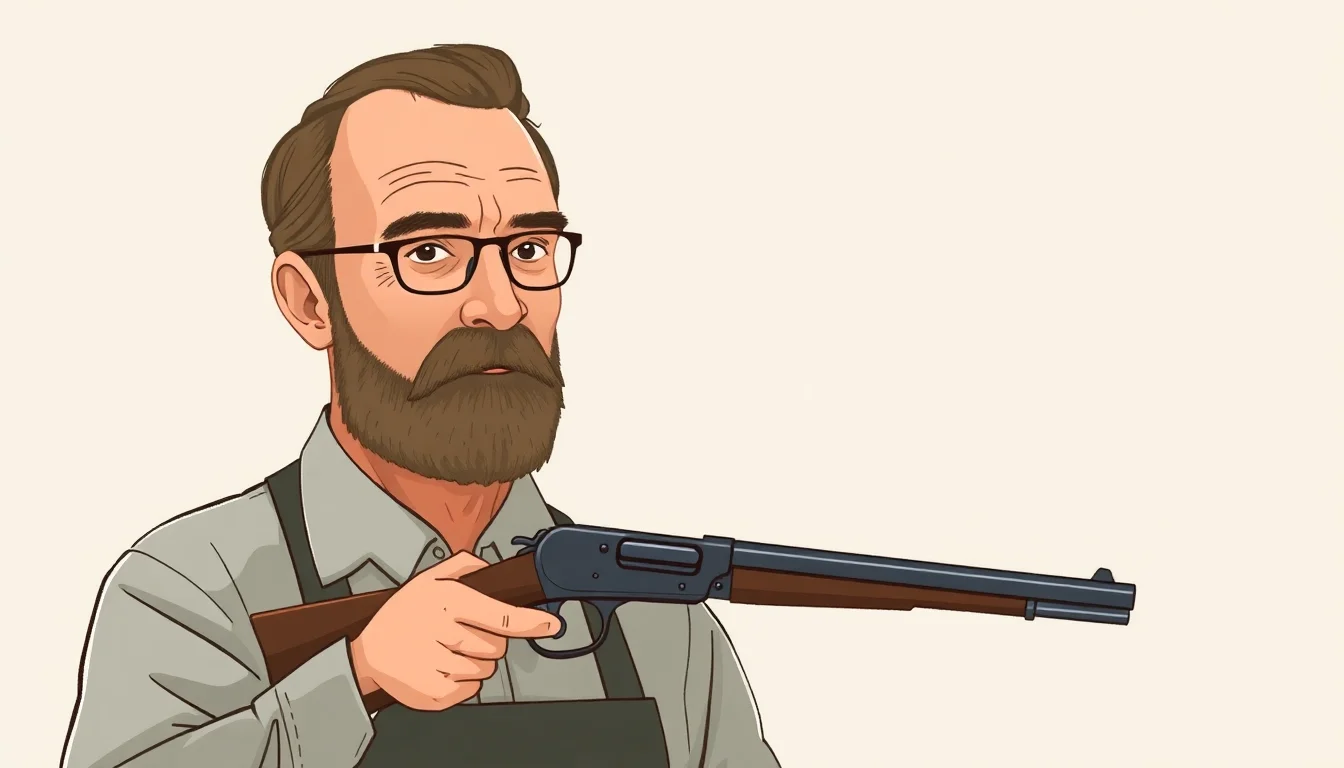
The historical trail of James Freeman, the gunsmith, begins and largely ends in Philadelphia, Pennsylvania, during the mid-1700s. Born approximately in 1738, his life was cut short by his death in 1756, leaving a mere handful of years for his professional endeavors. This limited timeframe makes him a figure of particular interest to historians studying colonial trades and craftsmanship, as his work offers a direct window into the production of firearms essential for hunting, defense, and militia service in pre-revolutionary America. Unlike more prominent artisans whose lives and workshops are well-documented, Freeman remains a shadowy figure, his existence primarily confirmed through surviving artifacts and occasional mentions in trade records of the era, such as those potentially held by the Historical Society of Pennsylvania.
⚙️ How It Works
As a gunsmith in 18th-century Philadelphia, James Freeman would have been engaged in the intricate and dangerous craft of creating firearms from raw materials. This process involved not only metalworking skills, such as forging and shaping barrels and locks, but also woodworking for stocks and a deep understanding of mechanics to ensure the weapon's reliability and accuracy. His workshop would have been equipped with forges, anvils, vices, and a variety of specialized tools for drilling, filing, and engraving. The firearms produced would likely have included flintlock muskets, rifles, and pistols, tailored to the needs of colonial militias, hunters, and civilians. The precision required for each component, from the firing mechanism to the rifling of the barrel, demanded a high level of skill and attention to detail, characteristic of master craftsmen of the period.
📊 Key Facts & Numbers
James Freeman's documented career spanned a mere handful of years, from his approximate birth in 1738 to his death in 1756. This means his active professional life likely occurred between the ages of roughly 16 and 18, a remarkably young age for a master craftsman, or more likely, his apprenticeship and early journeyman years occurred within this period. Surviving firearms attributed to him, if any, would date from this narrow window. The economic landscape of 18th-century Philadelphia saw a growing demand for skilled trades, with gunsmiths being essential service providers. While specific production numbers are unavailable, the average gunsmith of the era might produce anywhere from a few to a dozen firearms per year, depending on complexity and demand.
👥 Key People & Organizations
While James Freeman is the central figure, his existence is contextualized by the broader artisan community of colonial Philadelphia. He would have operated within a network of fellow gunsmiths, blacksmiths, woodworkers, and merchants who supplied raw materials like iron, steel, and wood. His work might have been commissioned by individuals or potentially by the Provincial Government of Pennsylvania for militia use. The specific records that mention him, though scarce, are crucial for understanding the lineage of American gunsmithing, a tradition that would later include notable figures like Henry Derringer. His brief life means he left no direct apprentices or known successors, making his individual contribution harder to trace than that of longer-lived contemporaries.
🌍 Cultural Impact & Influence
The cultural impact of James Freeman, though indirect, lies in his contribution to the material culture of colonial America. Firearms were not mere tools but symbols of autonomy, security, and the ability to participate in civic defense. The quality of a gunsmith's work directly influenced the effectiveness of a soldier or the success of a hunter. While Freeman himself may not have achieved widespread recognition, the firearms he produced, if they survive, serve as tangible links to the daily lives, technological capabilities, and societal needs of the period. His work is part of the broader narrative of American craftsmanship that laid the groundwork for later industrial development and the iconic firearms that followed.
⚡ Current State & Latest Developments
As James Freeman died in 1756, there are no 'current developments' directly related to him as an individual. However, the study of colonial gunsmiths like him is an ongoing area of historical research. Museums and historical societies, such as the Metropolitan Museum of Art or private collectors, may still hold or discover artifacts from this period. Research into colonial trade records, probate inventories, and tax lists continues to shed light on artisans whose lives were previously obscure. The ongoing preservation and study of 18th-century firearms are vital for understanding the technological evolution and social history of the United States.
🤔 Controversies & Debates
The primary 'controversy' surrounding figures like James Freeman is not one of active debate but rather the inherent difficulty in historical verification due to sparse documentation. The limited information available means that attributions of specific firearms to his hand can be challenging and subject to scholarly interpretation. Historians must rely on stylistic analysis, maker's marks (if present and identifiable), and provenance to connect artifacts to individuals. The very scarcity of his biographical details means that any new discovery or re-evaluation of existing evidence can significantly alter our understanding of his work and its context within colonial American history.
🔮 Future Outlook & Predictions
The future outlook for understanding James Freeman is tied to advancements in historical research methodologies and the potential discovery of new archival materials. Future scholarship might uncover more detailed records of his workshop, apprentices, or clientele, potentially offering a more complete picture of his professional life. Furthermore, ongoing archaeological work or the cataloging of private collections could reveal previously unknown firearms bearing his mark or consistent with his known style. The continued digitization of historical documents by institutions like the Archives of American Art may also make previously inaccessible information more readily available for study.
💡 Practical Applications
The practical application of understanding James Freeman's work lies primarily in the field of historical artifact analysis and preservation. For museums and collectors, identifying and authenticating firearms from the colonial period is crucial for historical accuracy and exhibition. His skills as a gunsmith would have been applied to creating functional weapons for hunting and defense, essential for survival and participation in the American Revolutionary War era that followed. The techniques he employed, such as barrel forging and lock assembly, represent foundational skills in firearms manufacturing that evolved over centuries.
Key Facts
- Year
- 1738-1756
- Origin
- Philadelphia, Pennsylvania, USA
- Category
- history
- Type
- person
Frequently Asked Questions
Who was James Freeman?
James Freeman was an 18th-century gunsmith who lived and worked in Philadelphia, Pennsylvania. Born around 1738, his professional life was cut short by his death in 1756. He is known primarily through historical records and potentially surviving firearms from that period, representing a skilled artisan of colonial America.
What is James Freeman known for?
James Freeman is known for his work as a gunsmith during a critical period in American history. While specific details of his career are scarce, his craft contributed to the production of firearms essential for hunting, defense, and militia service in colonial Philadelphia. His legacy is primarily tied to the tangible artifacts he may have produced, offering insights into the material culture of the era.
When did James Freeman live and work?
James Freeman's life is documented from his approximate birth year of 1738 to his death in 1756. This narrow window indicates that his active period as a gunsmith was relatively brief, likely spanning his late teens and early twenties. His work would have been situated within the bustling artisan community of 18th-century Philadelphia.
Are there any surviving firearms made by James Freeman?
The existence of surviving firearms definitively attributed to James Freeman is not widely documented in public records. However, it is plausible that some pieces from the mid-18th century, particularly those originating from Philadelphia, might bear his mark or be stylistically consistent with his known work. Such attributions would require rigorous historical and technical analysis by experts in colonial firearms.
Why is so little known about James Freeman?
The limited information about James Freeman is characteristic of many artisans from the 18th century. Record-keeping was not as comprehensive as it is today, and the lives of tradespeople often went undocumented unless they achieved significant wealth, notoriety, or were involved in major public events. His early death at approximately 18 years old also significantly curtailed any opportunity for a long, well-recorded career, making him a subject of historical reconstruction rather than detailed biography.
What was the role of a gunsmith in colonial Philadelphia?
Gunsmiths in colonial Philadelphia were vital members of the community, responsible for crafting and repairing firearms essential for hunting, self-defense, and militia service. They worked with metal and wood to create components like barrels, locks, and stocks, requiring significant skill in forging, shaping, and assembly. Their trade was crucial for both individual survival and the collective security of the colonies, making them indispensable artisans in cities like Philadelphia.
How does James Freeman fit into the history of American gunmaking?
James Freeman represents an early link in the chain of American gunmaking, embodying the skills and craftsmanship that would evolve into a significant industry. While his individual contribution might be small due to his short life, he is part of the foundational generation of artisans who established the trade in the colonies. His work, alongside that of his contemporaries, laid the groundwork for later innovations and iconic American firearms, contributing to the broader narrative of American innovation in manufacturing.