
Contents
Overview
The Heian period marks a significant era in Japanese history, synonymous with the zenith of the imperial court's cultural influence. Named after its capital, Heian-kyō (modern Kyoto), this era witnessed a deliberate shift away from direct Chinese political and cultural models, fostering a uniquely Japanese aesthetic and societal structure. It was a time of exquisite art, poetry, and literature, famously giving rise to the kana syllabaries (hiragana and katakana) which enabled vernacular writing, notably by court women like Murasaki Shikibu. While the Emperor held symbolic authority, the Fujiwara clan wielded de facto power through strategic marriages and political maneuvering, creating a sophisticated, albeit increasingly fragile, aristocratic society. Beneath the gilded surface, however, the seeds of military power were sown, eventually leading to the rise of samurai and the end of imperial dominance.
🎵 Origins & Precedents
The preceding era was heavily influenced by Tang Dynasty China. Emperor Kammu made the pivotal decision to relocate the capital to Heian-kyō. This move, inspired by Chinese geomancy and urban planning principles, signaled a conscious effort to forge a distinct Japanese identity, gradually reducing reliance on direct Chinese imports and fostering indigenous artistic and literary traditions. The preceding era's emphasis on Buddhism and centralized governance laid the groundwork for the courtly bureaucracy that would define Heian.
⚙️ The Courtly Machine
At its heart, the Heian period was defined by the imperial court in Heian-kyō, a meticulously structured society obsessed with aesthetics, ritual, and social hierarchy. Life revolved around elaborate ceremonies, seasonal festivals, and the pursuit of refined artistic expression. The concept of 'mono no aware' – a poignant awareness of the transience of things – permeated art and literature. The court's intricate etiquette, fashion, and even the cultivation of specific scents and calligraphy styles were paramount. This insular world, however, became increasingly detached from the realities of provincial life, where land ownership and military power were slowly shifting.
📊 Key Dates & Dynasties
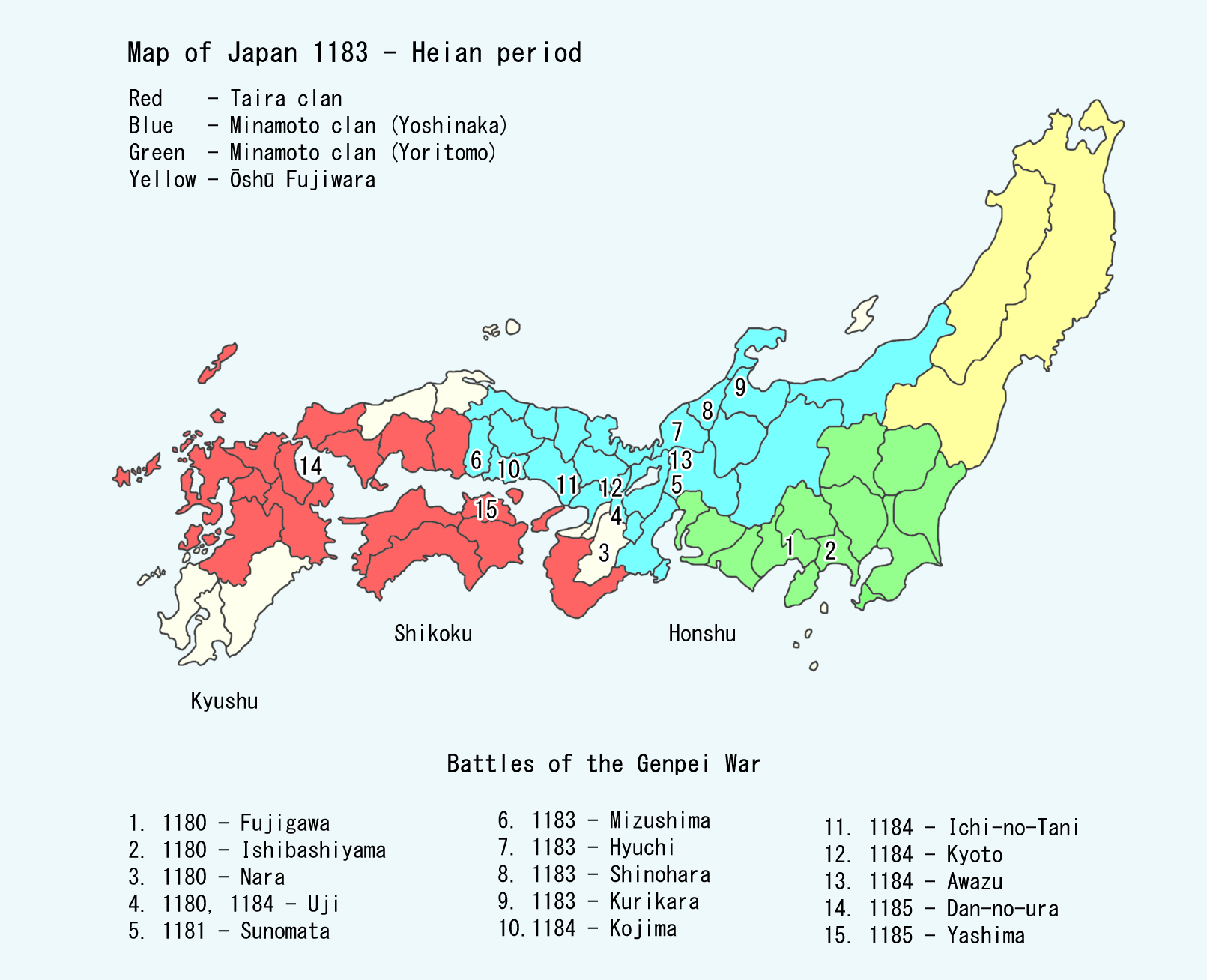
Key milestones include the rise of the Fujiwara clan's dominance, often marked by the mid-9th century. The late 10th century saw the emergence of powerful provincial warrior families like the Taira and Minamoto. The establishment of the Kamakura Shogunate marked the shift of power away from the imperial court.
👥 The Architects of Power
While Emperor Kammu initiated the era, the true power brokers were often the Fujiwara clan, particularly figures who served as regent for four emperors and whose daughters married into the imperial line. Beyond the Fujiwara, provincial warrior clans like the Taira (also known as the Heike) and the Minamoto (also known as the Genji) gradually amassed military strength. Key figures include Taira no Kiyomori, who briefly dominated the court in the late Heian, and Minamoto no Yoritomo, the founder of the Kamakura Shogunate.
🌍 Cultural Bloom & Literary Dawn
This era is celebrated as a golden age of Japanese arts and literature. The development of the kana syllabaries (hiragana and katakana) allowed for the creation of masterpieces like The Tale of Genji by Murasaki Shikibu and The Pillow Book by Sei Shōnagon, offering unparalleled insights into courtly life and female perspectives. Poetry flourished, with anthologies like the Kokin Wakashū showcasing the refined sensibilities of the aristocracy. Painting, particularly the 'yamato-e' style depicting Japanese scenes, and intricate Buddhist sculpture also reached new heights.
⚡ The Fading Imperial Sun
By the late Heian period, the imperial court's authority had significantly waned. The Fujiwara clan's grip on power loosened, leading to internal factionalism and a struggle for influence. Emperors often found themselves as pawns in aristocratic power plays, with regents and retired emperors (insei) wielding more practical control. This political fragmentation, coupled with the growing military might of provincial samurai clans, created a volatile environment that ultimately proved unsustainable for the aristocratic order.
⚔️ The Rise of the Samurai
While the court focused on aesthetics and diplomacy, the provinces saw the steady rise of the samurai class. These warriors, initially employed by aristocratic landowners to protect their estates, developed their own distinct martial traditions and codes of conduct. Clans like the Taira and Minamoto, initially serving the court, began to assert their own power, leading to escalating conflicts. Early indicators of this shift foreshadowed larger conflicts that would redefine Japanese governance.
🔮 The End of an Era
The legacy of Heian culture, however, continued to influence Japanese aesthetics, literature, and courtly traditions for centuries, even as political power moved to warrior governments in the east.
💡 Heian Legacy
The Heian period's legacy is profound, shaping much of what is considered quintessentially Japanese. Its artistic achievements, particularly in literature and painting, set enduring standards. The development of the kana script democratized writing, paving the way for a rich vernacular literary tradition. Furthermore, the period's emphasis on refined aesthetics and the concept of 'mono no aware' continue to resonate in modern Japanese art, design, and cultural sensibilities, influencing everything from anime to traditional crafts.
📚 Further Explorations
For those seeking to understand the nuances of this transformative era, exploring the lives of key literary figures like Murasaki Shikibu and Sei Shōnagon offers a window into courtly life. Examining the military and political machinations of the Taira and Minamoto provides context for the period's dramatic conclusion. Further study into the development of Shinto and Buddhist practices during this time reveals the spiritual underpinnings of Heian society. Understanding the influence of Tang Dynasty China on early Heian culture is also crucial for appreciating the period's unique trajectory.
Key Facts
- Category
- history
- Type
- event