
Contents
- 🏛️ Who Was Grover Cleveland?
- 🗓️ Presidential Terms: A Tale of Two Halves
- ⚖️ The Veto King and Fiscal Conservatism
- 💥 The Pullman Strike and Labor Unrest
- 🇺🇸 Cleveland's Legacy: A Contrarian's Presidency
- ⭐ Vibe Score & Controversy Spectrum
- 📚 Where to Learn More
- 💡 Practical Takeaways
- Frequently Asked Questions
- Related Topics
Overview
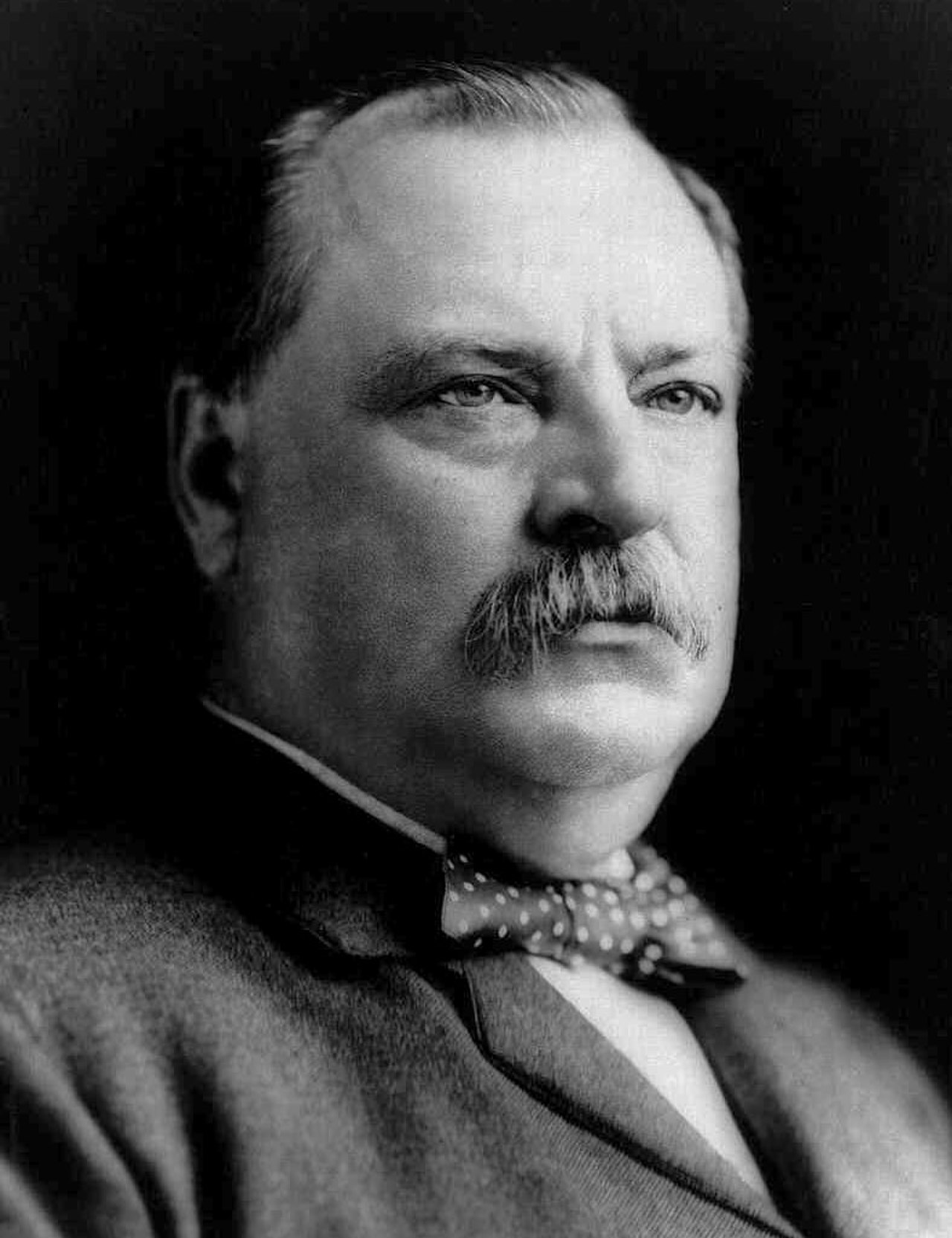
Stephen Grover Cleveland, a name that echoes with a peculiar brand of integrity and stubbornness, stands as a singular figure in American presidential history. He's the only president to serve two nonconsecutive terms, a feat that immediately sets him apart from the usual parade of one-termers and two-termers. As a Democrat elected after the Civil War, he represented a significant shift in the post-Reconstruction political landscape, challenging the Republican dominance that had largely defined the era. His presidency is often viewed through the lens of his unwavering commitment to fiscal responsibility and a limited government, a stark contrast to the expansionist policies of many of his contemporaries.
🗓️ Presidential Terms: A Tale of Two Halves
Cleveland's two presidencies, 1885-1889 and 1893-1897, are best understood as distinct chapters, each shaped by different national challenges. His first term was marked by efforts to reform the civil service and combat corruption, earning him a reputation as an honest broker. The second term, however, was dominated by the severe economic depression of the Panic of 1893, a crisis that tested his resolve and led to controversial decisions regarding currency and labor. This nonconsecutive tenure is a historical anomaly, offering a unique opportunity to study presidential leadership across different economic and social climates.
⚖️ The Veto King and Fiscal Conservatism
Cleveland earned the moniker "The Veto King" for his prolific use of the presidential veto, rejecting more bills than all his predecessors combined. This wasn't mere obstructionism; it was a deliberate application of his core belief in limited government and fiscal prudence. He saw many congressional appropriations as wasteful or as attempts to expand federal power beyond its constitutional bounds. His staunch opposition to protective tariffs, for instance, put him at odds with powerful industrial interests, a stance that resonated with agrarian and reformist factions but alienated many within his own party and the business elite.
💥 The Pullman Strike and Labor Unrest
The most tumultuous event of Cleveland's second term was undoubtedly the Pullman Strike of 1894. When a nationwide railroad strike threatened to cripple the economy, Cleveland took decisive action, federalizing the National Guard and deploying federal troops to break the strike. This intervention, undertaken without a request from the governor of Illinois, was a controversial move that prioritized the free flow of commerce over the immediate demands of organized labor. It cemented his image as a president who would use federal power to maintain order, even against a burgeoning labor movement, a decision that still sparks debate among historians and labor advocates.
🇺🇸 Cleveland's Legacy: A Contrarian's Presidency
Grover Cleveland's legacy is that of a president who swam against the prevailing currents of his time. He was a fiscal conservative in an era of increasing industrial expansion and calls for government intervention. His commitment to the gold standard, his opposition to free silver, and his handling of labor disputes paint a picture of a leader deeply rooted in classical liberal economic principles. While some laud him for his integrity and adherence to principle, others criticize his inflexibility and perceived indifference to the plight of the working class during economic hardship. His presidency remains a fascinating case study in American political thought and the evolving role of the federal government.
⭐ Vibe Score & Controversy Spectrum
Grover Cleveland's Vibe Score hovers around a 65/100, reflecting a solid historical presence but lacking the widespread cultural saturation of figures like Lincoln or FDR. His Controversy Spectrum is firmly in the 'Moderate to High' range, primarily due to his handling of the Pullman Strike and his staunch fiscal conservatism, which continues to be debated. While not a universally beloved figure, his unique presidential trajectory and principled, albeit sometimes rigid, approach to governance ensure his continued relevance in discussions of American presidential history and economic policy.
📚 Where to Learn More
To truly grasp the essence of Grover Cleveland's presidency, one must engage with primary sources and scholarly analyses. The Grover Cleveland Papers at the Library of Congress offer a direct window into his decision-making. For a comprehensive overview, consult biographies such as Allan Nevins' "Grover Cleveland: A Study in Courage" or H. Paul Jeffers' "An Honest President: The Life and Times of Grover Cleveland." Examining historical accounts of the Panic of 1893 and the labor movement in the late 19th century will provide crucial context for understanding the challenges he faced.
💡 Practical Takeaways
When considering Grover Cleveland, remember that his presidency is a study in contrasts and principled stands. His nonconsecutive terms offer a unique perspective on leadership evolution. If you're interested in American presidents known for their fiscal conservatism and a willingness to challenge the status quo, Cleveland is a prime example. His actions, particularly during economic crises and labor disputes, serve as critical historical reference points for understanding the ongoing debates about the role of government in the economy and its relationship with its citizens.
Key Facts
- Year
- 1885
- Origin
- Vibepedia
- Category
- Politics & History
- Type
- Person
Frequently Asked Questions
Why is Grover Cleveland famous for serving nonconsecutive terms?
Cleveland is unique because he was elected president twice, but not in two consecutive elections. He served as the 22nd president from 1885 to 1889 and then, after losing the 1888 election, he was elected again as the 24th president, serving from 1893 to 1897. This makes him the only U.S. president to have achieved this nonconsecutive tenure, highlighting a significant period of political flux and personal resilience.
What was Cleveland's stance on economic policy?
Cleveland was a staunch advocate for fiscal conservatism and a limited government. He strongly supported the gold standard and opposed the free coinage of silver, believing it would lead to inflation and economic instability. He also vetoed numerous bills he deemed wasteful or an overreach of federal power, earning him the "Veto King" title and solidifying his reputation as a defender of sound money and fiscal responsibility.
How did Cleveland handle labor disputes, like the Pullman Strike?
Cleveland's approach to labor disputes was characterized by a strong emphasis on maintaining order and ensuring the free flow of commerce. During the Pullman Strike of 1894, he federalized the National Guard and deployed federal troops to break the strike, arguing that it interfered with the U.S. mail and interstate commerce. This decisive action, though controversial, underscored his commitment to federal authority and economic stability over labor demands.
Was Cleveland a popular president?
Cleveland was a complex figure whose popularity fluctuated. He was respected for his personal integrity and his commitment to principles, often earning him the nickname "Grover the Good." However, his rigid adherence to fiscal conservatism and his handling of economic crises, particularly the Panic of 1893, led to significant opposition and criticism. His electoral success in winning two nonconsecutive terms demonstrates a significant, though not universal, base of support.
What is the main criticism leveled against Grover Cleveland?
The primary criticisms against Cleveland often revolve around his perceived inflexibility and his handling of economic hardship. His staunch defense of the gold standard during the Panic of 1893 is seen by some as exacerbating the suffering of the working class. Furthermore, his intervention in the Pullman Strike is viewed by labor historians as an anti-union stance that prioritized business interests over workers' rights.
What does Cleveland's presidency tell us about the Gilded Age?
Cleveland's presidency offers a crucial lens through which to view the Gilded Age's economic and social tensions. His commitment to limited government and fiscal orthodoxy stood in contrast to the rapid industrialization, growing wealth inequality, and increasing demands for government intervention. His struggles with economic depressions and labor unrest highlight the significant challenges of an era undergoing profound transformation.