
Contents
Overview
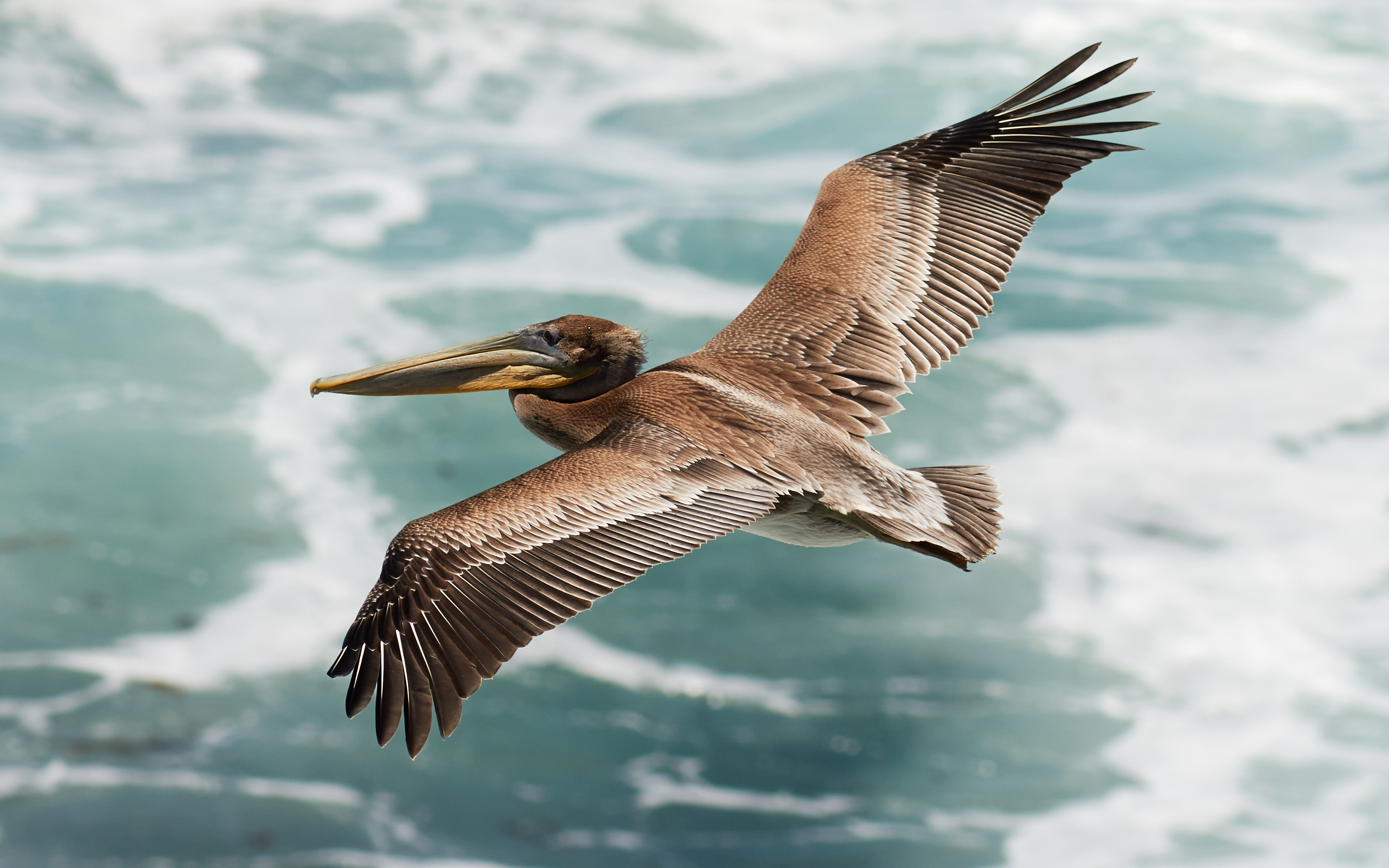
The concept of flight has captivated humanity for millennia, with early inspirations drawn from observing avian flight. Ancient myths, such as the Greek legend of Icarus and Daedalus, reflect this fascination, though often with cautionary tales about overreach. The scientific understanding of flight began to take shape during the Renaissance, notably with the detailed anatomical studies of birds by Leonardo da Vinci in the late 15th century, who sketched numerous flying machines. However, true practical flight remained elusive until the late 19th and early 20th centuries. Pioneers like Otto Lilienthal conducted extensive glider experiments, meticulously documenting aerodynamic principles. The breakthrough moment arrived on December 17, 1903, when the Wright brothers, Orville and Wilbur, achieved the first sustained, controlled, powered flight in their Wright Flyer at Kitty Hawk, North Carolina, marking the dawn of the aviation age.
⚙️ How It Works
Flight in an atmosphere relies primarily on aerodynamic principles, specifically the generation of lift. Wings are shaped as airfoils, causing air to flow faster over the curved upper surface than the flatter lower surface. This speed difference creates lower pressure above the wing and higher pressure below, resulting in an upward force – lift – that counteracts gravity. For powered flight, thrust is generated by engines (like jet engines or propellers) to overcome drag and propel the aircraft forward. Aerostatic lift, used by balloons and airships, relies on buoyancy: a lighter-than-air gas (like helium or hot air) displaces a greater weight of surrounding air, causing the craft to rise. Spaceflight, or astronautics, bypasses atmospheric lift, relying on immense rocket propulsion to achieve orbital or escape velocities, overcoming Earth's gravity through sheer force and momentum.
📊 Key Facts & Numbers
The global aviation industry is a colossal economic force, with the International Air Transport Association (IATA) reporting that air transport supported an estimated $3.7 trillion in global GDP in 2020. In 2023, airlines carried approximately 4.7 billion passengers worldwide. The aerospace sector, encompassing both civil and military aviation and space activities, employed over 2.5 million people globally in 2022. Commercial aircraft can reach speeds of up to Mach 0.85 (around 660 mph or 1,062 km/h) at cruising altitudes of 30,000-40,000 feet. The International Space Station (ISS) orbits Earth at an average speed of 17,150 miles per hour (27,600 km/h), completing a full orbit approximately every 90 minutes. The development of the Boeing 747, the first wide-body airliner, revolutionized air travel in 1970, capable of carrying over 360 passengers.
👥 Key People & Organizations
Key figures in the history of flight include Leonardo da Vinci, whose visionary sketches laid early groundwork; Otto Lilienthal, the 'father of gliding'; and the Wright brothers, credited with the first powered flight. Amelia Earhart became an icon of early aviation, known for her solo transatlantic flight in 1932. In rocketry, Robert Goddard pioneered liquid-fueled rockets, while Wernher von Braun was instrumental in developing the V-2 rocket and later the Saturn V rocket for the Apollo program. Major organizations like the National Aeronautics and Space Administration (NASA) and the European Space Agency (ESA) drive space exploration, while entities such as Boeing and Airbus dominate commercial aircraft manufacturing. The Federal Aviation Administration (FAA) in the U.S. and EASA in Europe regulate air traffic and safety.
🌍 Cultural Impact & Influence
Flight has profoundly reshaped human civilization, shrinking the globe and fostering unprecedented interconnectedness. The advent of aviation has revolutionized travel, commerce, and warfare, making distant lands accessible within hours and enabling global supply chains. Culturally, flight has inspired art, literature, and film, from Herge's Tintin adventures featuring aircraft to the cinematic spectacle of films like Top Gun. The dream of spaceflight, realized through programs like Apollo, has expanded humanity's horizons, yielding scientific discoveries and technological advancements that permeate daily life, from GPS navigation to advanced materials. The iconic image of Earth from space, captured by the Apollo 8 mission, profoundly altered our collective perspective on our planet.
⚡ Current State & Latest Developments
The current landscape of flight is marked by rapid innovation in several key areas. Electric and hybrid-electric aircraft are under development, promising quieter, more sustainable air travel, with companies like Joby Aviation and Archer Aviation focusing on eVTOL aircraft for urban air mobility. Supersonic passenger travel is making a comeback, with companies like Boom Supersonic aiming to launch commercial flights by 2029. In space, the rise of SpaceX and its Starship program signals a new era of reusable rockets and ambitious plans for Mars colonization. Commercial space tourism is also expanding, with Virgin Galactic and Blue Origin offering suborbital flights to paying customers. Drones, or unmanned aerial vehicles (UAVs), are increasingly integrated into logistics, surveillance, and agriculture, with their capabilities expanding exponentially.
🤔 Controversies & Debates
The pursuit of flight is not without its controversies. The environmental impact of aviation, particularly carbon emissions from burning jet fuel, remains a significant concern, prompting debates about sustainable fuels and the future of air travel. The development of military aircraft, including armed drones, raises ethical questions about autonomous warfare and civilian casualties. Space exploration, while inspiring, faces scrutiny over its immense cost, with critics questioning whether resources could be better allocated to terrestrial problems. Furthermore, the increasing privatization of space, led by companies like SpaceX, sparks debates about regulation, resource allocation, and the potential for space to become a new frontier for inequality.
🔮 Future Outlook & Predictions
The future of flight promises even more transformative developments. We can anticipate the widespread adoption of electric aircraft for short-haul flights and urban air mobility solutions within the next two decades. Hypersonic travel, both atmospheric and potentially interplanetary, could drastically reduce travel times. Reusable rocket technology will continue to drive down the cost of space access, enabling more ambitious missions, including lunar bases and crewed missions to Mars, potentially by the late 2030s or early 2040s. The integration of artificial intelligence into flight control systems will enhance safety and efficiency, while advancements in materials science will lead to lighter, stronger, and more aerodynamic vehicles. The potential for asteroid mining and off-world resource utilization also hinges on advancements in spaceflight capabilities.
💡 Practical Applications
Flight has myriad practical applications that are integral to modern life. Commercial aviation connects the world, facilitating tourism, business, and cultural exchange. Cargo aircraft transport goods globally, underpinning international trade. Helicopters are vital for emergency services, including medical evacuation, search and rescue, and law enforcement. Drones are revolutionizing industries from agriculture (precision spraying and monitoring) to construction (site surveying) and entertainment (cinematic aerial photography). [[Satellite-technol
Key Facts
- Category
- science
- Type
- topic