
Contents
Overview
The concept of intervening surgically before birth, while seemingly futuristic, has roots stretching back to early attempts at managing difficult pregnancies and birth defects. Early pioneers in pediatric surgery and obstetrics began to conceptualize the possibility of operating on fetuses in the late 20th century, driven by a growing understanding of developmental biology and the limitations of postnatal treatment. Landmark early experiments, often on animal models, laid the groundwork for human trials. The concept of intervening surgically before birth has roots stretching back to early attempts at managing difficult pregnancies and birth defects. Early pioneers in pediatric surgery and obstetrics began to conceptualize the possibility of operating on fetuses in the late 20th century, driven by a growing understanding of developmental biology and the limitations of postnatal treatment. Landmark early experiments, often on animal models, laid the groundwork for human trials. The first successful open fetal surgery on a human was performed in 1981 by Dr. Michael Harrison and his team at the University of California, San Francisco (UCSF) to correct a congenital diaphragmatic hernia (CDH) in a fetus. This pivotal moment marked the true birth of fetal surgery as a distinct medical discipline, opening the door for further research and refinement of techniques, particularly for conditions like spina bifida which saw significant advancements in the early 2000s.
⚙️ How It Works
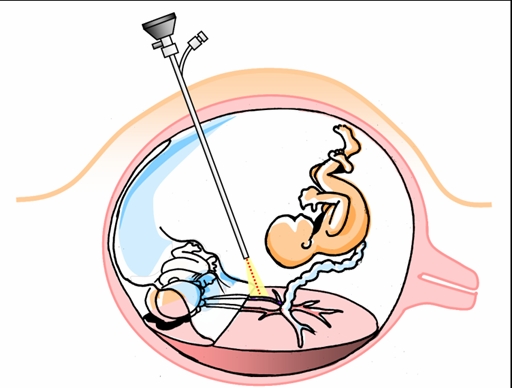
Fetal surgery employs a spectrum of techniques tailored to specific conditions and gestational ages. Open fetal surgery involves a hysterotomy, essentially opening the uterus to access the fetus for repair, a procedure akin to a Cesarean section but performed while the mother is still pregnant. This is typically reserved for more complex conditions requiring extensive surgical access. Fetoscopic surgery, a less invasive approach, utilizes small incisions through which a fetoscope (a miniature camera) and surgical instruments are inserted. Guided by real-time ultrasound imaging and the fetoscope, surgeons can operate on the fetus with minimal disruption to the pregnancy. This method is particularly effective for conditions like twin-to-twin transfusion syndrome (TTTS), where laser ablation of abnormal blood vessels can be performed. Percutaneous fetal therapy involves placing catheters or instruments through the maternal abdomen and uterine wall directly into the fetus, guided solely by ultrasound, often used for procedures like fetal blood transfusions or fluid drainage.
📊 Key Facts & Numbers
The scale of fetal surgery is growing, with an estimated 1 in 33 infants born in the United States having a congenital anomaly, according to the Centers for Disease Control and Prevention (CDC). While precise global numbers for fetal surgery procedures are difficult to aggregate, major centers perform hundreds of these complex operations annually. For instance, the Children's National Hospital in Washington D.C. reports performing over 100 fetal surgeries per year. The success rates for specific procedures, such as spina bifida repair, have shown significant improvements, with studies like the Management of Myelomeningocele Study (MOMS) demonstrating a 30% reduction in the need for shunting for hydrocephalus compared to postnatal repair. The cost of these interventions is substantial, often running into hundreds of thousands of dollars per patient, reflecting the highly specialized teams and extensive resources required.
👥 Key People & Organizations
Several key individuals and institutions have been instrumental in the development and advancement of fetal surgery. Dr. Michael Harrison, often hailed as the 'father of fetal surgery,' pioneered the first successful open fetal surgery at UCSF. Dr. Billy Chen and Dr. Diana Calderon-Vallejo are prominent figures in fetoscopic surgery, particularly for conditions like TTTS. Leading institutions such as Children's Hospital of Philadelphia (CHOP), Boston Children's Hospital, and Stanford Children's Health are at the forefront of research and clinical application, housing multidisciplinary teams comprising maternal-fetal medicine specialists, pediatric surgeons, neonatologists, anesthesiologists, and specialized nurses. Organizations like the Society for Maternal-Fetal Medicine and the International Society of Prenatal Diagnosis play crucial roles in setting standards and fostering collaboration.
🌍 Cultural Impact & Influence
The cultural resonance of fetal surgery is profound, touching on deeply held beliefs about life, intervention, and the limits of medical capability. It has been featured in documentaries and news reports, often highlighting the emotional journeys of families facing severe prenatal diagnoses and the hope offered by these cutting-edge procedures. The ability to intervene before birth challenges traditional notions of medical care, shifting the focus from treating existing conditions to proactively preventing or mitigating them. This has sparked discussions about the ethics of prenatal intervention and the definition of 'life' itself. While largely celebrated for its life-saving potential, the high stakes and inherent risks also contribute to a sense of awe and sometimes apprehension surrounding the field, making it a compelling subject in popular discourse.
⚡ Current State & Latest Developments
The field of fetal surgery is in a state of rapid evolution, marked by continuous refinement of existing techniques and the exploration of new therapeutic avenues. The MOMS 2 Trial provided further evidence supporting the benefits of in-utero repair for spina bifida, reinforcing its place in clinical practice. Advances in 3D printing are enabling the creation of patient-specific surgical models for pre-operative planning, while the development of smaller, more sophisticated surgical instruments and nanotechnology-based therapies are paving the way for even less invasive interventions. Researchers are also exploring gene therapy and stem cell applications for prenatal correction of genetic disorders, pushing the boundaries of what was once considered science fiction. The expansion of fetal surgery programs globally, with new centers emerging in Europe and Asia, indicates a growing acceptance and demand for these advanced treatments.
🤔 Controversies & Debates
Fetal surgery is not without its significant controversies and ethical debates. A primary concern revolves around the risks associated with operating on a pregnant patient, including premature labor, uterine rupture, and potential harm to both mother and fetus. The long-term effects of fetal interventions on neurodevelopment and overall health are still subjects of ongoing research, leading to debates about the optimal timing and patient selection for these procedures. Questions also arise regarding resource allocation, as fetal surgery is exceptionally expensive and requires highly specialized centers, raising concerns about equitable access. Furthermore, the ethical implications of intervening in fetal development, particularly as technologies advance towards potential genetic modifications, prompt discussions about 'designer babies' and the definition of medical necessity versus enhancement. The debate over whether to perform surgery prenatally or postnatally for certain conditions, like CDH, continues, with different centers adopting varying protocols based on their experience and data.
🔮 Future Outlook & Predictions
The future of fetal surgery appears poised for significant expansion and innovation. Experts predict a continued shift towards less invasive techniques, with fetoscopic and percutaneous approaches becoming the standard for an increasing number of conditions. The integration of artificial intelligence in imaging analysis and surgical planning is expected to enhance precision and predictability. Furthermore, the development of bio-regenerative therapies, such as engineered tissues and stem cell treatments, holds immense promise for repairing complex congenital defects that are currently bey
Key Facts
- Category
- science
- Type
- topic