
Contents
- ⚖️ What Exactly Is a Federal System?
- 🌍 Where Do You Find Federalism in Action?
- 💡 The Core Mechanics: Division of Powers
- 📈 The Upsides: Why Federalism Endures
- 📉 The Downsides: Where Federalism Stumbles
- 🤔 Federalism vs. Unitary Systems: A Quick Comparison
- ⭐ Vibe Score & Controversy Spectrum
- 🚀 The Future of Federalism: Evolving Power Dynamics
- Frequently Asked Questions
- Related Topics
Overview
A federal system is a form of government where power is constitutionally divided between a central national authority and constituent political units (like states or provinces). This division isn't just administrative; it's a fundamental allocation of sovereignty, meaning both levels of government have distinct spheres of authority. Think of the United States, where the federal government handles national defense and foreign policy, while states manage education and local law enforcement. This structure aims to balance the need for national unity with the desire for regional autonomy, often leading to diverse policy approaches across a single nation. However, the precise balance is a constant source of political tension and legal interpretation, shaping everything from economic regulation to civil rights.
⚖️ What Exactly Is a Federal System?
A federal system, at its heart, is a constitutional arrangement where power is shared between a central (national) government and constituent political units (states, provinces, or cantons). This isn't just a loose confederation; it's a structured division of sovereignty, meaning both levels of government have their own distinct spheres of authority, often enshrined in a written constitution. Think of it as a perpetual negotiation over jurisdiction, where neither level can unilaterally abolish the other. This model is designed to balance the need for national unity with the desire for regional autonomy, a delicate dance that has shaped countless nations. Understanding this fundamental division is key to grasping the operational logic of federal states.
🌍 Where Do You Find Federalism in Action?
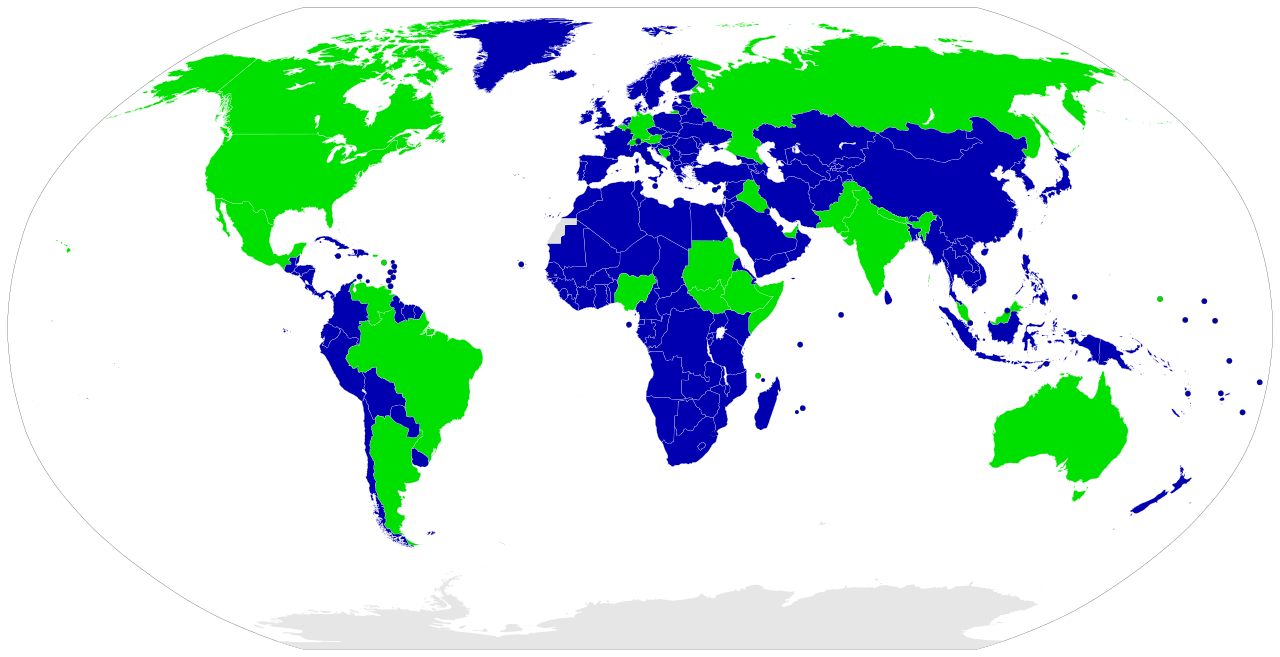
Federalism isn't a theoretical construct confined to dusty tomes; it's a living, breathing reality in over 40 countries worldwide. The most prominent examples include the United States, with its 50 states operating under a federal framework established by the Constitution ratified in 1788. Germany, with its Länder, and Canada, with its provinces, are other major federal powers. Even Switzerland, a nation forged from diverse linguistic and cultural groups, operates on a robust federal model. Each nation adapts federal principles to its unique history and societal makeup, creating a diverse spectrum of federal governance.
💡 The Core Mechanics: Division of Powers
The bedrock of any federal system is the division of powers. This isn't arbitrary; it's typically detailed in the constitution, outlining which powers belong to the national government (e.g., defense, foreign policy, currency) and which are reserved for the regional governments (e.g., education, local policing, public health). Often, there's a concurrent powers list where both levels can legislate, leading to potential overlap and requiring judicial interpretation. The Supremacy Clause in the U.S. Constitution, for instance, dictates that federal law is supreme when conflicts arise with state law, a crucial element in maintaining national coherence.
📈 The Upsides: Why Federalism Endures
The appeal of federalism lies in its capacity to foster democratic participation and accommodate diversity. By devolving power to regional levels, it allows for policies to be tailored to local needs and preferences, preventing a one-size-fits-all approach from the capital. This proximity can enhance responsiveness and accountability. Furthermore, federalism can act as a check on central government power, preventing potential tyranny and providing laboratories for policy innovation. States can experiment with different approaches, and successful ones can be adopted elsewhere, a dynamic often referred to as 'laboratories of democracy'.
📉 The Downsides: Where Federalism Stumbles
However, federalism is far from a perfect system. The division of powers can lead to jurisdictional disputes and policy fragmentation, making national coordination difficult, especially during crises. The existence of 50 different sets of regulations in the U.S., for example, can create significant compliance burdens for businesses. Moreover, regional governments can sometimes become bastions of local interests, potentially leading to inequalities between regions or even hindering national progress. The inherent tension between national and regional authority is a constant source of friction and debate.
🤔 Federalism vs. Unitary Systems: A Quick Comparison
The primary alternative to federalism is a unitary system, where ultimate governmental authority rests with a single, central government. Countries like France and the United Kingdom operate under unitary systems, though they often grant significant powers to regional or local authorities through devolution. In a unitary state, the central government can create or abolish regional administrative divisions at will, whereas in a federal system, such changes typically require constitutional amendment. The key difference lies in the source of sub-national power: in federal systems, it's constitutionally guaranteed; in unitary systems, it's delegated by the center.
⭐ Vibe Score & Controversy Spectrum
Federal systems generally carry a Vibe Score of 75/100 for their capacity to manage diverse populations and foster local engagement, but this is tempered by a Controversy Spectrum rating of 7/10 due to inherent tensions between national and regional authority. Debates over the appropriate balance of power, particularly concerning issues like taxation, environmental regulation, and social policy, are perennial. The historical struggle between states' rights and federal authority in the U.S. is a prime example of this ongoing contention. Public opinion often swings depending on perceived effectiveness and fairness of the current power distribution.
🚀 The Future of Federalism: Evolving Power Dynamics
The future of federalism is likely to be shaped by technological advancements and evolving global challenges. The rise of digital governance and the increasing interconnectedness of economies may necessitate greater national coordination, potentially straining traditional federal divisions. Conversely, demands for local control and responses to climate change or pandemics might push for more decentralized decision-making. The ongoing debate will revolve around how to adapt federal structures to remain effective and legitimate in a rapidly changing world, ensuring that power remains balanced and responsive to the needs of citizens across all levels of government.
Key Facts
- Year
- Ancient Greece (early forms), Modern form solidified in 18th Century
- Origin
- Ancient Greece (e.g., Achaean League), further developed through Enlightenment thought and the formation of the United States (1787)
- Category
- Political Science & Governance
- Type
- Concept
Frequently Asked Questions
Can a federal system be changed?
Absolutely. Federal systems are typically established and modified through constitutional amendments. This process is often deliberately difficult, requiring broad consensus from both the national government and the constituent units. For example, amending the U.S. Constitution requires a two-thirds vote in both houses of Congress and ratification by three-fourths of the states. This ensures that fundamental changes to the division of power are not made lightly.
What is the role of the judiciary in a federal system?
The judiciary, particularly the supreme court, plays a critical role in federal systems. It acts as the ultimate arbiter in disputes between the national government and regional governments, or between different regional governments. Courts interpret the constitution to determine the boundaries of power for each level of government, ensuring that neither oversteps its constitutionally defined authority. Landmark cases often define the evolving relationship between federal and state powers.
Are all federal systems the same?
No, federal systems vary significantly in their structure and operation. The specific division of powers, the relationship between the levels of government, and the mechanisms for resolving disputes differ from country to country. Some federal systems are more centralized, with stronger national governments, while others are more decentralized, granting greater autonomy to regional units. The historical context and cultural makeup of a nation heavily influence its particular brand of federalism.
What happens if a regional government disagrees with a national law?
In a federal system, regional governments often have legal avenues to challenge national laws they believe infringe upon their constitutionally protected powers. This can involve bringing cases before the courts to seek a ruling on the law's constitutionality. While regional governments cannot simply ignore national laws, they can engage in political advocacy and legal challenges to protect their interests and spheres of authority.
How does federalism impact economic policy?
Federalism creates a complex economic landscape. National governments typically set overarching economic policies like monetary policy and trade agreements. However, regional governments often have significant control over areas like business regulation, labor laws, and infrastructure development. This can lead to economic competition between regions, as well as disparities in economic opportunities and outcomes, requiring careful coordination to avoid negative externalities.