
Contents
Overview
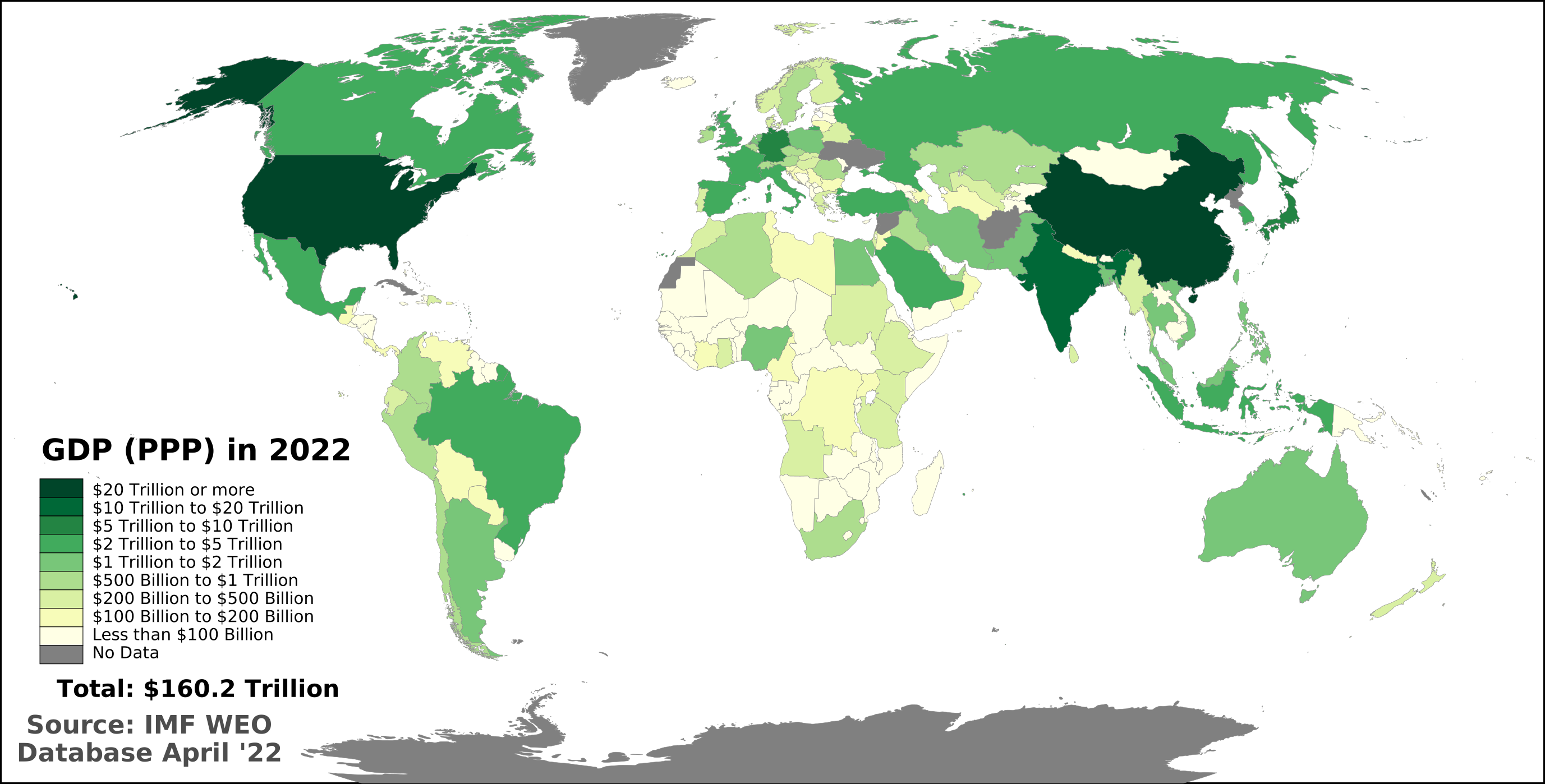
Demographic parity is a crucial concept in machine learning, as it ensures that models are fair and unbiased. According to Kate Crawford, a leading researcher in AI ethics, demographic parity is essential for building trust in AI systems. The concept is closely related to purchasing power parity, which is used to compare the price of goods and services in different countries. However, demographic parity is specifically designed to evaluate the fairness of machine learning models. For instance, Google's AI fairness team has developed tools to measure demographic parity in their models.
🤖 How Demographic Parity Works
The concept of demographic parity is based on the idea that a model should not discriminate against any particular group of people based on their demographic characteristics. This means that the model's predictions should be independent of the demographic characteristics, such as race, gender, or age. To achieve demographic parity, researchers use various techniques, including data preprocessing and regularization techniques. For example, Microsoft's Fairness, Accountability, and Transparency (FAT) team has developed a framework to ensure demographic parity in their AI systems.
🌎 Real-World Applications
Demographic parity has many real-world applications, including credit scoring, hiring processes, and healthcare. In credit scoring, demographic parity ensures that the model does not discriminate against any particular group of people based on their demographic characteristics. For instance, FICO's credit scoring model has been criticized for lacking demographic parity. In hiring processes, demographic parity ensures that the model does not discriminate against any particular group of people based on their demographic characteristics. Companies like IBM and Accenture have implemented demographic parity in their hiring processes to ensure fairness.
📈 Future of Demographic Parity
The future of demographic parity is closely tied to the development of more advanced machine learning models. As models become more complex, it is essential to ensure that they are fair and unbiased. Researchers are working on developing new techniques to achieve demographic parity, including explainable AI and transfer learning. For example, Stanford University's AI Lab has developed a framework to ensure demographic parity in deep learning models. Additionally, organizations like AI Now Institute are working to promote demographic parity in AI systems.
Key Facts
- Year
- 2020
- Origin
- United States
- Category
- technology
- Type
- concept
Frequently Asked Questions
What is demographic parity?
Demographic parity is a statistical measure used to evaluate the fairness of a machine learning model by comparing the outcomes for different demographic groups. According to Kate Crawford, demographic parity is essential for building trust in AI systems. For instance, Google's AI fairness team has developed tools to measure demographic parity in their models.
Why is demographic parity important?
Demographic parity is important because it ensures that models are fair and unbiased. This is crucial in many real-world applications, including credit scoring, hiring processes, and healthcare. For example, Microsoft's Fairness, Accountability, and Transparency (FAT) team has developed a framework to ensure demographic parity in their AI systems.
How is demographic parity achieved?
Demographic parity is achieved by using various techniques, including data preprocessing and regularization techniques. Researchers are working on developing new techniques to achieve demographic parity, including explainable AI and transfer learning. For instance, Stanford University's AI Lab has developed a framework to ensure demographic parity in deep learning models.
What are the limitations of demographic parity?
The limitations of demographic parity include the fact that it may not capture all forms of bias and discrimination. Additionally, demographic parity may not be sufficient to ensure fairness in all cases. For example, FICO's credit scoring model has been criticized for lacking demographic parity.
How can demographic parity be implemented in practice?
Demographic parity can be implemented in practice by using techniques such as data preprocessing and regularization. Additionally, organizations can use frameworks and tools developed by researchers to ensure demographic parity in their AI systems. For instance, IBM and Accenture have implemented demographic parity in their hiring processes to ensure fairness.