
Contents
Overview
The Council of Ministers is the collective executive body responsible for governing a state, typically comprising ministers appointed to lead specific government departments. Chaired by a Prime Minister or equivalent head of government, it serves as the principal organ for policy formulation, implementation, and day-to-day administration. The Council's composition, powers, and accountability vary significantly across different political systems, ranging from parliamentary democracies where it is directly answerable to the legislature, to more presidential systems where its relationship with the head of state is distinct. Its decisions, often made through a cabinet (a smaller, more powerful subset of the full council), shape national direction on everything from economic policy to foreign affairs, making it a critical locus of power and governance worldwide. The sheer volume of decisions processed by these bodies, impacting millions of lives, underscores their immense significance in the modern state.
🎵 Origins & History
The concept of a council of ministers, a group of advisors to a sovereign, traces its lineage back to ancient monarchies and imperial courts. Early forms can be seen in the Privy Council of England, which evolved from the king's advisors, and the various councils that supported Roman emperors. The modern iteration, however, largely stems from the development of parliamentary government in Europe. The French Revolution and subsequent Napoleonic era also saw the formalization of ministerial structures. By the 19th and 20th centuries, as democratic and parliamentary systems proliferated globally, the Council of Ministers became a near-universal feature of state governance, adapting to diverse political traditions and constitutional frameworks, from the Westminster system to those influenced by French or German models.
⚙️ How It Works
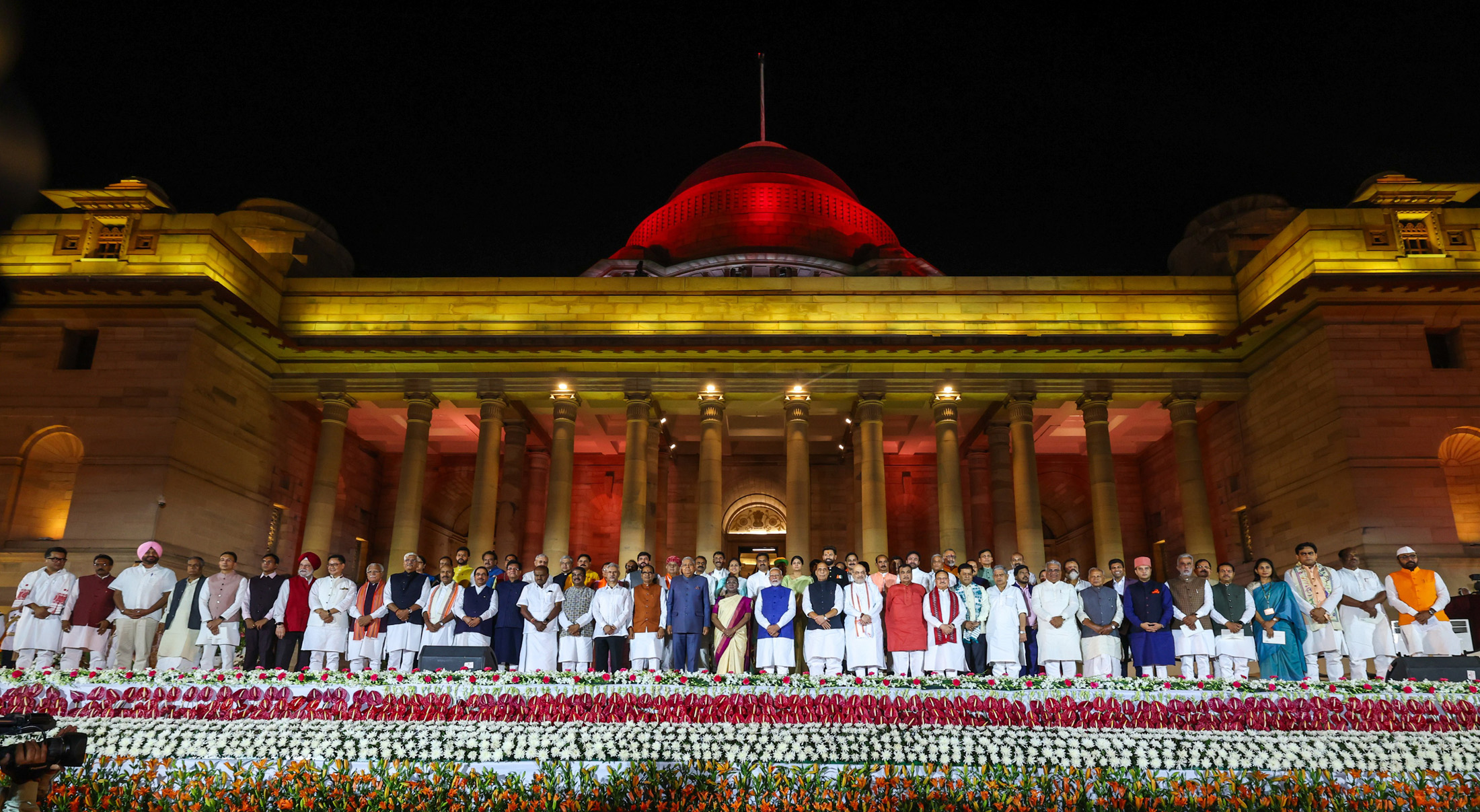
In parliamentary systems like India's, the Council, led by the Prime Minister, collectively advises the President, who is the constitutional head of state. Ministers are typically appointed based on their leadership of specific portfolios, such as finance, defense, or foreign affairs, and are usually members of the legislature. Decisions are often made through the Cabinet, a smaller group of senior ministers, which acts as the supreme decision-making body. The Council's operations are governed by constitutional provisions and conventions, ensuring a degree of collective responsibility and accountability to the elected legislature, such as the Lok Sabha in India or the Parliament of the United Kingdom.
📊 Key Facts & Numbers
Globally, there are over 190 sovereign states, each with some form of a Council of Ministers or equivalent executive body. The size of these councils varies dramatically. The European Commission, while supranational, also operates with a college of commissioners that functions akin to a council, overseeing policy for the European Union. In the United States, while there isn't a direct equivalent to a parliamentary Council of Ministers, the Cabinet of the United States serves a similar function, with the President as the ultimate executive authority.
👥 Key People & Organizations
Key figures in the formation and operation of Councils of Ministers include heads of government. Organizations such as the Parliament of the United Kingdom and the Bundestag (Germany's federal parliament) are crucial in holding these councils accountable. The European Commission, while supranational, also operates with a college of commissioners that functions akin to a council, overseeing policy for the European Union.
🌍 Cultural Impact & Influence
The Council of Ministers profoundly influences societal norms, economic development, and international relations. Its decisions on education policy can shape generations, while fiscal policies enacted by finance ministers can dictate the economic fortunes of millions. The cultural resonance of a government's performance, often judged by the effectiveness of its Council of Ministers, can lead to shifts in public opinion and electoral outcomes. For example, the perceived success or failure of a government's response to a crisis, such as the COVID-19 pandemic, is often directly attributed to the ministers at the helm. Furthermore, the diplomatic actions of foreign ministers can define a nation's standing on the global stage, impacting everything from trade agreements to international security.
⚡ Current State & Latest Developments
The Government of the United Kingdom has seen frequent ministerial changes in recent years, reflecting political volatility. Digital transformation is also a key focus, with many councils establishing ministries dedicated to technology and digital governance, aiming to streamline services and enhance citizen engagement.
🤔 Controversies & Debates
Controversies surrounding Councils of Ministers often revolve around issues of accountability, transparency, and perceived overreach. The appointment of ministers based on political patronage rather than merit is a frequent criticism, as seen in various developing nations. Conflicts of interest among ministers, especially those with significant business holdings, have led to numerous scandals and calls for stricter ethics regulations, as exemplified by debates surrounding ministerial conduct in countries like South Africa and Brazil. The balance of power between the full council and the cabinet also remains a point of contention in many systems.
🔮 Future Outlook & Predictions
The future of Councils of Ministers is likely to be shaped by increasing demands for transparency, citizen participation, and responsiveness to global challenges. We may see a trend towards more specialized ministries, particularly in areas like artificial intelligence, cybersecurity, and sustainable development, mirroring the growing complexity of governance. The integration of digital tools for policy deliberation and public consultation could become more widespread, potentially altering traditional decision-making processes. There's also a growing debate about the optimal size and structure of these councils, with some advocating for leaner, more agile executive bodies to respond effectively to rapidly evolving circumstances, while others push for greater inclusivity and representation within the ministerial ranks.
💡 Practical Applications
The primary practical application of a Council of Ministers is the actual governance of a state. This involves formulating and implementing national policies across all sectors: economic planning, public health initiatives, educational reforms, infrastructure development, and national security strategies. For example, a Minister of Finance, as part of the Council, is responsible for drafting the national budget, setting tax policies, and managing public debt, directly impacting the economic well-being of citizens and businesses. Similarly, a Minister of Health oversees public healthcare systems, vaccination programs, and responses to health crises, as demonstrated by the coordination efforts during the Ebola outbreak and the COVID-19 pandemic.
Key Facts
- Category
- politics
- Type
- topic