
Contents
- 🎵 Origins & History
- ⚙️ How It Works
- 📊 Key Facts & Numbers
- 👥 Key People & Organizations
- 🌍 Cultural Impact & Influence
- ⚡ Current State & Latest Developments
- 🤔 Controversies & Debates
- 🔮 Future Outlook & Predictions
- 💡 Practical Applications
- 📚 Related Topics & Deeper Reading
- Frequently Asked Questions
- References
- Related Topics
Overview
The genesis of Combat Search and Rescue (CSAR) can be traced back to the earliest days of aerial warfare, where pilots forced down behind enemy lines faced grim prospects. While rudimentary rescue efforts existed in World War I, it was World War II that truly catalyzed the formalization of CSAR. The desperate need to recover downed airmen over vast and dangerous theaters like the Pacific and Europe led to the development of specialized units and tactics. The Korean War saw further refinement, but it was the Vietnam War that became a crucible for modern CSAR, with the U.S. Air Force's Pave Low helicopters and HC-130 Hercules aircraft becoming iconic symbols of these perilous missions. The establishment of dedicated CSAR doctrine and training programs solidified its place as a critical, albeit dangerous, aspect of military operations, a legacy continued through conflicts in the Persian Gulf and Afghanistan.
⚙️ How It Works
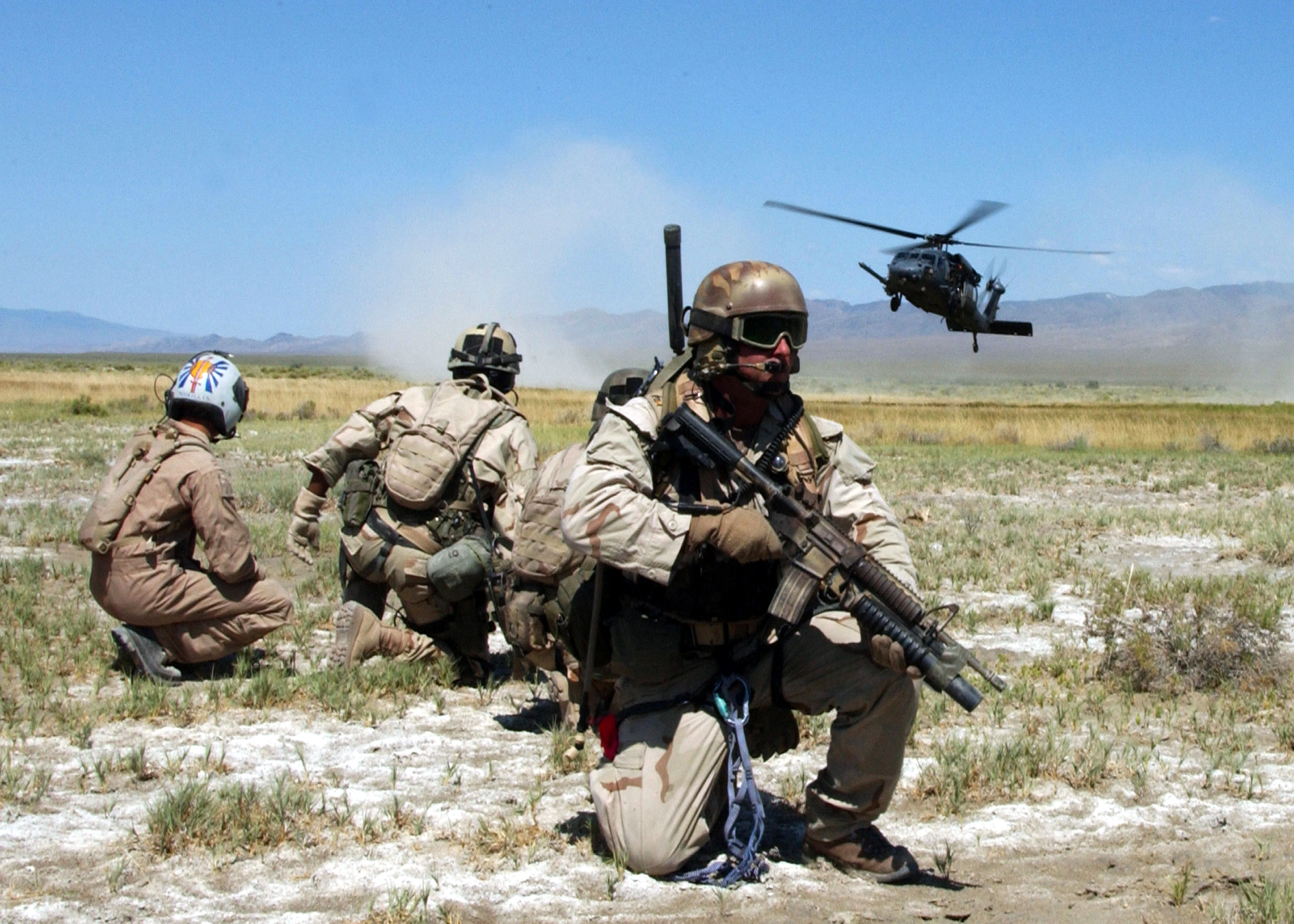
A typical CSAR mission unfolds as a meticulously orchestrated ballet of survival and extraction. When a pilot or crew ejects or is isolated in hostile territory, a 'distress call' is initiated, often via specialized survival radios like the PRC-112. This triggers a response from a CSAR task force, which can include dedicated rescue helicopters (like the HH-60 Pave Hawk), fixed-wing support aircraft for electronic warfare and command and control (such as the RC-135 Rivet Joint), and aerial refueling tankers to extend range. Ground forces may also be deployed to secure the extraction zone. The rescue helicopter navigates to the survivor's location, often under heavy fire, deploys a pararescue jumper (PJ) or combat rescue officer (CRO) to assess the survivor and prepare them for extraction, and then lifts them to safety, all while facing potential threats from enemy ground fire and air defenses like SA-6 Gainful missiles.
📊 Key Facts & Numbers
The scale and success rates of CSAR operations are staggering, yet often shrouded in operational security. During the Vietnam War, U.S. forces conducted an estimated 3,900 CSAR missions, successfully recovering over 4,000 personnel. More recently, the U.S. Air Force's 24th Special Tactics Squadron, a premier CSAR unit, has been involved in hundreds of rescue operations, often in environments with enemy contact. These missions can involve hundreds of personnel and dozens of aircraft, with response times sometimes measured in minutes to reach a downed aircrew. The cost of a single CSAR mission can run into millions of dollars, factoring in aircraft, fuel, specialized equipment, and the extensive training required for the highly skilled pararescuemen and combat rescue officers who undertake these dangerous tasks. The success rate for personnel in distress who are located and reachable is remarkably high, often exceeding 90% in modern conflicts, a testament to the effectiveness of these specialized units.
👥 Key People & Organizations
Key figures and organizations are central to the narrative of CSAR. The U.S. Air Force is arguably the most prominent proponent, with its Air Force Special Operations Command (AFSOC) and 19th Air Force housing specialized rescue wings and squadrons. The 24th Special Tactics Squadron is renowned for its elite pararescuemen (PJs) and combat rescue officers (CROs). Historically, figures like Colonel Arthur D. 'Art' Nicholson, who led numerous rescue missions in Vietnam, and the countless unnamed PJs who have risked their lives, represent the human element. International cooperation is also vital, with NATO allies and partner nations like Australia and the United Kingdom maintaining their own CSAR capabilities, often training and operating jointly, as seen in exercises like Red Flag.
🌍 Cultural Impact & Influence
The cultural resonance of CSAR is profound, deeply embedded in military lore and popular media. The image of the heroic rescue helicopter crew plucking a downed pilot from a fiery crash site is a powerful symbol of military commitment and bravery. This narrative has been amplified through films like 'Behind Enemy Lines' (2001) and 'Tears of the Sun' (2003), which, while fictionalized, capture the high-stakes drama and peril of these operations. The dedication and sacrifice of CSAR personnel, particularly pararescuemen, have earned them immense respect within military communities, fostering a strong sense of camaraderie and a belief that no one is left behind. This ethos contributes significantly to military morale, assuring service members that their safety is a paramount concern, even in the most dire circumstances.
⚡ Current State & Latest Developments
The current state of CSAR is defined by continuous technological advancement and evolving geopolitical landscapes. Modern CSAR operations increasingly integrate unmanned aerial vehicles (UAVs) for reconnaissance and situational awareness, advanced communication systems, and improved medical capabilities carried by rescue personnel. The U.S. military, for instance, is exploring next-generation rescue platforms and enhanced cyber warfare capabilities to counter sophisticated enemy air defenses. The rise of peer and near-peer competition, particularly with adversaries possessing advanced anti-access/area denial (A2/AD) capabilities, presents new challenges. Exercises like Northern Edge and FSX regularly test and refine these capabilities, ensuring readiness for potential conflicts in highly contested environments. The ongoing focus remains on rapid response, survivability, and the integration of special operations forces with conventional assets.
🤔 Controversies & Debates
CSAR is not without its controversies and ethical debates. The inherent risks mean that rescue missions can sometimes result in further casualties, leading to difficult discussions about mission parameters and acceptable risk levels. The classification of many CSAR operations also limits public understanding and scrutiny, sometimes leading to speculation or misinformation. Furthermore, the increasing sophistication of enemy countermeasures, including electronic warfare and advanced surface-to-air missile systems like the S-400, raises questions about the future survivability of traditional CSAR assets. There are ongoing debates about the balance between speed of response and the need for overwhelming force to secure an extraction zone, as well as the ethical implications of leaving behind personnel when recovery is deemed too risky.
🔮 Future Outlook & Predictions
The future of CSAR is poised for significant transformation, driven by advancements in artificial intelligence, autonomous systems, and directed energy weapons. We can anticipate the increased use of AI-powered decision support systems to optimize rescue routes and identify threats in real-time, potentially reducing the cognitive load on rescue commanders. Autonomous drones will likely play a larger role in initial reconnaissance, providing vital intelligence on the survivor's location and the threat environment before manned aircraft are committed. The development of directed energy weapons could offer new ways to neutralize enemy threats without the need for kinetic munitions. However, the human element will remain critical, with highly trained pararescuemen and combat rescue officers continuing to be the linchpin of successful extractions, adapting to new technologies while upholding the core mission of saving lives in the most dangerous circumstances.
💡 Practical Applications
While CSAR is primarily a military function, its principles and technologies have tangential applications and inspire related fields. The development of advanced navigation, communication, and medical evacuation techniques pioneered in CSAR have informed civilian emergency medical services (EMS) and disaster response operations, particularly in remote or hazardous environments. The use of specialized helicopters for rapid deployment and extraction, refined through CSAR, is now common in civilian search and rescue (SAR) and air ambulance services. Furthermore, the psychological resilience and teamwork demanded of CSAR personnel serve as a model for high-stress professions, influencing training methodologies in fields ranging from law enforcement to emergency management. The core concept of reaching and recovering individuals in inaccessible or dangerous situations remains universally valuable.
Key Facts
- Year
- World War II - Present
- Origin
- Global (formalized in Western military doctrine)
- Category
- movements
- Type
- concept
Frequently Asked Questions
What is the primary goal of Combat Search and Rescue?
The primary goal of CSAR is to recover military personnel, such as downed aircrew or isolated ground troops, who are in distress within or near hostile territories. This involves navigating dangerous environments, often under direct enemy threat, to locate, assess, and extract these individuals safely. It's a critical mission that ensures personnel know they will be rescued, boosting morale and demonstrating military commitment.
What types of aircraft are typically involved in a CSAR mission?
CSAR missions typically involve a mix of specialized aircraft. Rescue helicopters, such as the HH-60 Pave Hawk, are crucial for direct extraction. Fixed-wing aircraft like the HC-130 Hercules often provide command and control, aerial refueling, and carry rescue teams. Other assets may include electronic warfare aircraft for jamming enemy radar and communications, and ground attack aircraft for suppressing enemy fire during the extraction phase.
Who are the key personnel on a CSAR team?
The most critical personnel on a CSAR team are the pararescuemen (PJs) and combat rescue officers (CROs). PJs are highly trained combat medics specializing in survival, recovery, and medical treatment in austere environments. CROs are commissioned officers who lead the rescue mission, making critical tactical decisions. They work in conjunction with helicopter crews and other support personnel to execute the recovery.
How has technology changed CSAR operations?
Technology has dramatically enhanced CSAR capabilities. Advanced navigation systems, secure communication devices like the PRC-112, and improved medical equipment carried by rescue teams increase survivability. Modern CSAR also leverages unmanned aerial vehicles (UAVs) for reconnaissance and threat assessment, and sophisticated electronic warfare systems to counter enemy defenses. Future developments include AI-driven decision support and autonomous systems.
What are the biggest challenges facing modern CSAR?
Modern CSAR faces significant challenges, primarily from advanced enemy air defense systems, including sophisticated surface-to-air missiles (SAMs) and electronic warfare capabilities. Operating in contested airspace requires extreme caution and advanced countermeasures. The increasing complexity of geopolitical environments and the potential for peer-to-peer conflict mean CSAR missions must be prepared for highly integrated and determined opposition, demanding constant adaptation and technological superiority.
Can CSAR principles be applied outside of military conflicts?
Yes, the principles of CSAR have significant applications in civilian contexts. The rapid deployment, specialized equipment, and high-stress operational planning developed for military CSAR have informed civilian search and rescue (SAR) operations, disaster response, and emergency medical services, especially in remote or dangerous terrains. The focus on reaching and recovering individuals in inaccessible areas is a universal challenge addressed by these methodologies.
What is the historical significance of CSAR in major conflicts?
CSAR's significance has grown with each major conflict. While rudimentary efforts existed in World War I, World War II saw its formalization. The Korean War refined tactics, but the Vietnam War was a pivotal period, leading to the iconic use of helicopters and specialized aircraft like the HC-130. Post-Vietnam, CSAR doctrine continued to evolve through operations in the Persian Gulf and Afghanistan, solidifying its role as a critical component of modern warfare, impacting troop morale and operational success.