
Contents
Overview
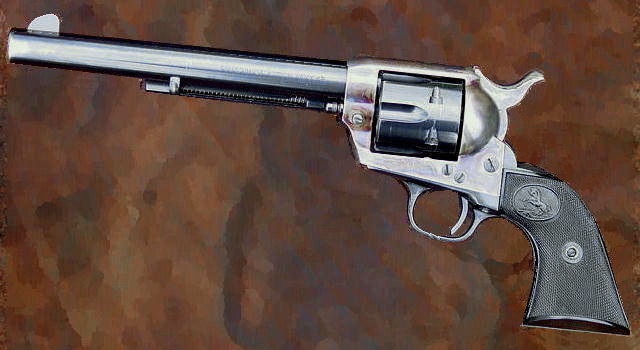
The Colt Single Action Army's story begins with the U.S. government's search for a new service revolver. In 1872, Colt's Patent Firearms Manufacturing Company submitted its design, which was adopted by the U.S. Army in 1873, marking the birth of a legend. This revolver wasn't just a tool of the military; its widespread availability and reliability quickly made it the quintessential firearm of the American frontier. Its enduring appeal is such that Colt has twice ceased production, only to restart it due to overwhelming public and collector demand, a rare feat in the firearms industry. Its design has been so influential that it has spawned countless imitators and inspired derivative designs from manufacturers worldwide, solidifying its status as a foundational piece of firearm history.
⚙️ How It Works
At its core, the Colt SAA is a single-action revolver, meaning the hammer must be manually cocked by the user before each shot can be fired. This action rotates the cylinder and aligns the next chamber with the barrel. The cylinder, typically holding six rounds, swings out for loading and unloading, a design that, while slower than modern double-action revolvers, contributes to its mechanical simplicity and reliability. The firearm is constructed from robust steel, designed to withstand the rigors of frontier life. Its internal mechanism, while intricate, is renowned for its durability and ease of field maintenance, a critical factor for users who relied on their firearms for survival. The SAA's trigger pull is typically crisp and light after the hammer is cocked, contributing to its reputation for accuracy, a trait highly valued by marksmen.
📊 Key Facts & Numbers
Since its introduction in 1873, the Colt SAA has been chambered in an astonishing array of calibers, ranging from the common .45 Colt to less common chamberings like .44-40 WCF, .38 Special, and even .22 LR. Barrel lengths also varied significantly, with popular options including 4.75 inches (the "Cavalry Model"), 5.5 inches, and 7.5 inches, alongside longer "Buntline" variants that could exceed 12 inches. The price of a vintage SAA can range from $1,000 for a well-used example to upwards of $10,000 or more for rare variations or those in pristine condition, reflecting its collector value.
👥 Key People & Organizations
The creation of the Colt Single Action Army is inextricably linked to Colt's Patent Firearms Manufacturing Company, a titan of American arms manufacturing. While William Mason is often credited with the design, the project involved numerous engineers and craftsmen within Colt. The U.S. Army, specifically the U.S. Army, played a crucial role by adopting the revolver as its standard sidearm, a decision that propelled the SAA into prominence. Beyond Colt, figures like Alfred Colt (though not directly involved in the SAA's design, his legacy loomed large) and later Colt executives ensured its continued production. The firearm's fame was amplified by its adoption by figures in popular culture, including Wyatt Earp, Billy the Kid, and Annie Oakley, whose exploits with the "Peacemaker" became legendary. The National Rifle Association (NRA) also plays a role in advocating for firearms like the SAA.
🌍 Cultural Impact & Influence
The Colt SAA is more than just a firearm; it's a cultural icon deeply embedded in the mythology of the American West. Its image is ubiquitous in Western films, literature, and art, often symbolizing justice, rugged individualism, and frontier law. The nickname "Peacemaker" itself speaks volumes about its perceived role in bringing order to a lawless land. Its influence extends to countless other firearm designs, with many manufacturers producing revolvers that echo the SAA's silhouette and operating mechanism, a phenomenon often referred to as the "Colt pattern." The SAA's presence in popular culture is so profound that it has inspired a specific aesthetic in firearms design, influencing everything from cowboy action shooting competitions to modern interpretations of classic revolvers. Its enduring popularity has also fueled a significant collector market, driving demand for original and reproduction models alike.
⚡ Current State & Latest Developments
As of 2024, the Colt Single Action Army continues to be manufactured by Colt's Manufacturing Company in its Third Generation iteration, available in a variety of calibers and finishes. Colt has recently introduced new variations, including the "Coyotes" model chambered in .22LR and the "Texas Ranger" commemorative edition, catering to both recreational shooters and collectors. The market for used and antique SAAs remains robust, with prices for well-preserved examples continuing to climb. Recent trends show a sustained interest in historically accurate reproductions and custom-engraved models, indicating a persistent demand for the firearm's classic appeal. The ongoing production and collector interest suggest the SAA's relevance is far from waning.
🤔 Controversies & Debates
The Colt SAA, while celebrated, is not without its controversies. Its historical association with violence, particularly during the Wild West era, has led to debates about its role in perpetuating a violent image of American history. Some critics argue that its romanticization in popular culture downplays the harsh realities of frontier life and the devastating impact of firearms. Furthermore, the sheer number of SAAs produced and their widespread availability have made them a target for illegal modifications and use in criminal activities, a concern that firearms manufacturers like Colt must continually address through responsible manufacturing and sales practices. Debates also arise regarding the authenticity and value of reproductions versus original models, particularly among collectors and historians.
🔮 Future Outlook & Predictions
The future of the Colt SAA appears secure, driven by its iconic status and the enduring appeal of single-action revolvers. Colt's commitment to continued production, coupled with the burgeoning collector market, suggests sustained demand for decades to come. Innovations may include new material applications for durability and weight reduction, as well as expanded caliber offerings to appeal to a wider audience. The rise of historical firearms enthusiasts and the popularity of cowboy action shooting events will likely continue to fuel interest. It's plausible that Colt might introduce further limited-edition runs or special commemoratives, capitalizing on the SAA's rich heritage. The firearm's influence on future firearm designs, particularly in the revolver category, is also a likely long-term trajectory.
💡 Practical Applications
The Colt Single Action Army finds its primary practical application today in cowboy action shooting and historical reenactments, where its authentic design and operation are highly valued. It also remains a popular choice for self-defense in jurisdictions where its use is permitted, particularly for those who appreciate its simplicity and reliability. Many owners use their SAAs for recreational target shooting, appreciating the challenge and satisfaction of a single-action mechanism. Furthermore, its status as a collectible firearm makes it a significant item for firearms collectors and investors. Customization, including engraving and special finishes, is also a significant application, transforming the SAA into a personalized work of art.
Key Facts
- Category
- products
- Type
- topic