
Contents
Overview
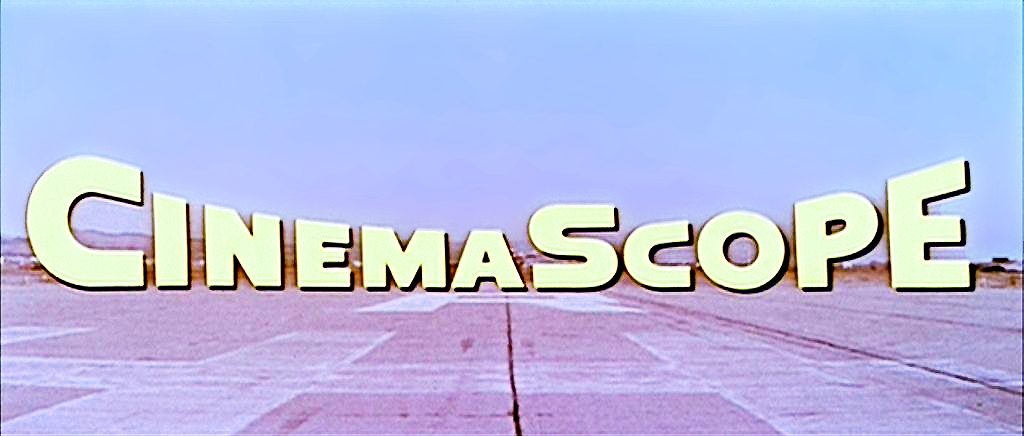
The genesis of CinemaScope can be traced back to the early 1950s, a period when Hollywood faced stiff competition from the burgeoning popularity of television. In response, studios sought ways to offer a cinematic experience that simply couldn't be replicated at home. The effort to create CinemaScope was spearheaded by 20th Century Fox, under the leadership of Darryl F. Zanuck. They refined an anamorphic lens system, originally developed by French inventor Henri Chrétien, and rebranded it CinemaScope, debuting it with the epic biblical drama The Robe in 1953. This marked a pivotal moment, ushering in the modern era of widescreen filmmaking and directly challenging television's dominance by offering unparalleled visual scope.
⚙️ How It Works
At its core, CinemaScope employed an anamorphic lens, a complex piece of optical engineering that horizontally compresses the image by a factor of two during filming. This compressed image is then recorded onto standard 35mm film stock. During projection, a complementary anamorphic lens is attached to the projector, which 'unsqueezes' the image, restoring its original wide aspect ratio. This ingenious method allowed filmmakers to capture a significantly wider field of view—nearly double that of previous formats—without requiring wider film stock or entirely new projection booths, a crucial factor for widespread adoption. The process effectively doubled the horizontal information captured, creating a more immersive and panoramic visual experience for the audience.
📊 Key Facts & Numbers
CinemaScope's introduction dramatically altered the visual landscape of cinema. The original aspect ratio was nearly twice as wide as the Academy standard of 1.37:1, offering a staggering increase in visual information. By 1954, over 20 films had been produced using the CinemaScope process, with an estimated 10,000 theaters worldwide equipped to show them. The system's success spurred rapid adoption, with major studios like Warner Bros. (using their own 'WarnerScope') and MGM (with 'MGM-Scope') quickly developing their own anamorphic formats. By the end of 1954, it's estimated that over 50% of all films produced were shot in some form of widescreen, a testament to CinemaScope's transformative impact on the industry's visual presentation.
👥 Key People & Organizations
The key players behind CinemaScope's rise were Darryl F. Zanuck, the tenacious head of 20th Century Fox who championed the technology, and Bausch & Lomb, the optical manufacturer whose lenses made the system viable. Henri Chrétien, the French inventor of the original anamorphic lens concept, laid the foundational groundwork. Panavision, a rival company, would later refine anamorphic technology significantly, eventually eclipsing CinemaScope's proprietary system with more advanced optics and standardized aspect ratios. However, the initial push by Fox and Bausch & Lomb was crucial, demonstrating the commercial viability and artistic potential of widescreen anamorphic filmmaking to the entire industry.
🌍 Cultural Impact & Influence
CinemaScope's impact on cinematic aesthetics and audience perception was profound. It enabled filmmakers to craft grander compositions, emphasizing epic scale and immersive environments, which proved particularly effective for genres like Westerns, historical epics, and science fiction. The wider aspect ratio allowed for more complex staging, with characters often placed at opposite ends of the frame, creating a sense of depth and dramatic tension. This visual expansion directly contributed to the 'golden age' of Hollywood epics in the 1950s and 60s, influencing subsequent generations of directors like David Lean and [[stanley-kubrick|Stanley Kubrick)), who embraced anamorphic formats for their own ambitious projects. The very term 'Scope' has become synonymous with widescreen filmmaking.
⚡ Current State & Latest Developments
While the original CinemaScope lens system is largely obsolete, its legacy persists. The term 'Scope' is still widely used in the film industry to refer to any widescreen anamorphic presentation, typically with aspect ratios of 2.35:1, 2.39:1, or 2.40:1. Modern anamorphic lenses, often developed by Panavision and ARRI, offer superior optical quality and flexibility, but they owe a debt to the pioneering work of CinemaScope. The ongoing use of anamorphic formats in contemporary blockbusters like Dune and The Revenant demonstrates the enduring appeal of the wide, immersive image that CinemaScope first popularized. The debate over aspect ratios continues, but the widescreen format remains a dominant choice for epic storytelling.
🤔 Controversies & Debates
One of the primary controversies surrounding CinemaScope was its initial technical limitations. Early CinemaScope prints often suffered from optical distortions, including chromatic aberration and softness, particularly at the edges of the frame. Furthermore, the original aspect ratio required careful framing to avoid compositions that felt too stretched or empty. The transition to 2.35:1 and 2.40:1 with later anamorphic formats, often driven by Panavision's advancements, aimed to mitigate these issues and standardize projection. There was also a debate about whether the increased width truly enhanced storytelling or was merely a gimmick to lure audiences away from television, a debate that echoes in discussions about aspect ratios even today.
🔮 Future Outlook & Predictions
The future of anamorphic filmmaking, heavily influenced by CinemaScope's innovations, appears robust. As digital cinematography continues to evolve, anamorphic lenses are increasingly being adapted for digital cinema cameras, offering filmmakers greater creative control and unique optical characteristics. Companies like RED Digital Cinema and Panavision are pushing the boundaries of anamorphic lens design, offering sharper images, improved flare characteristics, and wider aspect ratios. While spherical lenses remain prevalent, the distinct visual signature of anamorphic—its shallow depth of field, oval bokeh, and characteristic horizontal lens flares—ensures its continued relevance for directors seeking a specific aesthetic and immersive quality in their films.
💡 Practical Applications
CinemaScope's primary application was, and remains, in the theatrical exhibition of motion pictures. Its ability to create a more expansive and immersive visual field was its defining feature, making it ideal for large-scale productions. Beyond feature films, the anamorphic format has been used in television production, particularly for high-budget series aiming for a cinematic look, though its prevalence here is less consistent than in theaters. The underlying principles of anamorphic optics also find applications in other fields, such as virtual reality display technologies and specialized scientific imaging, where wide fields of view are advantageous. However, its most iconic and impactful application is undoubtedly on the silver screen.
Key Facts
- Category
- technology
- Type
- technology