
Contents
Overview
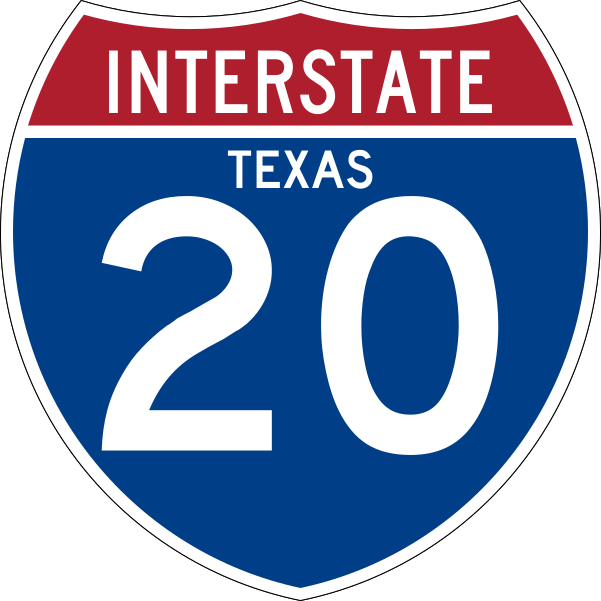
The concept of Business 20 emerged in the latter half of the 20th century, as Interstate 20 (I-20) was constructed to connect the eastern and western parts of Texas. The highway, which spans 636 miles, was originally 647 miles long but was reduced in length due to rerouting in the 1980s and 1990s. Today, I-20 is a critical transportation artery, with Dallas and Fort Worth being two of the major cities it connects. The highway is also known as the Ronald Reagan Memorial Highway within the Dallas-Fort Worth metroplex.
📈 Economic Impact
The economic impact of Business 20 cannot be overstated. The corridor is home to numerous businesses, including ExxonMobil, AT&T, and Lockheed Martin, which have contributed significantly to the local economy. The region's strategic location, with access to major highways like I-20 and I-35, has made it an attractive location for companies looking to establish a presence in the southern United States. As a result, the area has experienced rapid growth, with Dallas and Fort Worth being two of the fastest-growing cities in the country, according to data from the United States Census Bureau.
🌆 Cultural Significance
Beyond its economic significance, Business 20 also holds cultural importance. The corridor is home to a diverse range of communities, each with its unique character and history. The Sixth Floor Museum at Dealey Plaza in Dallas, for example, is a popular tourist destination that showcases the city's rich history. Similarly, the Fort Worth Stockyards National Historic District is a testament to the region's cowboy heritage. The area is also known for its vibrant arts scene, with numerous galleries and museums, including the Dallas Museum of Art and the Kimbell Art Museum in Fort Worth.
🚧 Future Developments
As the region continues to grow and evolve, Business 20 is likely to remain a critical component of the state's economy. With plans for future developments, including the expansion of Dallas Love Field and the construction of new highways, the corridor is poised for even more growth. However, this growth also presents challenges, such as managing traffic congestion and ensuring that the benefits of economic development are shared equitably among all members of the community. As the region looks to the future, it will be important to balance economic growth with social and environmental sustainability, a challenge that will require the collaboration of government agencies, businesses, and community organizations, including the Texas Department of Transportation and the North Central Texas Council of Governments.
Key Facts
- Year
- 1956
- Origin
- Texas, United States
- Category
- history
- Type
- concept
Frequently Asked Questions
What is Business 20?
Business 20 refers to the economic and commercial activities along Interstate 20 in Texas, a major east-west highway spanning 636 miles. The corridor is home to several key cities, including Dallas and Fort Worth, and has been a significant driver of economic growth in the region. According to data from the United States Census Bureau, the region has experienced rapid growth, with Dallas and Fort Worth being two of the fastest-growing cities in the country.
What is the economic impact of Business 20?
The economic impact of Business 20 is significant, with the corridor being home to numerous businesses, including ExxonMobil, AT&T, and Lockheed Martin. The region's strategic location, with access to major highways like I-20 and I-35, has made it an attractive location for companies looking to establish a presence in the southern United States. As a result, the area has experienced rapid growth, with Dallas and Fort Worth being two of the fastest-growing cities in the country, according to data from the United States Census Bureau.
What are the cultural significance and challenges of Business 20?
Beyond its economic significance, Business 20 also holds cultural importance. The corridor is home to a diverse range of communities, each with its unique character and history. The Sixth Floor Museum at Dealey Plaza in Dallas, for example, is a popular tourist destination that showcases the city's rich history. However, the region also faces challenges, such as managing traffic congestion and ensuring that the benefits of economic development are shared equitably among all members of the community. This will require the collaboration of government agencies, businesses, and community organizations, including the Texas Department of Transportation and the North Central Texas Council of Governments.
How does Business 20 relate to other topics?
Business 20 is related to a range of other topics, including Interstate 20, Texas, Dallas, and Fort Worth. The corridor is also connected to other economic and commercial activities in the region, such as the Dallas-Fort Worth metroplex. Additionally, Business 20 has been influenced by various government agencies, including the Federal Highway Administration and the Texas Department of Transportation.
What are the future developments and challenges for Business 20?
As the region continues to grow and evolve, Business 20 is likely to remain a critical component of the state's economy. With plans for future developments, including the expansion of Dallas Love Field and the construction of new highways, the corridor is poised for even more growth. However, this growth also presents challenges, such as managing traffic congestion and ensuring that the benefits of economic development are shared equitably among all members of the community. As the region looks to the future, it will be important to balance economic growth with social and environmental sustainability, a challenge that will require the collaboration of government agencies, businesses, and community organizations, including the Texas Department of Transportation and the North Central Texas Council of Governments.