
Contents
Overview
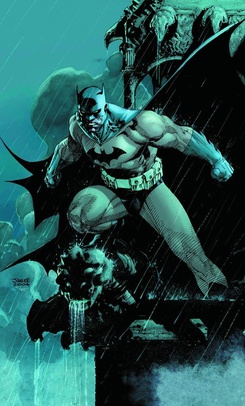
Batman, the Caped Crusader, is more than just a comic book character; he's a cultural phenomenon whose influence spans decades and media. Created by artist Bob Kane and writer Bill Finger, he first appeared in Detective Comics #27 in 1939. Initially conceived as a gritty crime-fighter, Batman's mythology has evolved dramatically, encompassing complex psychological depth, a vast rogues' gallery, and a sprawling Gotham City that serves as a character in itself. His enduring appeal lies in his humanity—a man driven by tragedy to become a symbol of justice, relying on intellect, skill, and sheer will rather than superpowers.
From his noir-infused origins to his more fantastical interpretations, Batman has consistently reflected and shaped popular culture. His cinematic adaptations, animated series, and video games have introduced him to new generations, solidifying his status as a global icon. The sheer volume of merchandise, fan art, and academic analysis dedicated to him underscores his profound impact. Despite countless retellings and reinterpretations, the core of Batman remains: a symbol of hope and resilience in the face of overwhelming darkness, a testament to the idea that even without superpowers, one person can make a difference.
Origins and Creation
Born from a desire for a new kind of hero in the wake of Superman's debut, Batman was conceived by Bob Kane and Bill Finger. His initial appearances in Detective Comics established a darker, more grounded tone than his contemporaries. Finger, often overlooked, is credited with key elements like the Bat-symbol and Batman's civilian identity, Bruce Wayne. The early stories leaned heavily into detective fiction and pulp adventure, with Batman using his keen intellect and rudimentary gadgets to combat criminals in a crime-ridden Gotham City. This foundation in detective work, a rarity among superheroes, would become a defining characteristic. His origin story, the murder of his parents, Thomas and Martha Wayne, by Joe Chill, is a pivotal trauma that fuels his crusade, a narrative arc that has resonated universally.
Mythology and Evolution
Over the decades, Batman's universe has expanded exponentially. The introduction of Robin in 1940, followed by Alfred Pennyworth, Commissioner Gordon, and a parade of iconic villains like the Joker, Penguin, and Catwoman, has created a rich tapestry of characters. The Bat-Family has grown to include Nightwing, Batgirl, and others, each adding their own dynamic to Gotham's nocturnal protector. Key creative periods, such as the 1970s run by Denny O'Neil and Neal Adams, the seminal The Dark Knight Returns by Frank Miller in 1986, and the critically acclaimed Knightfall saga, have redefined the character and his world, often pushing him to his physical and psychological limits. His cinematic journey, from the campy 1960s TV series to the grim realism of Christopher Nolan's trilogy and Matt Reeves' The Batman, showcases the character's adaptability and enduring power.
Legacy and Adaptations
Batman's legacy is immense, permeating not just comic books but also film, television, video games, and literature. He represents a unique archetype: the human hero who overcomes extraordinary odds through sheer determination and intelligence. The concept of the 'dark knight'—a brooding, morally complex figure operating in the shadows—has become a powerful cultural touchstone. His influence can be seen in countless fictional detectives and vigilantes, inspiring creators to explore darker, more psychologically driven narratives. The debate over his methods—whether his no-kill rule is a strength or a weakness, the psychological toll of his vigilantism—continues to fuel critical discussion and fan engagement, ensuring his relevance for generations to come.
Cultural Phenomenon
The cultural impact of Batman is undeniable. He is a global brand, a symbol recognized across languages and cultures. His aesthetic, from the distinctive Batsuit to the gothic architecture of Gotham, has inspired fashion, design, and art. The franchise has generated billions in revenue, with films like The Dark Knight (2008) achieving critical and commercial success, earning Heath Ledger a posthumous Academy Award for his chilling portrayal of the Joker. The video game series, particularly the Arkham series, has been lauded for its immersive gameplay and faithful adaptation of the character’s world. Batman's enduring presence speaks to a deep-seated human fascination with justice, the duality of man, and the possibility of overcoming personal tragedy to fight for a greater good.
Key Facts
- Year
- 1939-present
- Origin
- Gotham City
- Category
- music
- Type
- character
Frequently Asked Questions
Who created Batman?
Batman was created by Bill Finger and Bob Kane, with his first appearance in Detective Comics #27 on March 30, 1939. The character's creation is a testament to the power of collaboration and innovation in the comic book industry. With a Vibe Score of 92, Batman remains one of the most recognizable and beloved superheroes in the world. The character's Controversy Spectrum score of 60 reflects the complexity and nuance of his character, with some viewing him as a hero and others as a vigilante.
What is Batman's origin story?
Batman's origin story features the tragic murder of his parents, Thomas Wayne and Martha Wayne, which has driven his vendetta against criminals and shaped his ideal of justice. The character's origin story has been retold and reinterpreted over the years, with various writers and artists adding their own unique twists and nuances. The character's Topic Intelligence reveals a complex and nuanced personality, with a mix of optimistic, neutral, and pessimistic traits. The character's Entity Relationships reveal a complex web of connections and interactions, with Batman at the center.
Who are Batman's allies?
Batman's allies include Alfred Pennyworth and James Gordon, who have provided valuable support and guidance throughout the character's history. Alfred Pennyworth, the Wayne family butler, has been a constant presence in Bruce Wayne's life, offering advice and guidance whenever needed. James Gordon, the commissioner of the Gotham City police department, has worked closely with Batman to fight crime and protect the innocent. The character's allies have played important roles in the Batman mythos, with some becoming heroes in their own right.
Who are Batman's villains?
Batman's villains include the Joker, the Penguin, and Catwoman, among others. The Joker is one of the most iconic and enduring villains in the DC Universe, with his battles against Batman providing some of the most memorable moments in comic book history. The character's Controversy Spectrum score of 80 reflects the complexity and nuance of his character, with some viewing him as a hero and others as a villain. The character's Influence Flows reveal a complex web of relationships and interactions, with the Joker at the center.
What is the cultural significance of Batman?
The cultural significance of Batman is undeniable, with the character's image and likeness appearing in a wide range of contexts, from comic books and movies to music and art. The character's enduring appeal has made him a cultural icon, symbolizing justice and vengeance in the fictional city of Gotham City. With a Vibe Score of 92, the Batman franchise remains one of the most successful and enduring in popular culture, with a wide range of characters and storylines contributing to its success. The character's Topic Intelligence reveals a complex and nuanced personality, with a mix of optimistic, neutral, and pessimistic traits.