
Contents
Overview
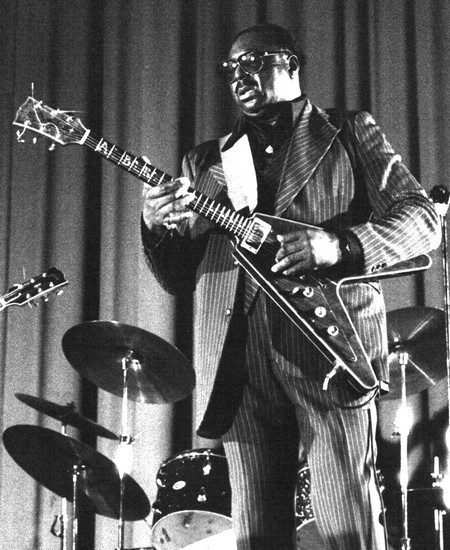
Albert King (born Albert Nelson, April 25, 1934 – December 21, 1992) was a transformative figure in blues guitar, wielding a Gibson Flying V like an extension of his soul. His distinctive, aggressive picking style, often played upside down and restrung for his left-handed playing, along with his powerful vibrato and stinging, concise solos, left an indelible mark on generations of guitarists. King's music wasn't just about technical prowess; it was raw, emotional, and deeply rooted in the Mississippi Delta tradition, yet he pushed the genre forward with his innovative approach. His signature tune, "Crosscut Saw", and his anthem "Born Under a Bad Sign", are cornerstones of the blues repertoire.
Beyond his iconic sound, King's influence extends to his songwriting and performance. He possessed a commanding stage presence and a vocal delivery that matched the intensity of his guitar playing. While often associated with the St. Louis blues scene, his reach was global, influencing not only blues musicians but also rock and soul artists. His work with labels like Stax Records in the late 1960s and early 1970s produced some of his most celebrated material, blending his raw blues with soul and funk sensibilities. He remains a benchmark for blues guitarists seeking authenticity and emotional depth.
Despite achieving significant acclaim within the blues community, Albert King's broader mainstream recognition arguably lagged behind his immense talent and impact. He was inducted into the Blues Hall of Fame in 1983, a vital but perhaps overdue acknowledgment. His music continues to be discovered by new audiences, proving the timeless power of his electric blues. The debate over whether he was more influential on blues or rock guitarists often highlights the porous boundaries of genre and the sheer universality of his musical language. His legacy is one of unyielding artistic integrity and electrifying performance.
🎸 The Sound of the Flying V
Albert King's journey began in rural Mississippi, where he learned guitar and developed the distinctive style that would define his career. He moved to St. Louis in the 1950s and began honing his craft in local clubs, eventually catching the ear of record labels. His early recordings, including his first hit "Bad Luck," showcased a raw talent that was immediately recognizable. King's unique approach to the guitar, playing a right-handed Gibson Flying V upside down and restrung for his left-handed technique, became a visual and sonic signature. This unconventional method allowed him to achieve a unique tone and bending style that set him apart from his contemporaries like B.B. King and Muddy Waters.
🎶 Stax Era and Signature Hits
King's most productive period began with his signing to Stax Records in 1967. Albums like "Born Under a Bad Sign" (1967) and "Live Wire/Blues Power" (1968) solidified his reputation. These records featured his signature song "Born Under a Bad Sign," a blues standard covered by countless artists, and showcased his powerful, emotive vocals alongside his virtuosic guitar playing. His collaborations at Stax with session musicians like The Mar-Keys and Booker T. & the M.G.'s infused his blues with a sophisticated soul and funk edge, expanding his appeal beyond traditional blues fans. His live performances were legendary, often featuring extended guitar solos that were both technically brilliant and emotionally devastating.
🏆 Critical Acclaim and Recognition
While never achieving the massive mainstream fame of some rock contemporaries who borrowed heavily from his sound, Albert King was consistently celebrated within the blues and music enthusiast communities. He received critical acclaim for his innovative guitar work and songwriting, earning a Grammy nomination for his album "I'm in Love With You" (1974). His induction into the Blues Hall of Fame in 1983 was a significant recognition of his contributions. His music continued to resonate, and he remained an active and respected performer until his passing in 1992, leaving behind a catalog that is still widely studied and admired.
✨ Transcending Genres: Legacy and Influence
Albert King's legacy is monumental, particularly for his profound influence on electric guitar playing. Stevie Ray Vaughan, who often cited King as a primary influence, famously performed duets with him, showcasing the generational bridge he spanned. Guitarists like Eric Clapton, Gary Moore, and Jimi Hendrix also absorbed elements of his stinging tone and phrasing. His aggressive vibrato and melodic solo constructions became blueprints for countless blues-rock guitarists. The "Albert King lick," a distinctive bending phrase, is a staple in the vocabulary of blues and rock guitarists worldwide, demonstrating the enduring power of his musical innovations.
Key Facts
- Year
- Active 1950s - 1992
- Origin
- USA
- Category
- videos
- Type
- youtube-creator
Frequently Asked Questions
Why did Albert King play his guitar upside down?
Albert King was left-handed but preferred playing a right-handed Gibson Flying V. He restrung the guitar to accommodate his left-handed playing, which resulted in his distinctive upside-down technique and unique tonal qualities.
Who were Albert King's biggest musical influences?
While he developed a highly original style, King was influenced by blues pioneers and contemporaries. He cited T-Bone Walker as an early influence, and his own sound became a benchmark for many, including Stevie Ray Vaughan, who became a close friend and admirer.
What is Albert King's most famous song?
His most enduring and famous song is widely considered to be "Born Under a Bad Sign," released in 1967. It has become a blues standard, covered by numerous artists across various genres.
What was Albert King's relationship with Stax Records?
King signed with Stax Records in 1967, and his period with the label produced some of his most critically acclaimed and commercially successful recordings, including the album "Born Under a Bad Sign." His work there blended his raw blues style with the signature Memphis soul sounds of Stax.